


EN
3 Rate Sensitive Financial Stocks Ahead Of CPI And The Fed
Rate sensitive financial stocks are back in the spotlight as inflation data and Fed decisions crowd the calendar. With October CPI and PPI landing just before a key Fed meeting, interest rate expectations could swing quickly, and that can shift how investors view banks, insurers, and diversified financial firms. This article unpacks three stocks from a U.S. screener that appear particularly exposed to this cluster of inflation and policy headlines.
The three stocks highlighted next are just a sample from the idea, and the full screen surfaced 7 more U.S. rate sensitive financial companies with similarly detailed stories that are not covered here. To identify and analyze the highest conviction setups around upcoming inflation and Fed moves, head straight into the U.S. Rate‑Sensitive Financials screener.
Federal National Mortgage Association (FNMA)
Federal National Mortgage Association, or Fannie Mae, is a focused way to access the U.S. Rate Sensitive Financials theme. Its mortgage financing engine responds directly to Federal Reserve moves and housing credit conditions, so any change in rate expectations can quickly affect its business.
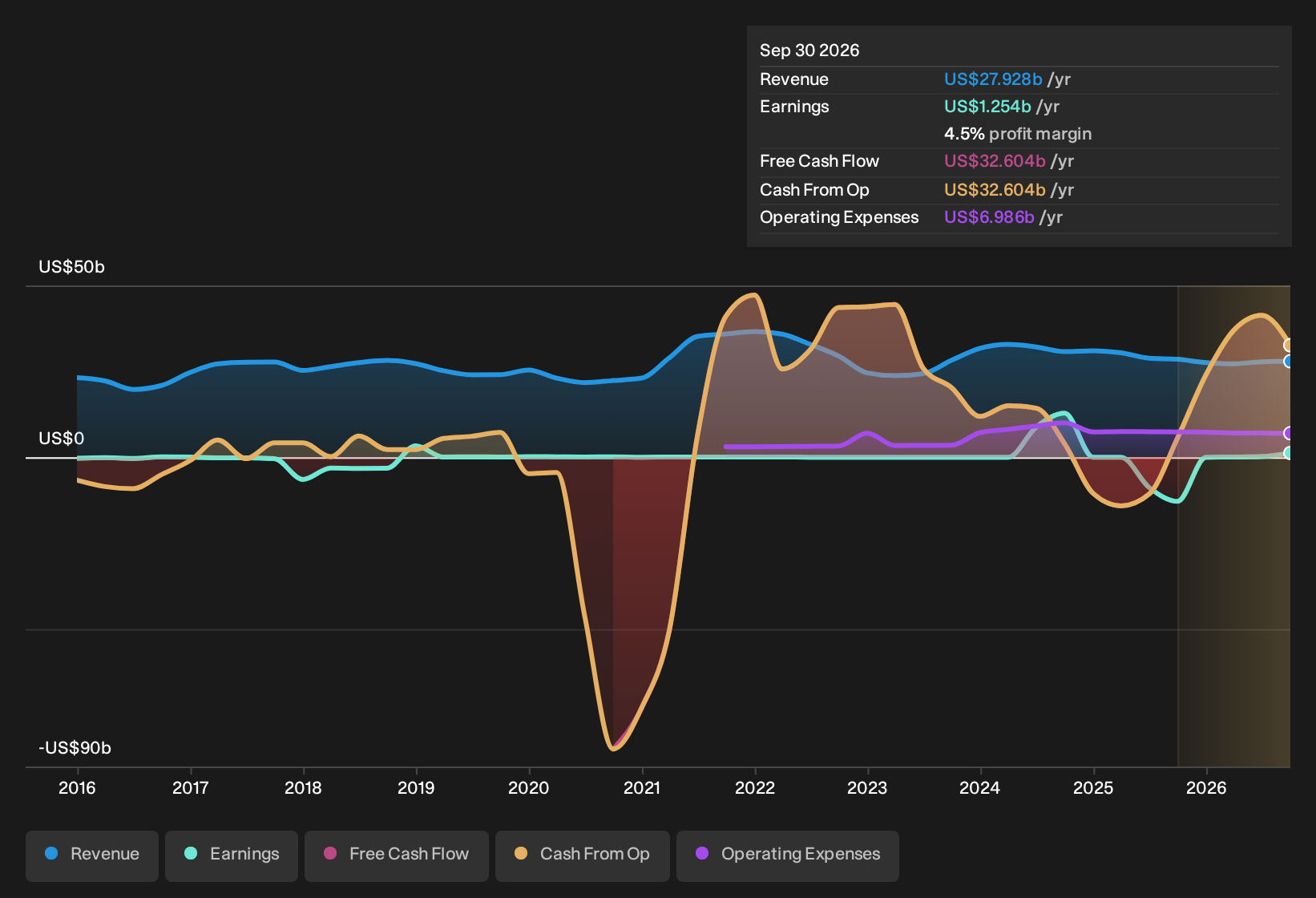
Federal National Mortgage Association generates about US$23.7b from Single Family and US$4.2b from Multifamily activities in the U.S., reflecting its focus on residential mortgage financing, and the stock carries a market cap of roughly US$24.4b.
"Although the company highlights year-to-date net interest margin of 68.6 basis points supported by higher portfolio interest income and a growing retained mortgage and corporate liquidity portfolio, increased exposure to longer term rate positions and higher debt expense can compress future margins if rate movements turn less favorable, which could weigh on net interest income and overall profitability."
The real test comes if one crucial pressure on its housing credit engine shifts direction at the same time that the next round of rate decisions is announced.
That turning point is exactly where the opportunity sits, and the full narrative for Federal National Mortgage Association shows how Federal National Mortgage Association could turn shifting rate pressures into renewed momentum.
Triumph Financial (TFIN)
Triumph Financial plugs into the U.S. Rate Sensitive Financials theme as a bank holding company that has pushed deep into trucking focused payments and factoring, so its earnings can react when Fed policy shifts ripple through funding costs, freight activity, and client demand.
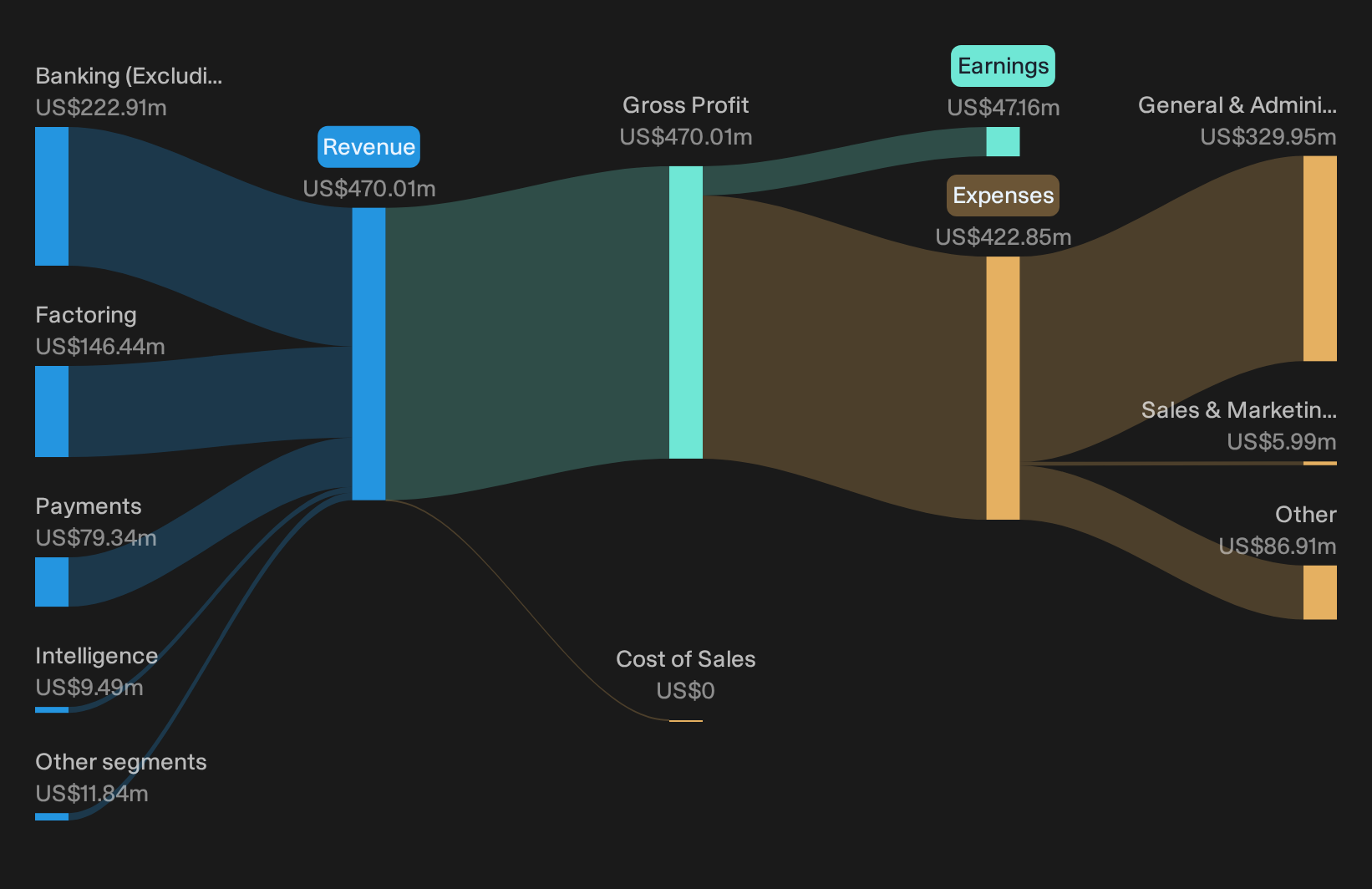
Triumph Financial runs a U.S. focused banking and freight finance platform, with about US$222.9 million from banking, US$146.4 million from factoring, US$79.3 million from payments, and a smaller intelligence arm, giving the stock a roughly US$1.5b market cap.
"A structural shift toward tighter, compliance focused freight capacity is supporting higher average invoice values. Triumph Financial’s sensitivity to invoice pricing changes means further moves in average ticket size can translate into higher transportation revenue and pretax income."
What happens to Triumph Financial’s margin story if one key pressure on how much it earns per transaction moves in the opposite direction.
If that pressure point matters to your thesis, the full narrative for Triumph Financial lays out how Triumph Financial’s freight engine could accelerate or stall as rate expectations reset.
Equitable Holdings (EQH)
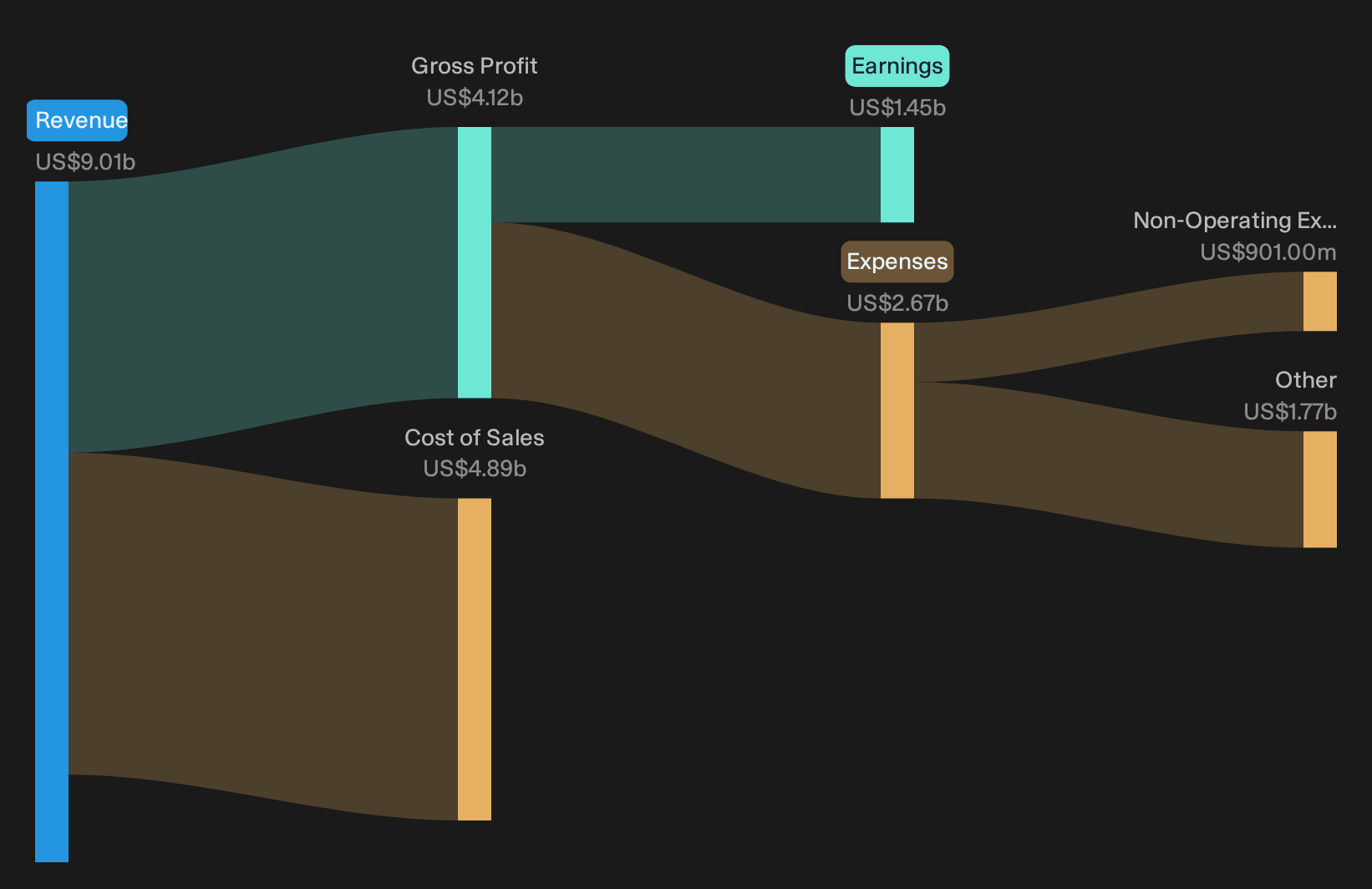
Equitable Holdings taps directly into the U.S. Rate Sensitive Financials theme through its mix of retirement, insurance, and wealth businesses that lean on investment returns and product pricing, and the group carries a market value of about US$14.2b.
Equitable Holdings fits this rate focused screen as a diversified insurer and asset manager whose retirement and protection products are closely tied to interest-rate assumptions, so upcoming inflation data and Fed signals matter for how its long term earnings story is framed.
"Demographic retirement needs in the U.S. are expected to keep pulling more assets into annuities and advice, which positions Equitable Holdings and Corebridge to use their combined retirement platform across RILAs, fixed annuities, group retirement and wealth management to grow fee income and support higher revenue and earnings over time."
What really moves the needle for Equitable Holdings is how one still unresolved pressure shapes the balance between higher fee potential and actual profit margins over the next few years.
That unresolved pressure is exactly what the full narrative for Equitable Holdings unpacks, showing where Equitable Holdings could turn rate sensitivity into accelerating, fee driven profit power.
Seeking Alternatives Before The Crowd
Fresh themes are breaking out, momentum is shifting, and some ideas will be flying before most investors notice. Scan these curated lists while it still matters and get in early.
- Spot cash generative companies before they get crowded by running through a curated 39 high quality undervalued stocks that filters for quality and financial strength.
- Track where real earnings momentum meets AI adoption by scanning a hand picked set of 41 profitable AI stocks that aren't just burning cash with disciplined cost control.
- Secure potential income ideas early by reviewing a focused lineup of 8 dividend fortresses built around balance sheet resilience and payout durability.
Have feedback on this article? Concerned about the content? Get in touch with us directly. Alternatively, email editorial-team@simplywallst.com