


EN
One Day Left To Buy Dabur India Limited (NSE:DABUR) Before The Ex-Dividend Date
Dabur India Limited (NSE:DABUR) stock is about to trade ex-dividend in day or so. The ex-dividend date is two business days before a company's record date in most cases, which is the date on which the company determines which shareholders are entitled to receive a dividend. The ex-dividend date is important as the process of settlement involves at least two full business days. So if you miss that date, you would not show up on the company's books on the record date. Therefore, if you purchase Dabur India's shares on or after the 9th of November, you won't be eligible to receive the dividend, when it is paid on the 4th of December.
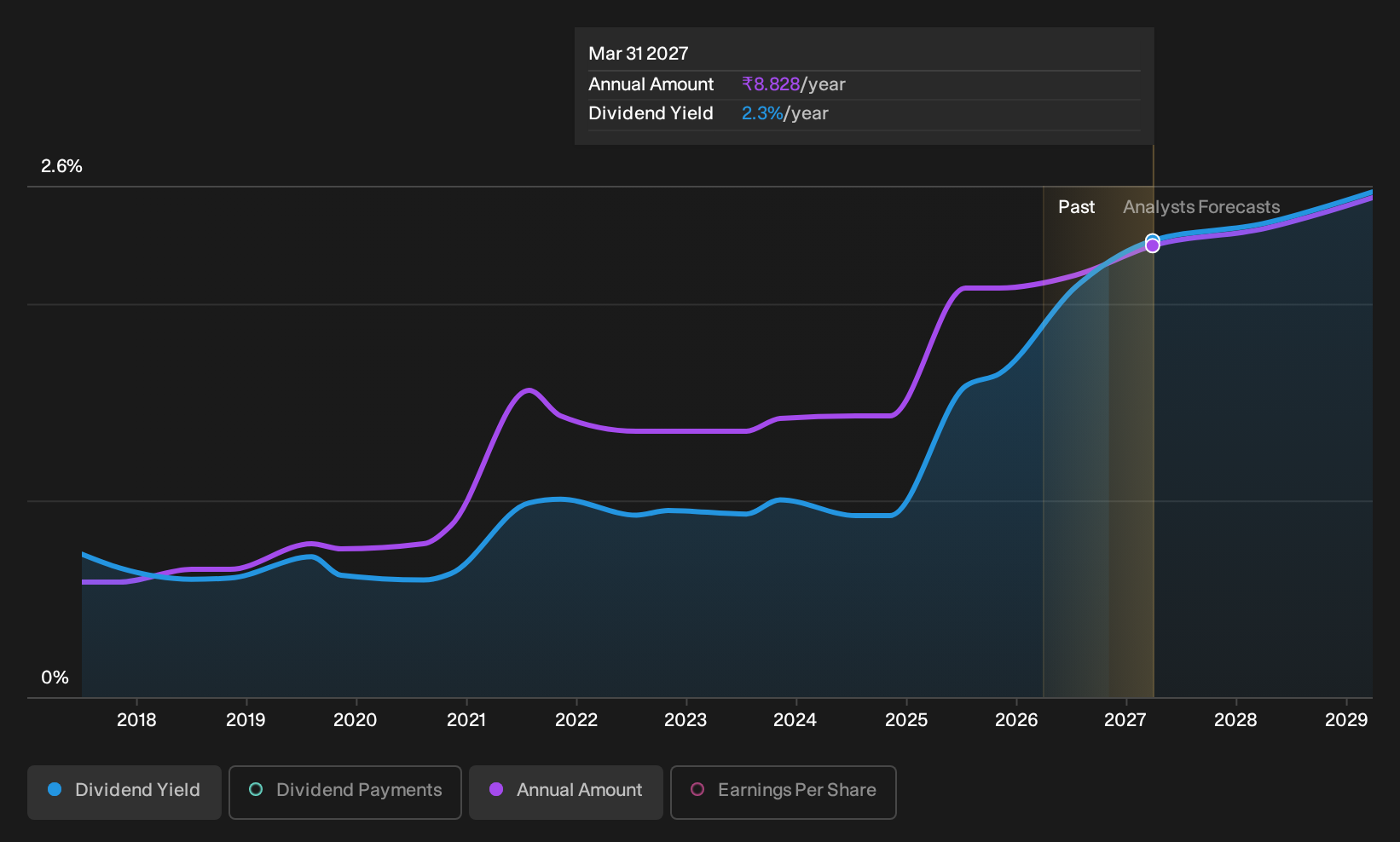
The company's next dividend payment will be ₹3.50 per share. Last year, in total, the company distributed ₹8.25 to shareholders. Based on the last year's worth of payments, Dabur India has a trailing yield of 2.2% on the current stock price of ₹380.35. Dividends are an important source of income to many shareholders, but the health of the business is crucial to maintaining those dividends. We need to see whether the dividend is covered by earnings and if it's growing.
Dividends are typically paid out of company income, so if a company pays out more than it earned, its dividend is usually at a higher risk of being cut. Its dividend payout ratio is 79% of profit, which means the company is paying out a majority of its earnings. The relatively limited profit reinvestment could slow the rate of future earnings growth. We'd be worried about the risk of a drop in earnings. Yet cash flows are even more important than profits for assessing a dividend, so we need to see if the company generated enough cash to pay its distribution. Dividends consumed 69% of the company's free cash flow last year, which is within a normal range for most dividend-paying organisations.
It's encouraging to see that the dividend is covered by both profit and cash flow. This generally suggests the dividend is sustainable, as long as earnings don't drop precipitously.
View our latest analysis for Dabur India
Click here to see the company's payout ratio, plus analyst estimates of its future dividends.
Have Earnings And Dividends Been Growing?
Businesses with strong growth prospects usually make the best dividend payers, because it's easier to grow dividends when earnings per share are improving. If business enters a downturn and the dividend is cut, the company could see its value fall precipitously. With that in mind, we're encouraged by the steady growth at Dabur India, with earnings per share up 3.6% on average over the last five years. A payout ratio of 79% looks like a tacit signal from management that reinvestment opportunities in the business are low. In line with limited earnings growth in recent years, this is not the most appealing combination.
The main way most investors will assess a company's dividend prospects is by checking the historical rate of dividend growth. In the past 10 years, Dabur India has increased its dividend at approximately 14% a year on average. It's encouraging to see the company lifting dividends while earnings are growing, suggesting at least some corporate interest in rewarding shareholders.
Final Takeaway
Is Dabur India worth buying for its dividend? Earnings per share growth has been unremarkable, and while the company is paying out a majority of its earnings and cash flow in the form of dividends, the dividend payments don't appear excessive. While it does have some good things going for it, we're a bit ambivalent and it would take more to convince us of Dabur India's dividend merits.
With that being said, if dividends aren't your biggest concern with Dabur India, you should know about the other risks facing this business. Case in point: We've spotted 1 warning sign for Dabur India you should be aware of.
Generally, we wouldn't recommend just buying the first dividend stock you see. Here's a curated list of interesting stocks that are strong dividend payers.
Have feedback on this article? Concerned about the content? Get in touch with us directly. Alternatively, email editorial-team (at) simplywallst.com.