


EN
Rate Cap Risk Is Rising for Enova International Stock and Other US Fintechs
Regulation just moved back into the spotlight, and this time it is pointed squarely at U.S. consumer fintechs and card networks that rely on credit card interest and fees. With Elizabeth Warren set to steer the Senate Banking Committee, the debate over rate caps and tougher consumer rules is no longer theoretical. This creates real pricing and profit risk as well as potential openings. This article explains how that policy shift could matter for investors by examining three stocks from our U.S. Consumer-Focused Fintechs and Card Networks Exposed to Rate Caps screener that appear positioned to benefit from this turn in Washington.
The three stocks discussed below are only a starting sample from this rate cap theme. The full screen surfaced 14 more U.S. consumer-focused fintechs and card networks with equally compelling regulatory stories that are not covered in this article. To go beyond headlines and actually identify, compare, and analyze the highest-conviction candidates, head straight into the U.S. Consumer-Focused Fintechs and Card Networks Exposed to Rate Caps screener.
Happen (HAPN)
Overview: Happen is a U.S. marketplace-focused bank holding company that offers deposit accounts and a wide range of consumer and small business loans tied closely to credit card refinancing.
Operations: Happen generates about US$1.39b from Happen Bank and US$29.9 million at the parent level, almost entirely in the United States.
Market Cap: US$1.9b
Happen matters for this rate cap theme because its personal loans and credit card refinancing sit directly in the crosshairs of tougher consumer rules, yet its marketplace bank structure gives it more ways to respond than a traditional card issuer.
"Happen is still rolling out and deepening its digital marketplace bank model, which lets it shift loans between marketplace sales and the growing deposit funded balance sheet."
The real test for Happen will come from how one unresolved regulatory pressure reshapes the economics of those refi focused borrowers.
That pressure point is exactly where the full narrative for Happen shows how Happen’s marketplace model could accelerate, absorb or even sidestep future rate caps.

Enova International (ENVA)
Overview: Enova International runs online consumer and small business lending platforms, earning interest and fees that tie directly into potential U.S. rate cap debates.
Operations: Enova International reports about US$1.83b from consumer financial services, with total revenue of roughly US$3.56b concentrated in the United States.
Market Cap: US$4.3b
Enova International matters for this rate cap screen because it operates in the part of the market where U.S. regulators are focusing, using data-heavy lending tools to extend credit to consumers and small businesses that might lose access if credit card pricing is constrained.
"The pending Grasshopper Bank acquisition, which is expected to contribute more than 25% adjusted EPS accretion from funding synergies, introduces integration, regulatory and execution risks."
The key investment question is what happens to Enova International’s earnings power if a single assumption about future funding flexibility quietly shifts.
That hinges on how funding flexibility, regulation and pricing power really interact inside Enova International’s model. This is where the full narrative for Enova International reveals what may be getting masked by headline risks.

Green Dot (GDOT)
Overview: Green Dot provides U.S. consumers and businesses with prepaid and debit cards, checking accounts and embedded finance services closely tied to card fees.
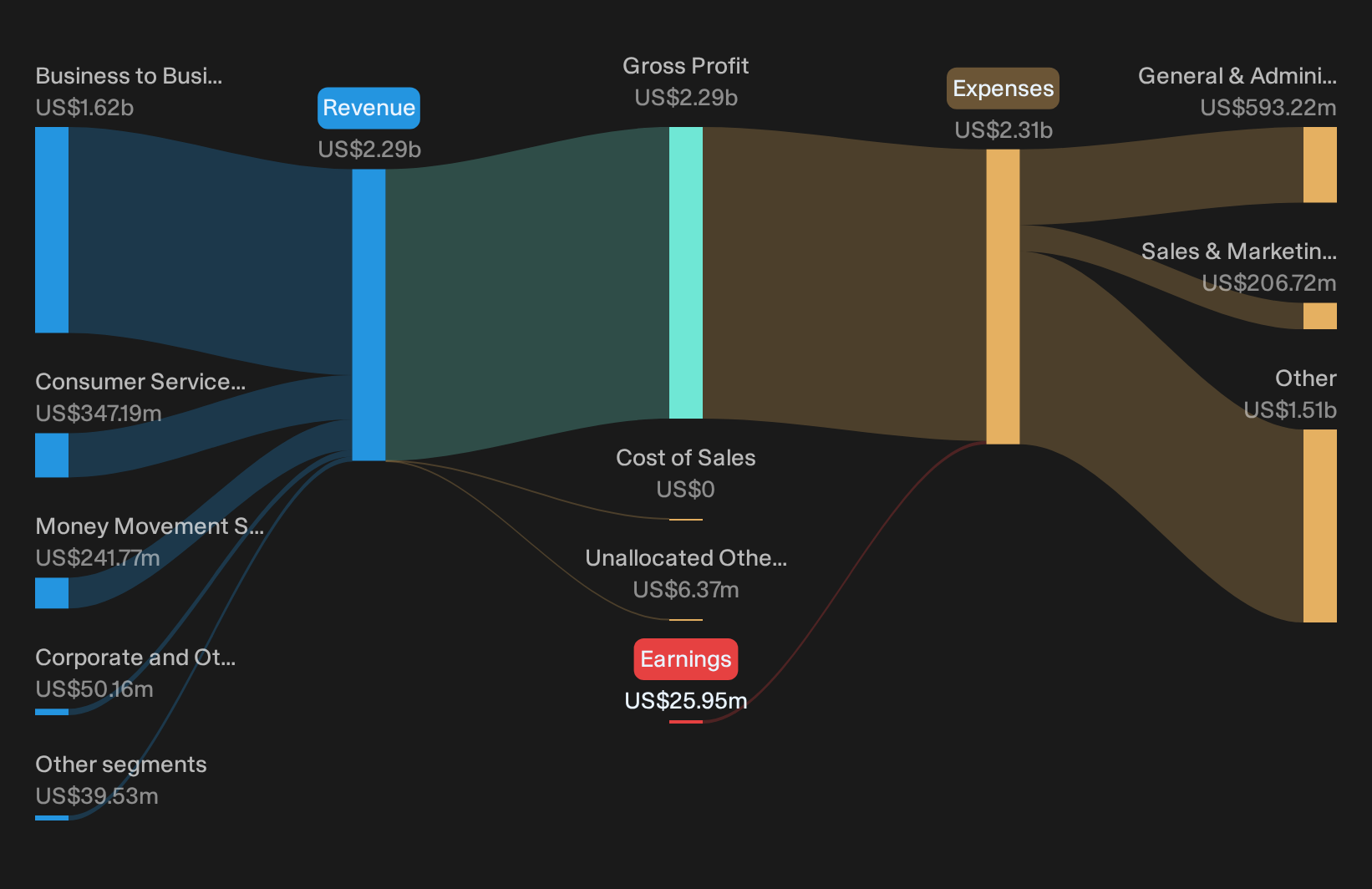
Operations: Green Dot generates about US$1.62b from Business to Business Services, with another roughly US$347 million from Consumer Services, almost entirely in the United States.
Market Cap: US$709 million
Green Dot is closely connected to the rate cap debate because its prepaid and debit card programs rely heavily on interchange and consumer fees. At the same time, its embedded finance partnerships provide it with a different way to respond compared with a traditional credit card lender.
"Rising adoption of embedded finance by large enterprises and platforms, evidenced by expanding BaaS partnerships on the Arc platform, may continue to lift active accounts, purchase volume and deposits, supporting revenue growth and higher earnings."
The key question is what happens to Green Dot’s earnings power if a single assumption about how regulators treat embedded finance card programs quietly shifts.
That hinge point is exactly where the full narrative for Green Dot pulls together how Green Dot’s embedded finance momentum, fee exposure and regulatory risk could be quietly reshaping the opportunity set.
Seeking Alternatives Before Momentum Flies?
Fresh ideas move first. Breakout opportunities often get caught once momentum is already flying and prices start dropping less attractively. Scan under the radar for now and look for potential entries earlier in the move.
- Explore income opportunities that can still respond to pressure while you review a curated 8 dividend fortresses built to prioritize resilience and cash returns before the crowd focuses on them.
- Find quietly compounding balance sheets by checking the list of solid balance sheet and fundamentals (24 results) that highlights businesses where fundamentals and funding strength are central to the story.
- Search the next infrastructure upgrade theme by scanning the 42 power grid technology and infrastructure stocks that focuses on companies involved in grid modernization trends.
Have feedback on this article? Concerned about the content? Get in touch with us directly. Alternatively, email editorial-team@simplywallst.com