


EN
What Does Mastercard (MA) Need To Watch After Hamilton’s Kansas Senate Win?
- Mastercard (NYSE:MA) faces fresh regulatory questions after Democrat Adam Hamilton won the Kansas Senate race on 5 November 2026.
- Hamilton replaces a departing senator who had backed the Credit Card Competition Act, removing one prominent supporter of the proposal.
- The shift in Kansas representation adds uncertainty to the future of merchant fee and card network competition legislation in Washington.
- Hamilton's Kansas victory, and what it means for the Credit Card Competition Act, now has to be weighed against wider trends our research tracks. We have also flagged 2 warning signs for Mastercard.
Consider widening your watchlist to other payment and fintech stocks that could be affected by similar policy debates through 41 profitable AI stocks that aren't just burning cash.
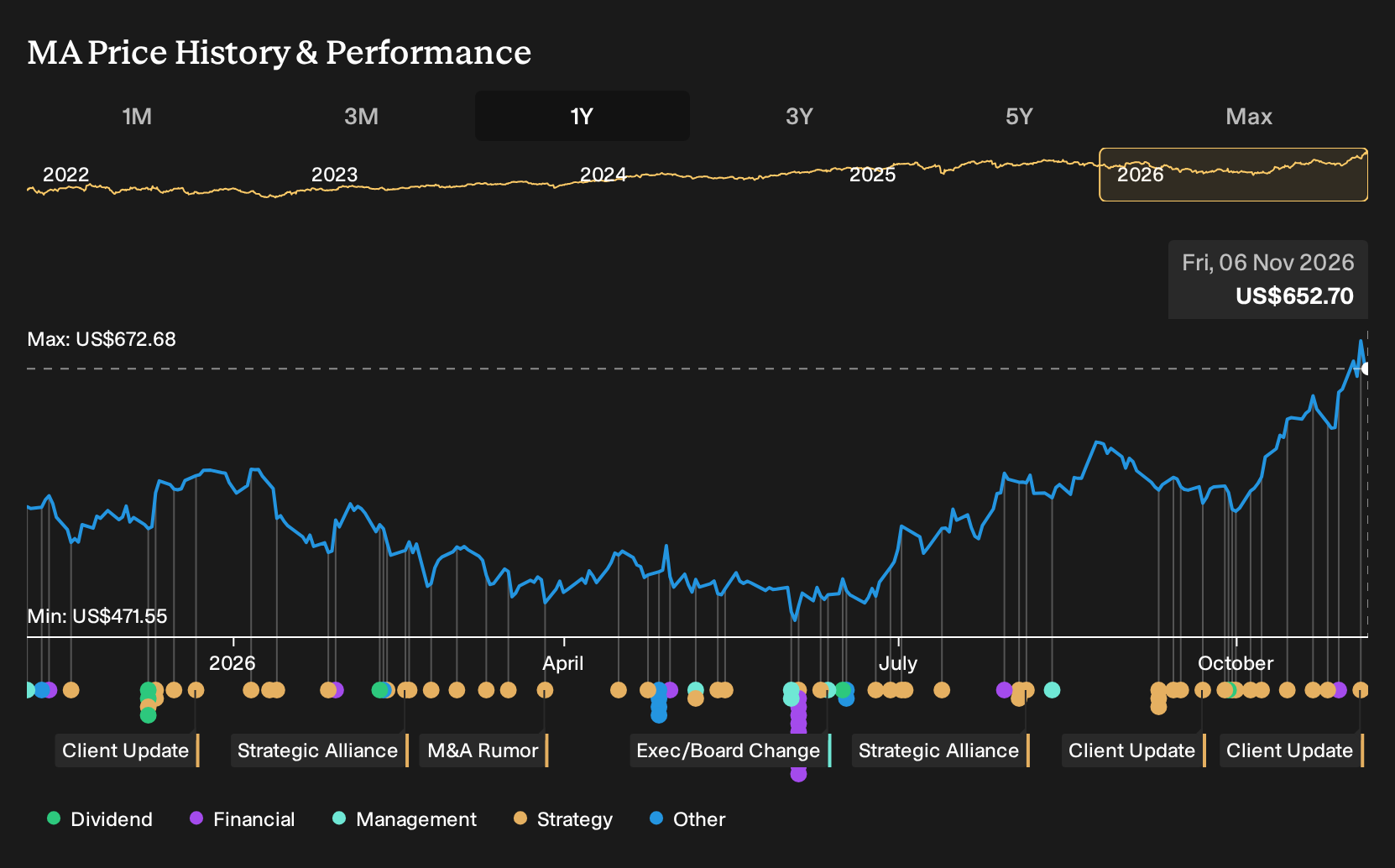
Mastercard positions itself as a global payment technology provider, handling transaction processing and related services for banks, merchants and consumers across multiple regions. This means any change in US credit card rules can ripple through how its network operates and how partners use its rails.
See which insiders are buying and selling Mastercard following this latest news.
What Hamilton’s win really tests in the Mastercard Narrative
The investment story for Mastercard hinges on whether its toll-like card network and growing service lines can keep earning strong fees even as regulators and new rails question how those fees are set. A fresh voice in the Senate scrutinising credit card rules feeds directly into that Narrative.
These offerings already represent a significant share of revenue and are being extended through products that help issuers and merchants reduce fraud across many countries...
See how the full story points towards a $687 fair value for Mastercard.
Hamilton’s victory does not rewrite Mastercard’s investment case, yet it sharpens the long-running risk that card fees and routing rules draw tougher scrutiny in Washington. For a business whose Narrative leans on fee-based income and service growth, any renewed debate over the Credit Card Competition Act challenges the assumption that economics on US credit spend remain stable.
At the same time, the Narrative’s emphasis on value-added services, tokenization and agentic commerce gives Mastercard more levers than pure interchange, something Visa shares but many smaller processors lack. Analysts have already flagged legal and regulatory actions as key risks, so this outcome looks less like a surprise shock and more like one more data point to weigh against that existing concern.
News like this only turns into a real investment decision when you set it against a clear Narrative about how Mastercard actually earns its money and where that story could break.
The Mastercard question headlines skip: who is actually steering this machine, and what are they rewarded for?
News usually stops at products and regulation, yet Mastercard also has a board, senior executives and pay plans shaping every choice you see. See who is actually steering Mastercard, and how they are paid.
Have feedback on this article? Concerned about the content? Get in touch with us directly. Alternatively, email editorial-team@simplywallst.com