


EN
3 U.S. Consumer Discretionary Stocks Tied To Strong Jobs Data And Consumer Spending
Fresh jobs data has put US consumers back in the spotlight, with a strong October hiring print, low jobless claims and wages roughly keeping pace with 3.1% inflation. A pay cheque that stretches a bit further can ripple quickly into discretionary spending, which is where investors start to lean in or step back. This article walks through three stocks exposed to that story and how the latest numbers might matter for each.
The three stocks below are just a sample pulled from this theme, and the full screen surfaced 26 more U.S. consumer discretionary companies with equally compelling stories that are not covered here. To go straight to the full list and start to analyze, compare and identify potential higher conviction ideas for your watchlist, use the U.S. Consumer Discretionary Stocks screener.
J.Jill (JILL)
J.Jill plugs directly into the U.S. Consumer Discretionary Stocks theme because it sells fashion that depends on shoppers feeling secure in their pay cheques and willing to refresh wardrobes. This makes its current customer mix and pricing power especially important to watch.
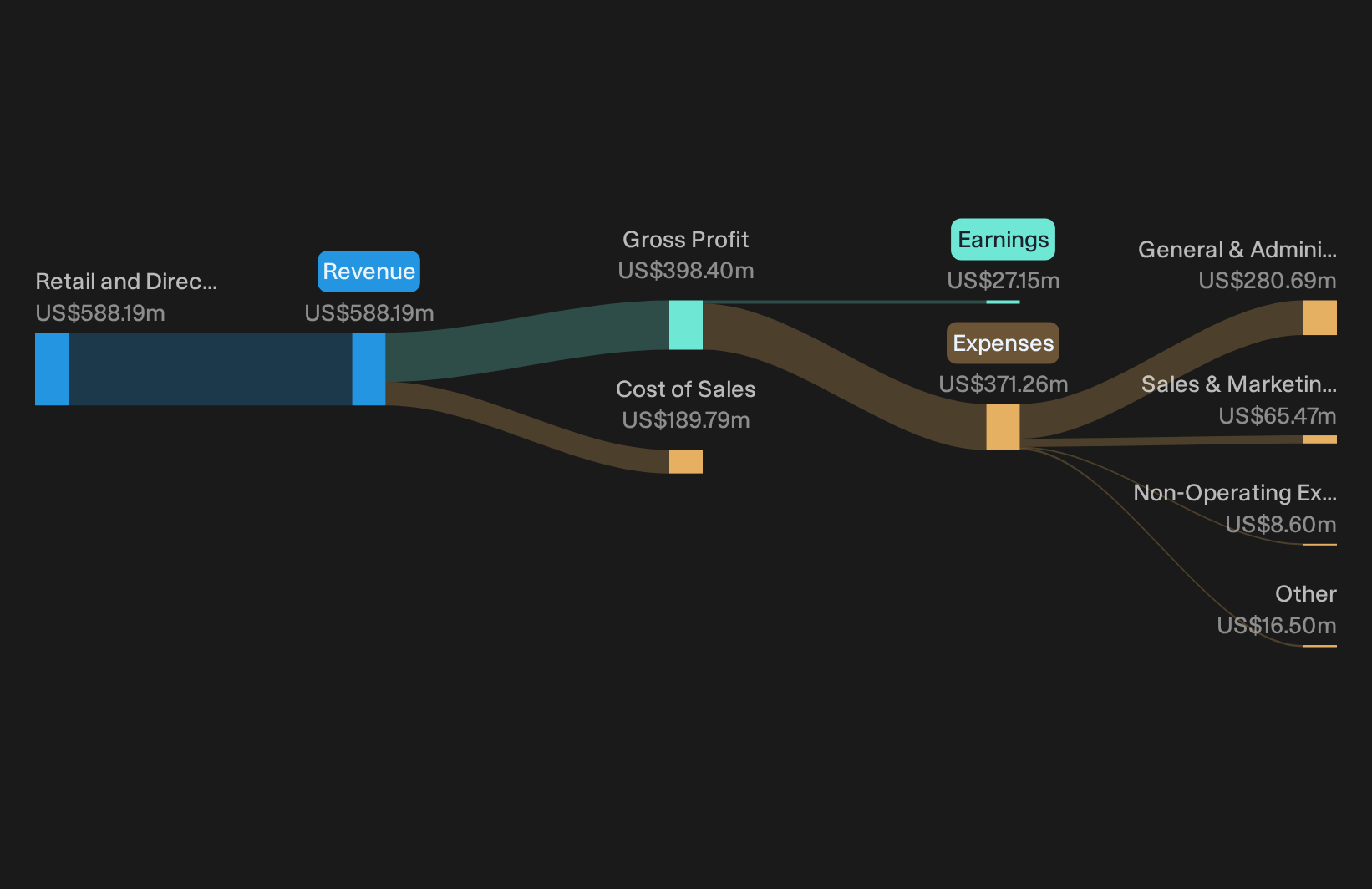
J.Jill is an omnichannel U.S. womenswear retailer that sells apparel, footwear and accessories across stores, ecommerce and catalogs. It generates about US$588 million from its retail and direct channels, and the stock carries a market value of roughly US$342 million.
"Although J.Jill is seeing younger, higher spending new customers come into the file, the continued price sensitivity in the direct channel and the 8% decline in Q1 2026 direct sales raise the risk that more colorful, print driven assortments and expanded categories fail to hold these customers at full price."
What happens to earnings will hinge on how one quiet shift in the cost and promotional mix feeds through to future pricing power.
If that pricing balance is what you care about, the full narrative for J.Jill explains how those pressures and opportunities could reshape J.Jill’s next chapter.
Haverty Furniture Companies (HVT)
Haverty Furniture Companies plugs into this consumer discretionary theme as a pure play on big-ticket home purchases, where your willingness to upgrade a sofa or mattress usually tracks how secure you feel in your job and pay packet.
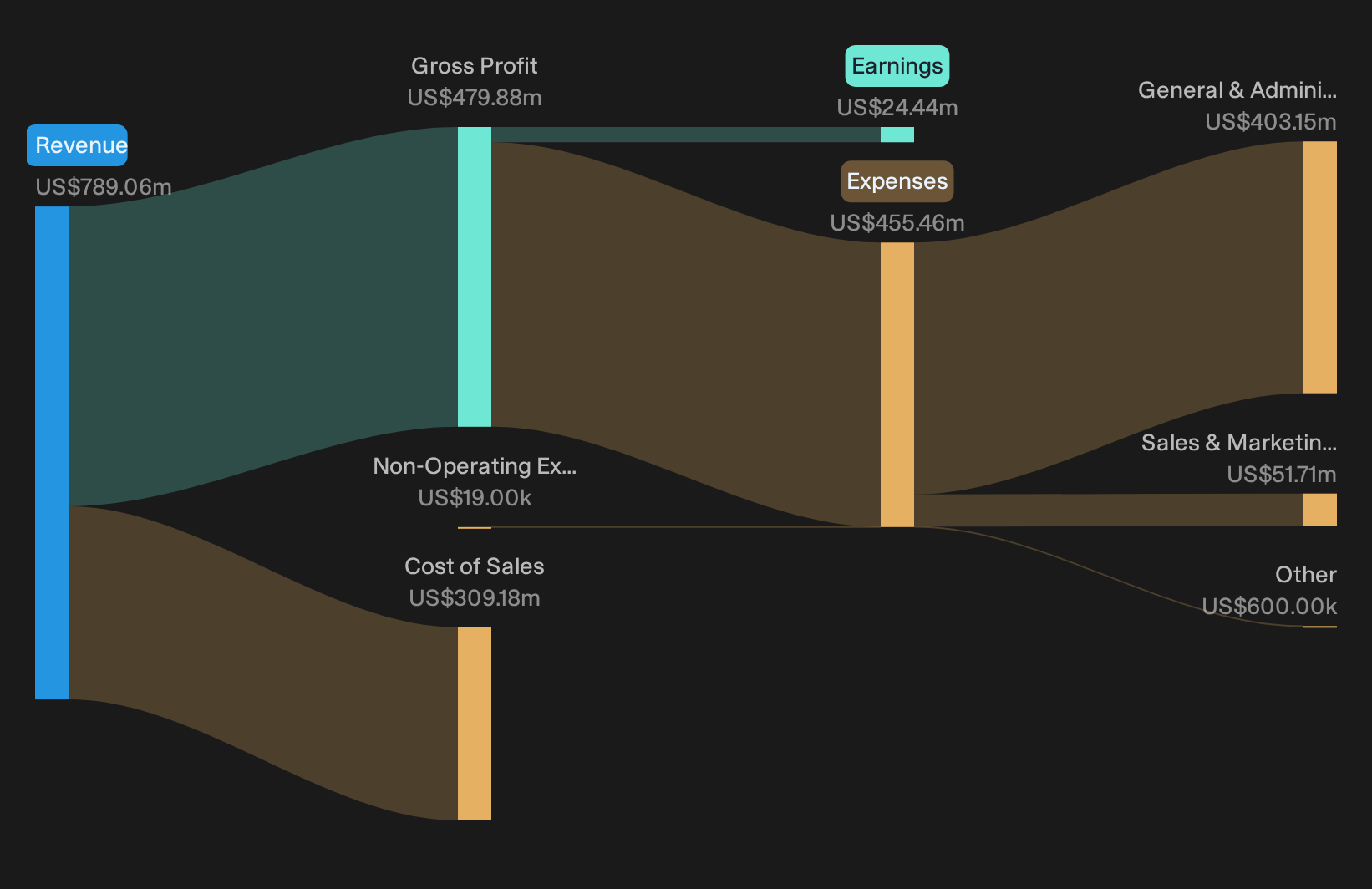
Haverty Furniture Companies is a long established U.S. retailer selling Havertys branded residential furniture, custom upholstery and well known mattress labels through its stores and website, with a market value of about US$408 million.
"Rising penetration of Haverty Furniture Companies design and custom special-order business, with design already accounting for over one third of sales and carrying an average ticket above US$8,800, can continue to shift mix toward higher ticket transactions and support revenue and earnings growth."
What really matters now is how one less visible cost pressure interacts with that richer sales mix and shapes where margins settle.
That margin outcome is the real hinge, and the full narrative for Haverty Furniture Companies explains how Haverty Furniture Companies could convert richer ticket sizes into an earnings story with overlooked risks and catalysts, as well as areas where growth may accelerate.
Shoe Station Group (SHOE)
Shoe Station Group plugs neatly into this consumer discretionary theme because once footwear moves beyond basic replacement, spending tends to track job confidence and pay trends, which puts its focus on U.S. shoppers and product mix squarely in the spotlight right now.
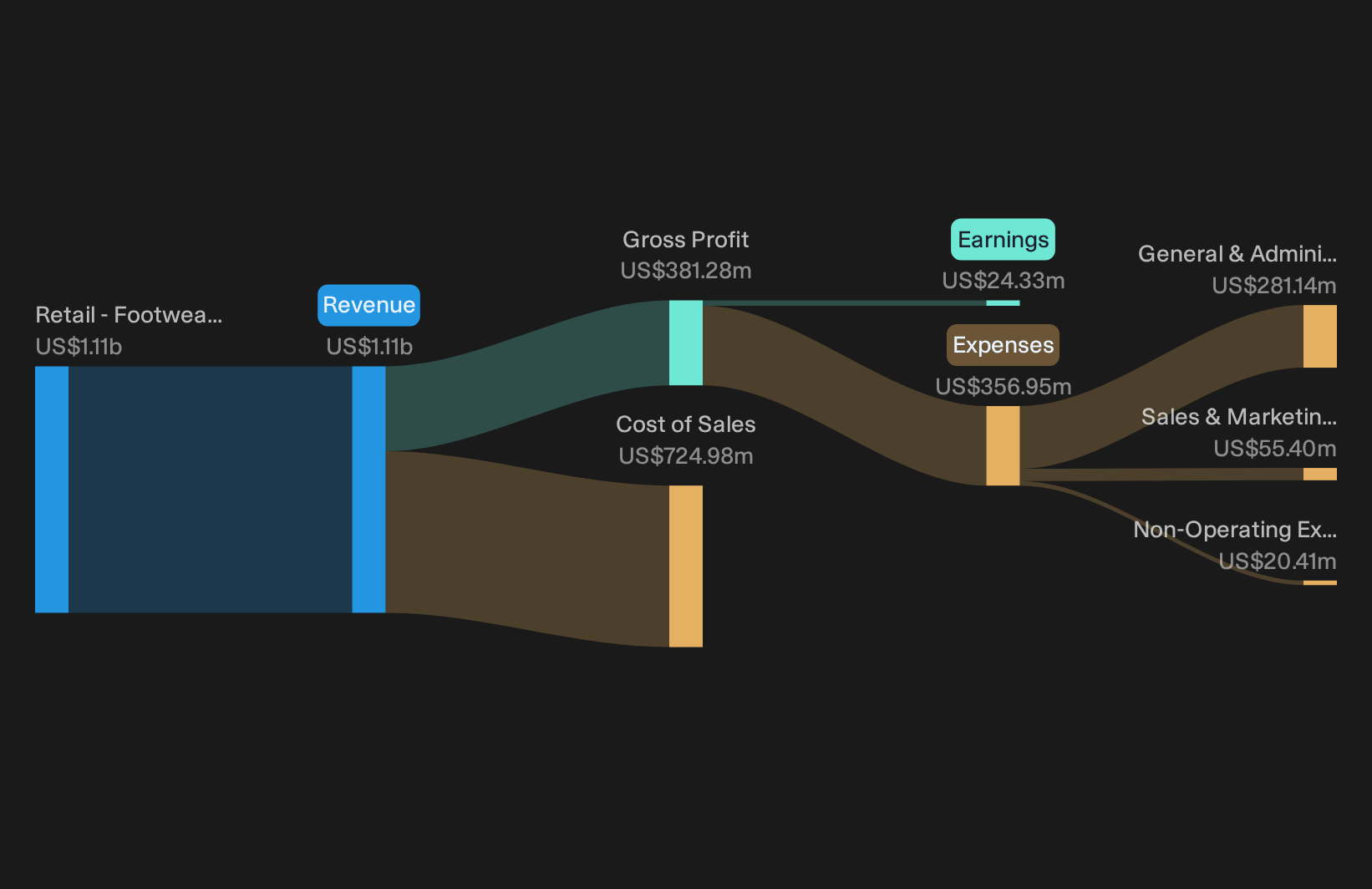
Shoe Station Group Inc. is a U.S. footwear retailer selling shoes, sneakers, heels, sandals, boots, work and safety footwear, and accessories for men, women and kids across stores, online and a mobile app, generating about US$1.1b from retail footwear with a market value near US$413 million.
"By accepting lower merchandise margins in the short term, Shoe Station is targeting a $50 million reduction in inventory by year end."
What happens to profitability will depend on how one quiet shift in customer behavior and pricing power plays through those leaner shelves.
That turning point on leaner shelves is exactly where the full narrative for Shoe Station Group shows whether Shoe Station Group is quietly compressing risk or setting up an accelerating recovery.
Seeking Alternatives Before The Crowd?
Fresh breakout ideas rarely stay quiet for long. Momentum shifts, stories get picked over, and the best entries are gone. Use these under the radar lists while it matters and get in early.
- Spot resilient operators that keep compounding while others stall by scanning the 29 resilient stocks with low risk scores curated specifically to highlight durable balance sheets and steadier earnings profiles.
- Review the 8 dividend fortresses to find companies that combine higher yields with fundamentals that support ongoing distributions.
- Explore long term tech infrastructure themes by checking the 52 AI infrastructure stocks which focuses on businesses supplying the hardware and pipelines behind AI growth.
Have feedback on this article? Concerned about the content? Get in touch with us directly. Alternatively, email editorial-team@simplywallst.com