


EN
Will Earnings Beat Change Aflac Stock Narrative
- Aflac reported third quarter 2026 net income of US$303 million with US$2.43 in adjusted EPS, raised its Japan pretax profit margin outlook to a range of 35% to 38%, and completed a reinsurance deal expected to release roughly US$1 billion of capital over time.
- The company paired better than expected earnings with a 44-year streak of dividend increases and continued capital returns, while also outlining leadership changes in Japan and the U.S. that aim to keep execution on track in its largest profit engines.
- We will explore how Aflac's upgraded Japan profit margin guidance shapes the existing investment narrative around capital efficiency and earnings quality.
Scan how Aflac's earnings beat, dividend streak and capital moves compare with other insurers by reviewing a curated group of 32 resilient stocks with low risk scores.
Aflac Investment Narrative Recap
To own Aflac, you need to believe the Japan and U.S. operations can keep generating solid underwriting and investment results even if premium growth is patchy. The big short term swing factor is whether higher profit margins in Japan and strong U.S. earnings can offset weaker reported net income this quarter and ongoing pressure on certain product lines.
The biggest watchpoint remains Japan, where prior commentary highlighted softer third sector volumes, higher benefit ratios and fallout from a cyber incident. The latest quarter shows capital and margins holding up, so the near term story looks more about execution on reinsurance, pricing and product mix than a change in fundamental risk.
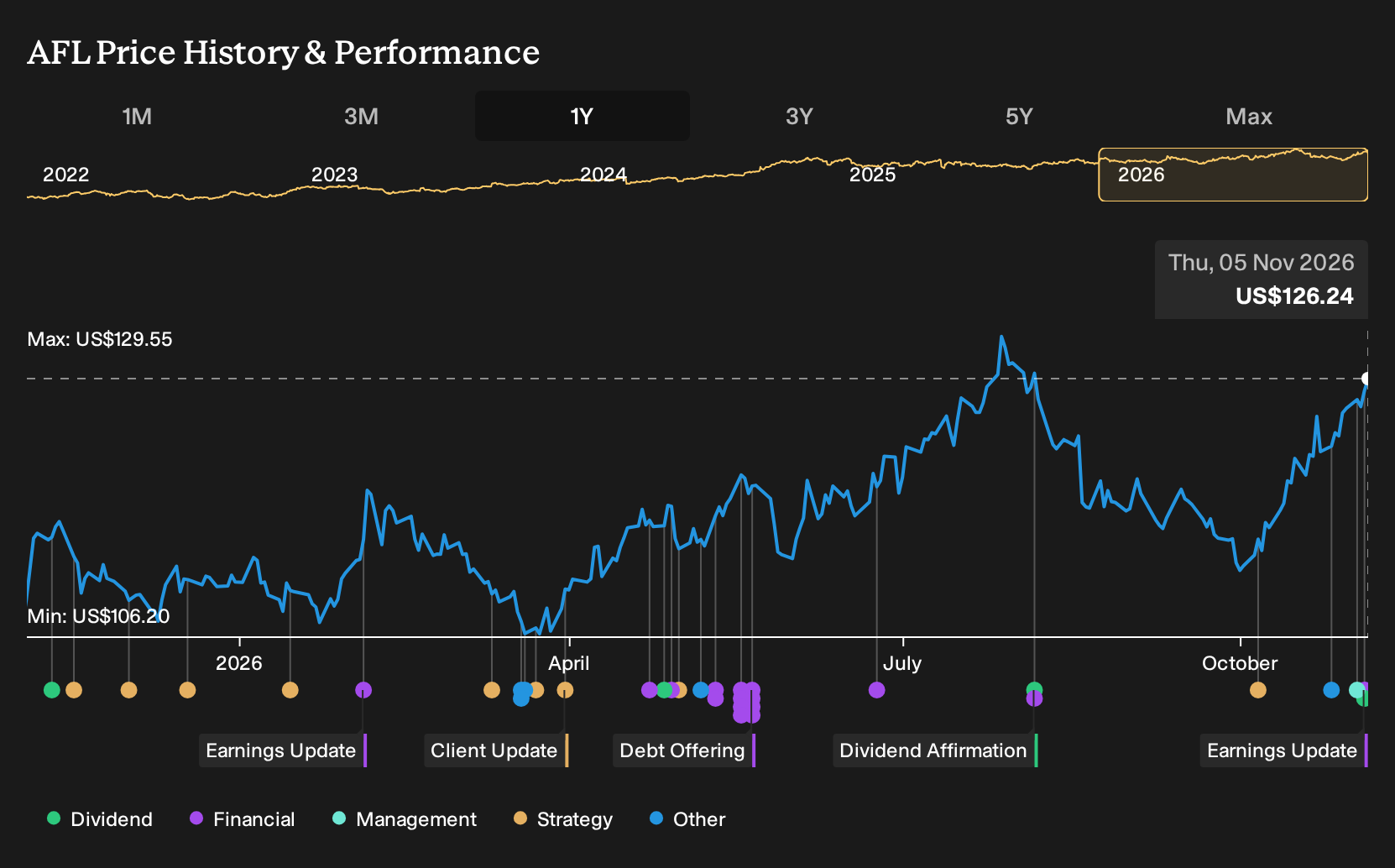
The most relevant update for this story is Aflac’s third quarter 2026 earnings release. Management reported US$303 million of net income for the quarter and US$2,147 million for the first nine months, with earnings per share from continuing operations broadly similar to a year ago over that nine month period.
That set of numbers matters for your thesis because it tests whether capital actions and product shifts are feeding through to the income statement. The board’s decision to declare a US$0.61 quarterly dividend, alongside leadership changes planned for Japan and the U.S., keeps attention firmly on execution, capital efficiency and how resilient those cash flows stay if benefit ratios or premiums worsen again.
Aflac's current revenue profile is modeled to decline by 1.2% each year, with analysts expecting earnings to move from US$4.9b today to US$3.6b by 2029. This implies a US$1.3b earnings decrease over that period and ties into forecasts for US$17.4b of revenue and US$3.6b of earnings in 2029.
Uncover why Aflac's fair value indicates a 6% potential downside to its current price, which leaves little room for error.
Exploring Other Perspectives
The Simply Wall St Community currently includes 2 Aflac fair value estimates that range from about US$118.53 to US$173.05 per share, so retail opinions already span a wide gap. When you set that against falling earned premiums in Japan and benefit ratios near the top of guidance, you can see why views differ sharply. Explore those alternative takes before leaning on any single narrative.
Explore another Aflac fair value estimate, including one that suggests there could be as much as 37% upside from the current price.
Decide For Yourself
Don't just follow the ticker. Dig into the data and build a conviction that's truly your own.
- A great starting point for your Aflac research is our analysis highlighting 2 key rewards and 1 important warning sign that could impact your investment decision.
- See our latest analysis for Aflac. The report includes a comprehensive fundamental analysis summarized in a single visual, the Snowflake, making it easy to evaluate Aflac's overall financial health at a glance.
Looking for more Aflac-sized investment ideas?
Once you have a view on Aflac, it can help to line it up against a broader watchlist so you see how its risk, income and balance sheet profile stacks up.
- If capital preservation is your priority, start with a curated group of resilient businesses in the 32 resilient stocks with low risk scores and see how their risk scores compare.
- For investors hunting for quality at a reasonable entry point, scan a 42 high quality undervalued stocks that combine stronger fundamentals with more conservative pricing.
- If reliable income matters most, focus on potential cash generators through a 6 dividend fortresses that currently clear a 5% yield hurdle.
Have feedback on this article? Concerned about the content? Get in touch with us directly. Alternatively, email editorial-team@simplywallst.com