


EN
Indian Bank Stocks Worth Watching As Rising Rates Reshape Lending Margins
Inflation is heating up again, policy rates look poised for another move, and suddenly the boring world of banking and financials does not look so boring. When the cost of money shifts, some businesses can gain pricing power while others feel the squeeze. This article unpacks three Indian lenders and financiers exposed to that story, helping you decide which ones might deserve a closer look as the rate cycle evolves.
The stocks covered below are just a sample of the idea in action, and the full screen surfaced 14 more Indian banks and financiers with equally compelling rate cycle stories that are not included in this article. If you want to go beyond the short list and actively identify, compare, and analyze which lenders might fit your own playbook, head straight to the Indian Banking and Financials Benefiting from Rising Interest Rates screener.
IDFC First Bank (BSE:539437)
IDFC First Bank is one of the purest ways to play this rising rate theme, because its retail heavy loan book and low cost deposits tend to feel policy moves quickly on both sides of the balance sheet.
IDFC First Bank runs a broad retail led franchise that leans into rising rate cycles, with home, vehicle, personal and SME loans supported by transaction rich digital banking and wealth products across India.
The bank earns most of its income from Retail Banking, with about ₹485,915 million from other retail activities and ₹97,373 million from digital banking, while Corporate and Wholesale Banking contributes roughly ₹124,491 million and Treasury adds about ₹300,102 million, on a base valued at roughly ₹665.7b in market cap.
"The significant repricing and reduction of fixed deposit and funding rates, which has taken the cost of funds from 7.8% in 2019 to about 6.0% in FY26 and 5.96% in Q1 FY27, continues to work through the book and is expected to support higher net interest margins and earnings as older liabilities reprice."
What happens to those economics if one unseen pressure on funding and loan mix shifts faster than deposit growth can keep up?
If that funding mix really does start to shift, you will want the full context from the full narrative for IDFC First Bank, including how management plans to respond.

AU Small Finance Bank (NSEI:AUBANK)
AU Small Finance Bank is built for a rising rate cycle, with a granular lending franchise across retail and commercial customers that tends to reprice quickly when the RBI moves policy rates.
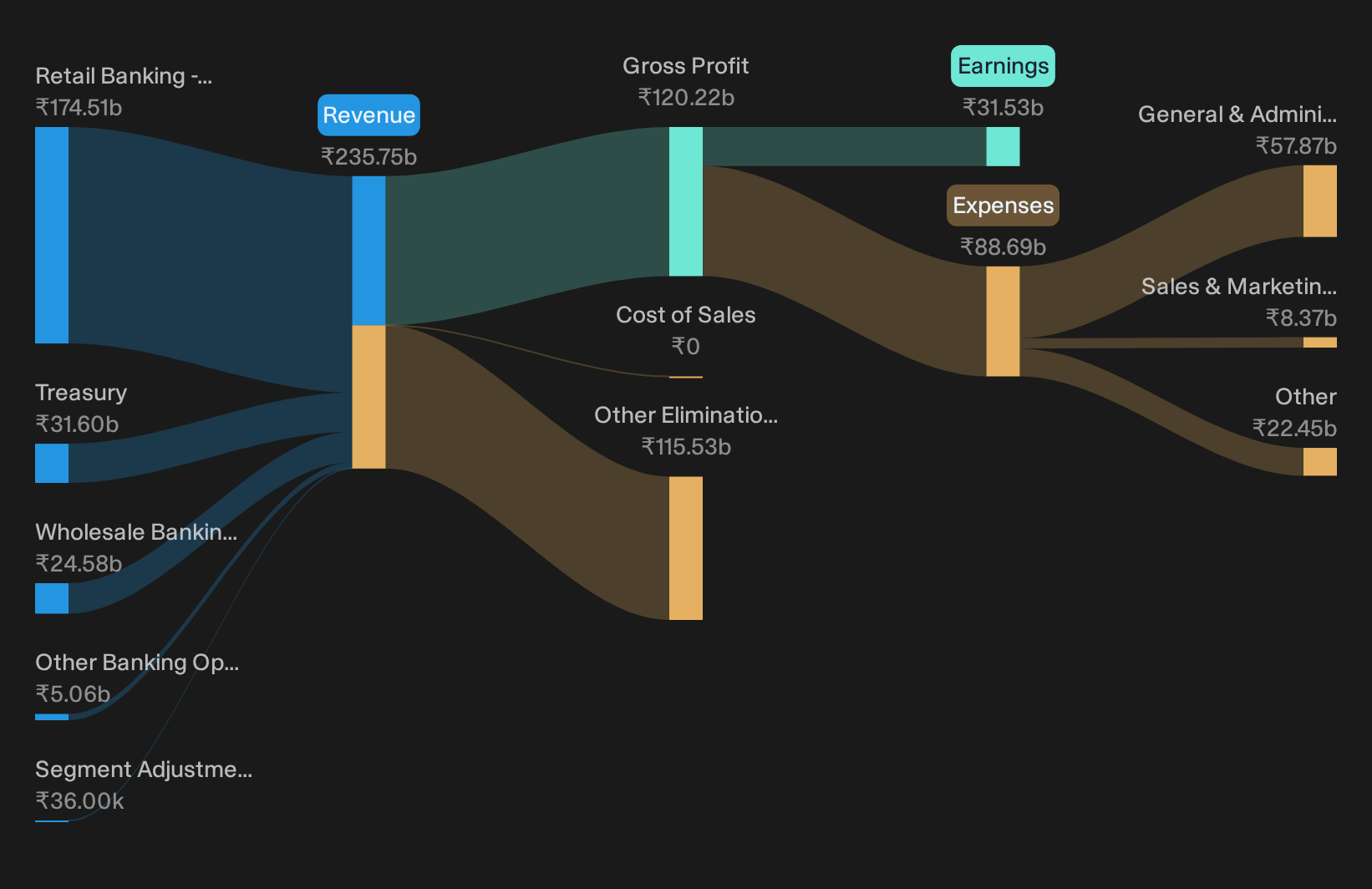
AU Small Finance Bank runs a broad India focused banking model, generating roughly ₹174.5b from other retail banking, ₹31.6b from Treasury, ₹24.6b from Wholesale Banking and ₹5.1b from Other Banking Operations, on a market value of about ₹698.5b.
"The shift to an AI driven operating model, including an enterprise wide AI platform, unified data and workflow systems and AI based underwriting and servicing, is intended to bring cost to assets below 4% in the near term and closer to about 3.5% over 3 to 5 years. This could therefore support net margin and earnings improvement."
The real test comes if one key pressure on its lending mix moves faster than those cost and efficiency gains can keep pace.
As that pressure builds, read the full narrative for AU Small Finance Bank to see how AU Small Finance Bank’s repricing, AI ambition and funding risks really fit together.
Bank of Maharashtra (NSEI:MAHABANK)
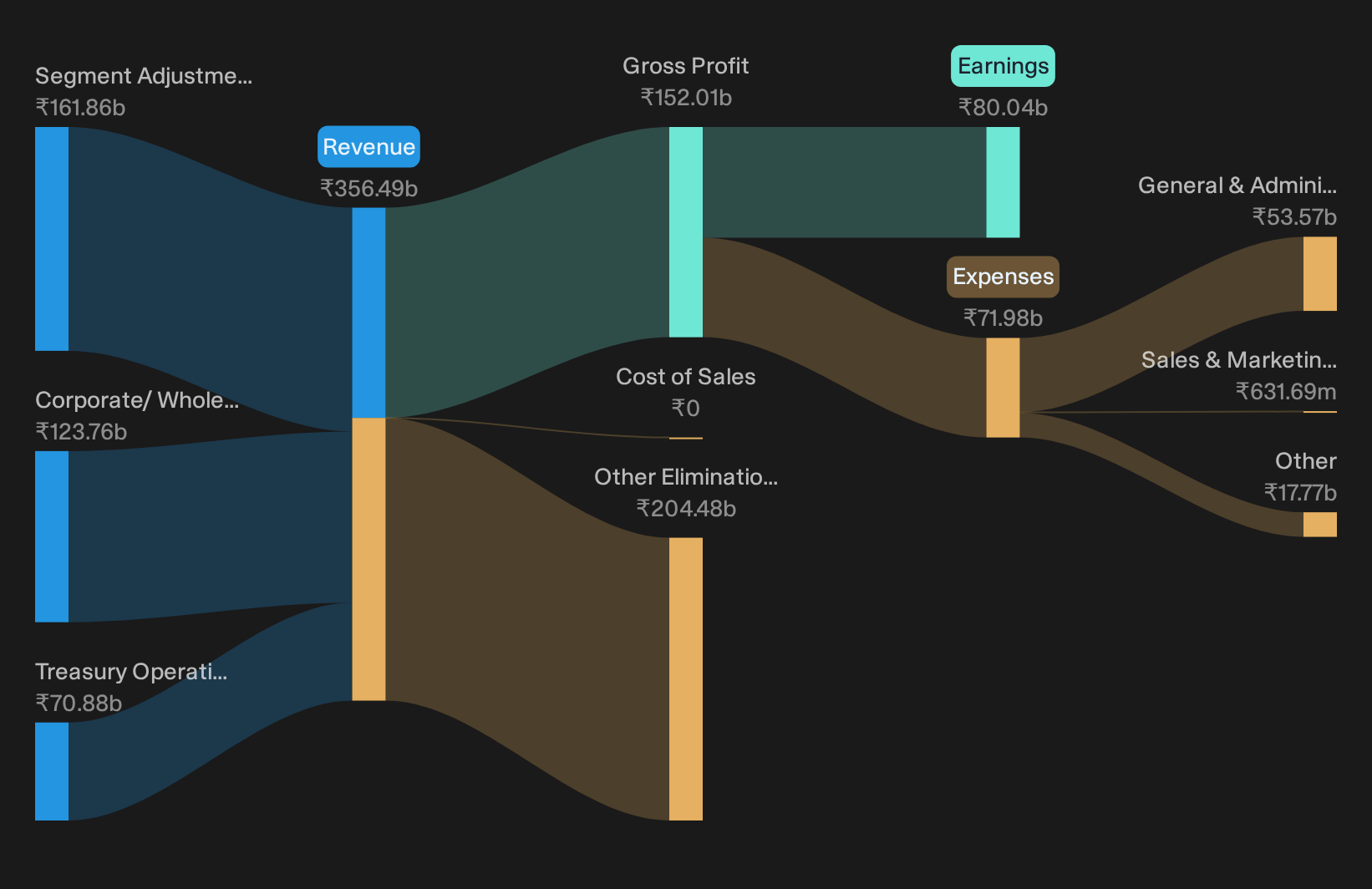
Bank of Maharashtra plugs directly into the rising rates theme as a large public sector lender that leans on traditional spread income, with most revenue tied to Treasury and corporate banking, and a market value of about ₹668.5b underpinning its role in the system.
"The strategy of maintaining a high CASA ratio and consciously avoiding reliance on high-cost bulk deposits helps to structurally lower funding costs even as rates fluctuate, preserving net interest margins and supporting earnings stability."
The real story now is how one quiet shift in its loan and deposit mix could tilt those margins and earnings either way.
That quiet shift is exactly what the full narrative for Bank of Maharashtra unpacks, revealing how funding mix trends, credit risk and profitability pressures could be accelerating or quietly decoupling.
Seeking Alternatives Before The Crowd
Fresh ideas move first, and slow money often gets caught chasing what is already flying. Scan for quiet momentum while it still matters, then act now.
- Spot under-the-radar quality before momentum traders wake up by scanning the 592 high quality undiscovered gems curated from balance sheet strength and durable fundamentals.
- Stack potential compounders into your watchlist by running the 224 high quality undervalued stocks that filters for quality businesses priced below what their financials might justify.
- Explore stronger income ideas while yields remain elevated by reviewing the 232 dividend fortresses built around cash rich payers with sizable distributions.
Have feedback on this article? Concerned about the content? Get in touch with us directly. Alternatively, email editorial-team@simplywallst.com