


EN
How Third Quarter Results At Personalis (PSNL) Have Changed Its Investment Story
- Personalis reported third quarter 2026 revenue of US$25.6 million, compared with US$14.5 million a year earlier, alongside a net loss of US$33.8 million versus US$21.65 million and basic and diluted loss per share of US$0.32 compared with US$0.24.
- Across the first nine months of 2026, Personalis delivered US$63.43 million in sales, compared with US$52.3 million last year, yet the cumulative net loss widened to US$95.52 million, with loss per share from continuing operations at US$0.90 compared with US$0.65.
- We will now look at how Personalis' wider quarterly net loss shapes the investment narrative investors have been using up to now.
Personalis Investment Narrative Recap
To hold Personalis, you need to believe the MRD testing and broader oncology platform can eventually support a business with healthier gross margins and more disciplined cash use. The third quarter result, with US$25.6 million in revenue but a loss of US$33.8 million, keeps the focus on how quickly the cost base can be aligned with that opportunity.
In the near term, the key swing factor is whether rising NeXT Personal volumes and expanding coverage turn into higher quality revenue that narrows losses. The biggest risk is that current cash burn and a widening nine month loss of US$95.52 million extend longer than expected, which can pressure the balance sheet and shareholder dilution.
The most relevant development tied to this update is management’s earlier indication that 2026 cash usage could be around US$100 million and the guided net loss of about US$105 million. The latest quarterly figures, with losses growing faster than sales, sit squarely in that context and keep execution on expense control in sharp focus for Personalis.
For catalysts, investors are still watching adoption of NeXT Personal and the mix shift into MRD focused biopharma work. Analysts expect these factors to support faster revenue expansion. The third quarter outcome does not change those operational levers, but it underlines that progress on reimbursement, margins and any eventual Tempus integration will need to show up clearly in future quarters to ease concern around ongoing operating losses.
What The Long Range Personalis Forecast Implies
On current analyst assumptions, Personalis is modeled to lift revenue by 33.4% a year over the next few years, with earnings moving from a loss of US$107.2 million today to a projected profit of US$26.8 million by 2029. That shift implies an earnings swing of about US$134 million. To align with this view, forecasts point to 2029 revenue of US$165.2 million and use that same year as the anchor for long range estimates.
Uncover why Personalis' fair value is essentially in line with its current price.
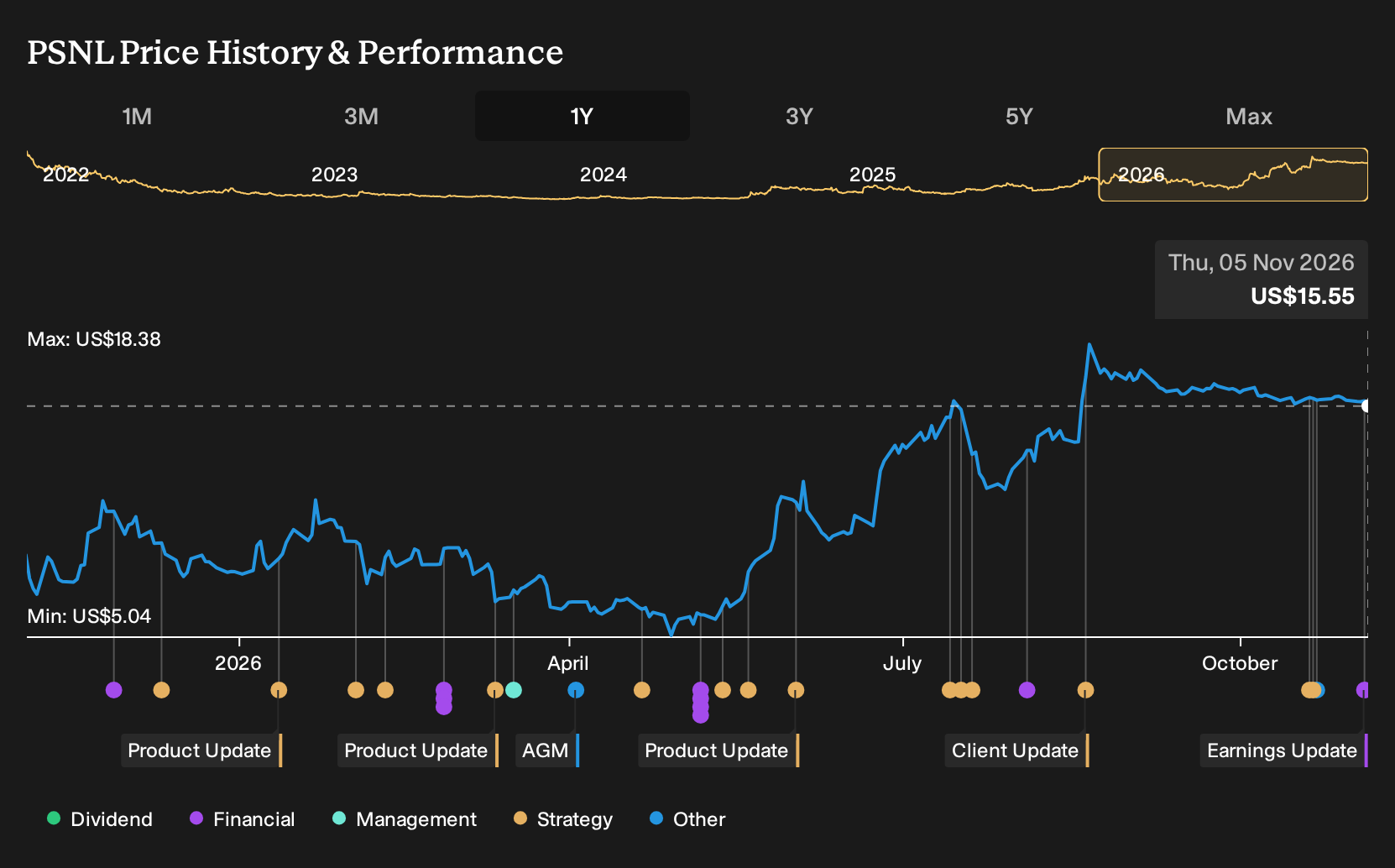
Exploring Other Perspectives
One alternate view around Personalis leans heavily on gross margin pressure rather than MRD volume growth. The most cautious analysts were already baking in 35.0% annual revenue growth to about US$171.2 million and earnings of roughly US$27.3 million by 2029, yet still landed on a lower price target. That gap shows how sharply opinions can diverge, so treat this earnings update as a prompt to compare several narratives before deciding what feels reasonable to you.
Explore another Personalis fair value estimate, including one that suggests it could be worth just $15.17.
Reach Your Own Conclusion
Don't just follow the ticker. Dig into the data and build a conviction that's truly your own.
- A great starting point for your Personalis research is our analysis highlighting 1 key reward and 3 important warning signs that could impact your investment decision.
- See our latest analysis for Personalis. The report includes a comprehensive fundamental analysis summarized in a single visual, the Snowflake, making it easy to evaluate Personalis' overall financial health at a glance.
Looking For More Ideas Beyond Personalis?
If the Personalis story has you thinking about position sizing, cash burn and balance sheet strength, it can help to line it up against other opportunities with different risk profiles. Use the Simply Wall St Screener to compare businesses on the traits that matter most to you instead of relying on a single headline result.
- For investors who want potential mispricings backed by fundamentals, start with a 42 high quality undervalued stocks that may align better with your risk and return expectations.
- If capital preservation and stability sit higher on your list, filter for a 32 resilient stocks with low risk scores and see which companies look steadier than the broader market.
- When you care most about financial resilience through the cycle, focus on a list of solid balance sheet and fundamentals (24 results) that can help you compare leverage, liquidity and overall strength side by side.
Have feedback on this article? Concerned about the content? Get in touch with us directly. Alternatively, email editorial-team@simplywallst.com