


EN
2 Red Flags Supermicro Investors Shouldn’t Ignore After Earnings
Super Micro Computer (SMCI) had an earnings quarter that, at first blush, you may think investors would be celebrating. Revenue nearly quadrupled, earnings easily beat expectations, and management raised its full-year sales forecast. All good things, right?
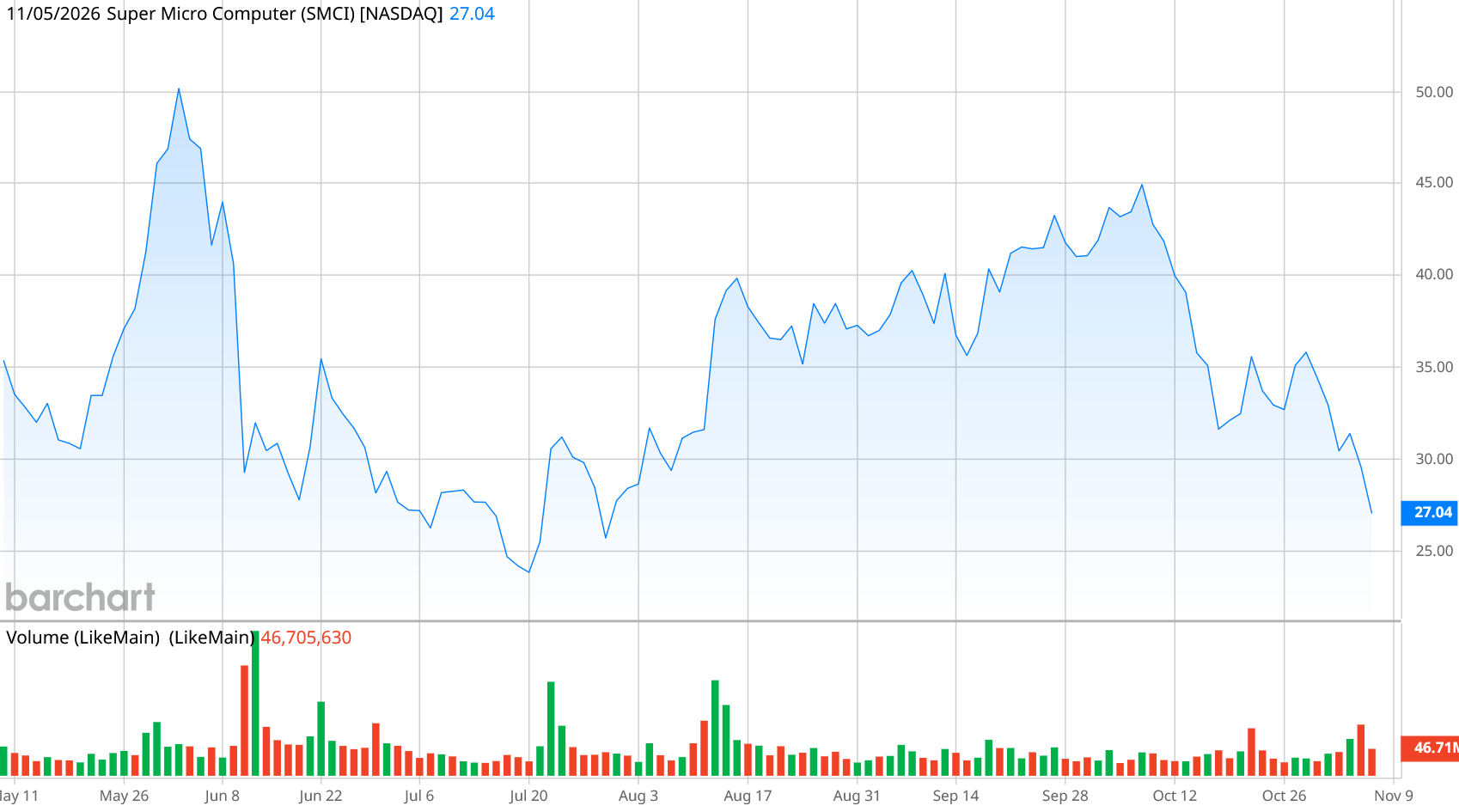
Instead, Supermicro stock ended trading down nearly 4% Wednesday, as investors look beyond the impressive numbers and focus on some troubling developments underneath them.
And I think their skepticism is justified. There’s a shadow over Supermicro stock, and Tuesday’s fiscal first-quarter earnings report did nothing to shake it.
Thursday's broad selloff in chipmakers and AI stocks hasn't been helping SMCI's case either.
Supermicro’s AI Business Is Booming
There's no question that Supermicro is benefiting from the massive investments companies are making in artificial intelligence (AI) infrastructure.
The company manufactures servers and provides integrated data center solutions, including liquid cooling systems. Its products are used to build the facilities that power AI applications, making Supermicro a direct beneficiary of growing demand for computing capacity.
In its fiscal first quarter of 2027, which ended Sept. 30, Supermicro reported revenue of $19.9 billion, up 298% from a year ago. Adjusted earnings reached $1.81 per share, easily beating Wall Street's expectations of $1.24.
AI-related solutions accounted for roughly 71% of quarterly revenue, up from 59% in the previous quarter.
And management expects the momentum to continue. Supermicro raised its fiscal 2027 revenue guidance to between $72 billion and $82 billion, compared with its previous forecast of $65 billion to $72 billion. For the current quarter, it expects revenue of $19.5 billion to $21.5 billion and adjusted earnings of $1.66 to $1.90 per share.
Those are outstanding growth figures. But there's a problem.
More Revenue Isn’t Necessarily Translating Into Better Margins
Supermicro's non-GAAP gross margin fell to 12.8% in the quarter, which is an improvement from 9.5% a year ago, but also is down from 17.6% in the preceding quarter.
That's a big drop, particularly for a company experiencing such extraordinary revenue growth.
Chief Financial Officer Mark Long, who was named to the job less than a month ago, explained that large-scale AI deployments typically carry lower margins than Supermicro's enterprise and channel businesses. As those enormous orders become a larger percentage of revenue, they put pressure on overall profitability.
And the situation may get worse. Management expects gross margins of just 12% to 12.5% in the fiscal second quarter and 11.8% to 12.2% for the full year. That means Supermicro could continue reporting massive revenue increases without generating the corresponding improvement in profitability that investors might expect.
And here’s something else: Management disclosed that approximately $2.3 billion of first-quarter revenue came from deployments originally scheduled for earlier periods. Without that catch-up revenue, quarterly sales would have been $17.6 billion. Bottom line: That’s legitimate revenue, but the timing makes the headline growth figure less relevant for investors trying to decide if Supermicro is gaining momentum.
Customer Concentration Is Another Concern
Perhaps the most troubling disclosure came from Long, who said one large data center customer accounted for 44% of Supermicro's quarterly revenue. That's an extraordinary amount of business tied to a single customer.
Large contracts are attractive when they're flowing in, but they also create substantial risk. A delayed deployment, reduced spending, or decision to switch suppliers could have an outsized effect on Supermicro's results.
And the company is already dealing with considerable working capital demands. Operating activities consumed $434 million in cash during the quarter, despite the company reporting $1.59 billion in GAAP net income. Supermicro finished September with $6.9 billion in cash and equivalents, compared with $8.6 billion in bank debt and convertible notes.
Management says customer prepayments are helping finance its growth, and its cash conversion cycle has improved substantially. That’s great. But it doesn’t eliminate the risks associated with funding enormous hardware deployments while margins remain under pressure.
What Are Analysts Saying About Supermicro?
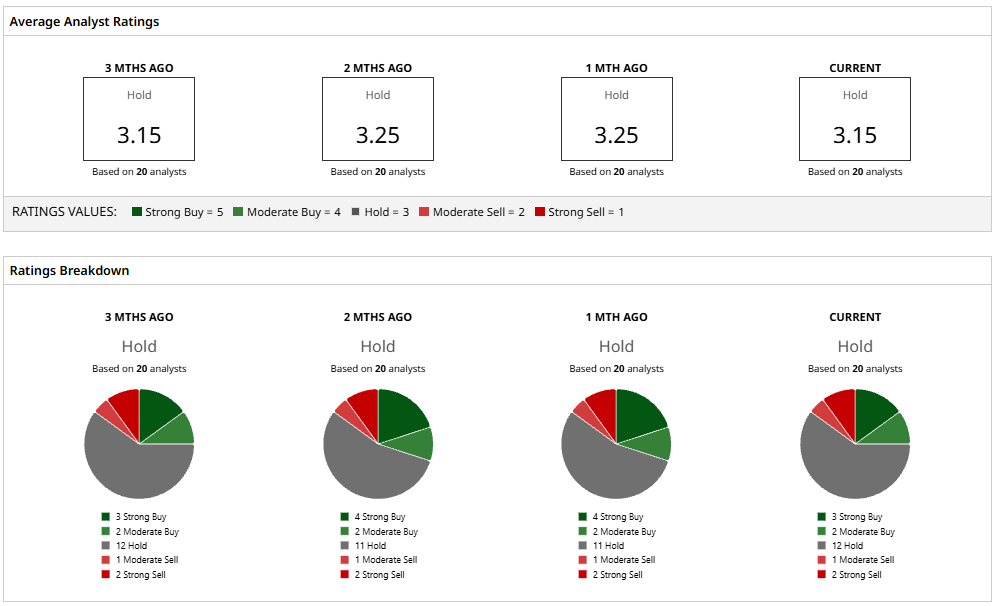
Often, AI infrastructure stocks get a lot of love from Wall Street analysts. Supermicro isn’t one of them—20 analysts who cover the stock have a consensus “Hold” rating. And that really hasn’t changed in recent months. The stock carries a mean price target of $43, which represents a potential upside of 48%.
SMCI stock trades at a relatively low earnings multiple of 6.3 times, which could make the stock appear attractive to bargain hunters.
But a low valuation isn't necessarily a bargain when the business faces significant customer concentration, declining margins, and negative operating cash flow.
I'm bullish on the long-term demand for AI infrastructure. I'm considerably less enthusiastic about Supermicro's ability to turn that demand into consistently attractive returns for shareholders. Until the company demonstrates that its rapid growth can produce healthier margins and sustainable cash flow, I'd rather invest elsewhere.
On the date of publication, Patrick Sanders did not directly have a position in any of the securities mentioned in this article. All information and data in this article is solely for informational purposes. For more information please view the Barchart Disclosure Policy here.