


EN
DraftKings (NASDAQ:DKNG) misses Q3 2026 revenue estimates, stock drops 23%

Fantasy sports and betting company DraftKings (NASDAQ:DKNG) fell short of the market’s revenue expectations in Q3 2026, but revenue rose 16.2% year on year to $1.33 billion. The company’s full-year revenue guidance of $6.45 billion at the midpoint came in 3.1% below analysts’ consensus estimates. Its non-GAAP loss of $0.53 per share was significantly below analysts’ consensus estimates.
For more on DraftKings, read our free full research report.
DraftKings (DKNG) Q3 2026 highlights:
- Revenue $1.33 billion vs S&P analysts’ consensus estimates of $1.39 billion (16.2% year-on-year growth, 4.2% miss)
- Adjusted EPS -$0.53 vs S&P analysts’ consensus estimates of -$0.25 (significant miss)
- Adjusted EBITDA -$316.9 million (-23.8% margin, 151% year-on-year decline)
- Revenue guidance The company lowered its revenue guidance for the full year to $6.45 billion at the midpoint from $6.7 billion, a 3.7% decrease
- EBITDA guidance $225 million at the midpoint for the full year, below analysts’ consensus estimates of $647 million due to "the Company’s increased Adjusted EBITDA investment in Predictions of $650 million to $700 million"
- Operating margin -37.1%, down from -23.8% in the same quarter last year
- Free cash flow -$82.13 million, down from $283 million in the same quarter last year
- Monthly unique payers 4.1 million, up 500,000 year on year
- Market capitalization $11.7 billion
“The third quarter marked a pivotal moment for DraftKings, as the Predictions offering we have been building is now powering meaningful growth for our business,” said Jason Robins, DraftKings’ Chief Executive Officer and Co-founder.
Revenue growth
A company’s long-term revenue performance is one signal of its overall quality. Any business can have short-term success, but a top-tier one grows for years. DraftKings’s revenue grew at a decent 41.1% compounded annual growth rate over the last five years. Its growth was slightly above the average consumer discretionary company and shows its offerings resonate with customers.
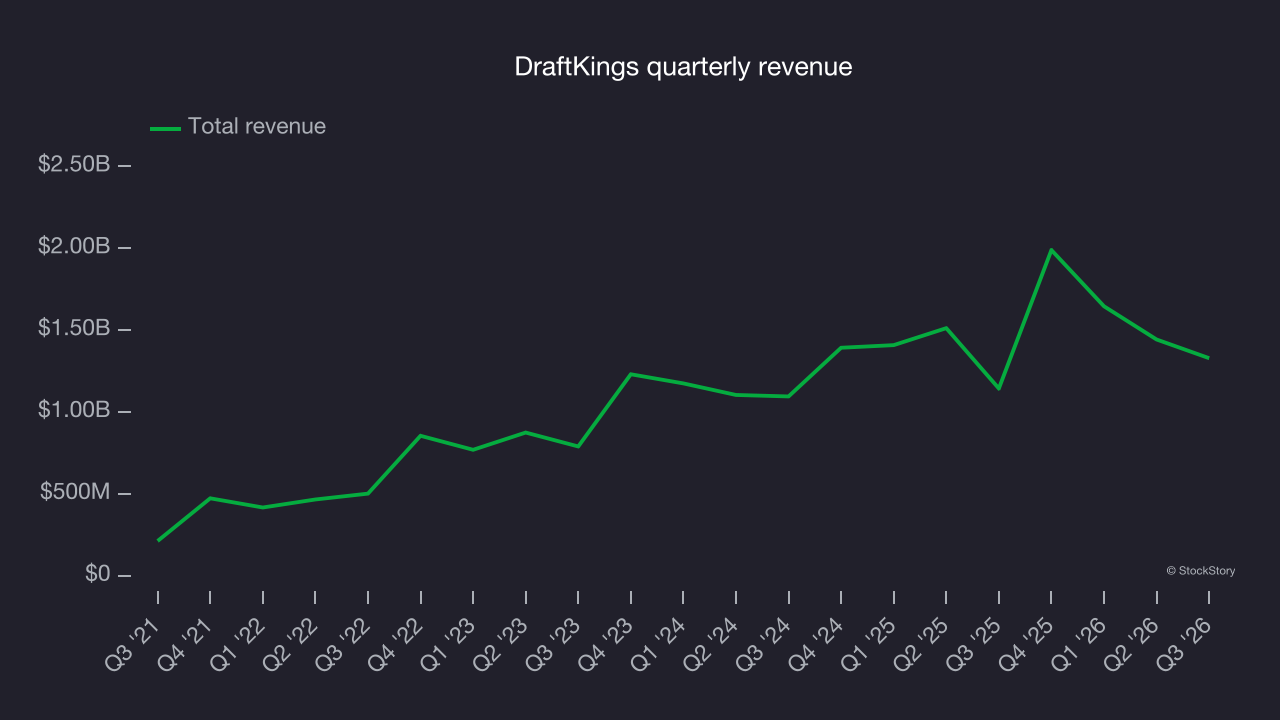
Long-term growth matters most, but within consumer discretionary, a stretched historical view may miss a company riding a successful new product or trend. DraftKings’s recent performance shows its demand has slowed as its annualized revenue growth of 17.9% over the last two years was below its five-year trend. Decelerating revenue growth in the sector warrants caution, as it could signal changing consumer tastes aided by low switching costs.
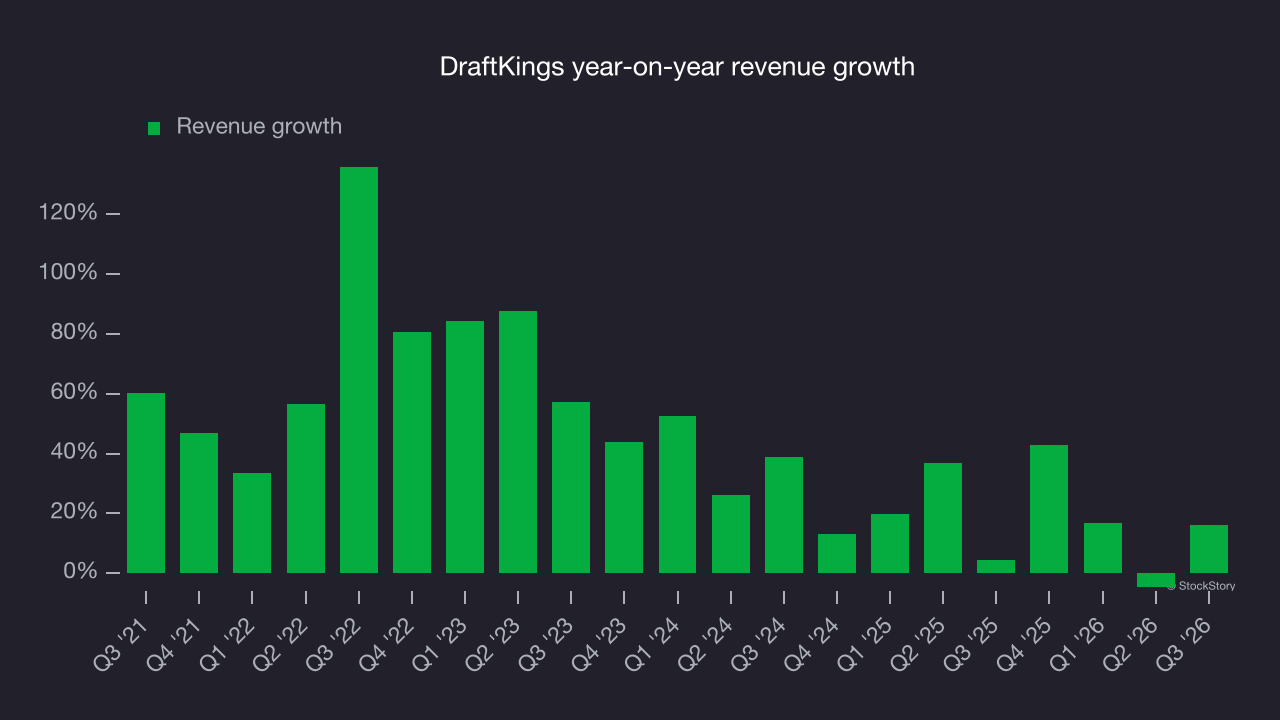
This quarter, DraftKings’s revenue grew by 16.2% year on year to $1.33 billion but fell short of Wall Street’s consensus estimates.
Looking ahead, sell-side analysts expect revenue to grow 14% over the next 12 months, according to S&P, a deceleration versus the last two years. Despite the slowdown, this projection is above the sector average and indicates the market sees some success for its newer products and services.
Operating margin
DraftKings’s operating margin has remained roughly unchanged over the last 12 months, averaging negative 6% over the last two years. Unprofitable consumer discretionary companies that fail to narrow their losses or grow revenue rapidly deserve extra scrutiny. For the time being, it’s unclear if DraftKings’s business model is sustainable.
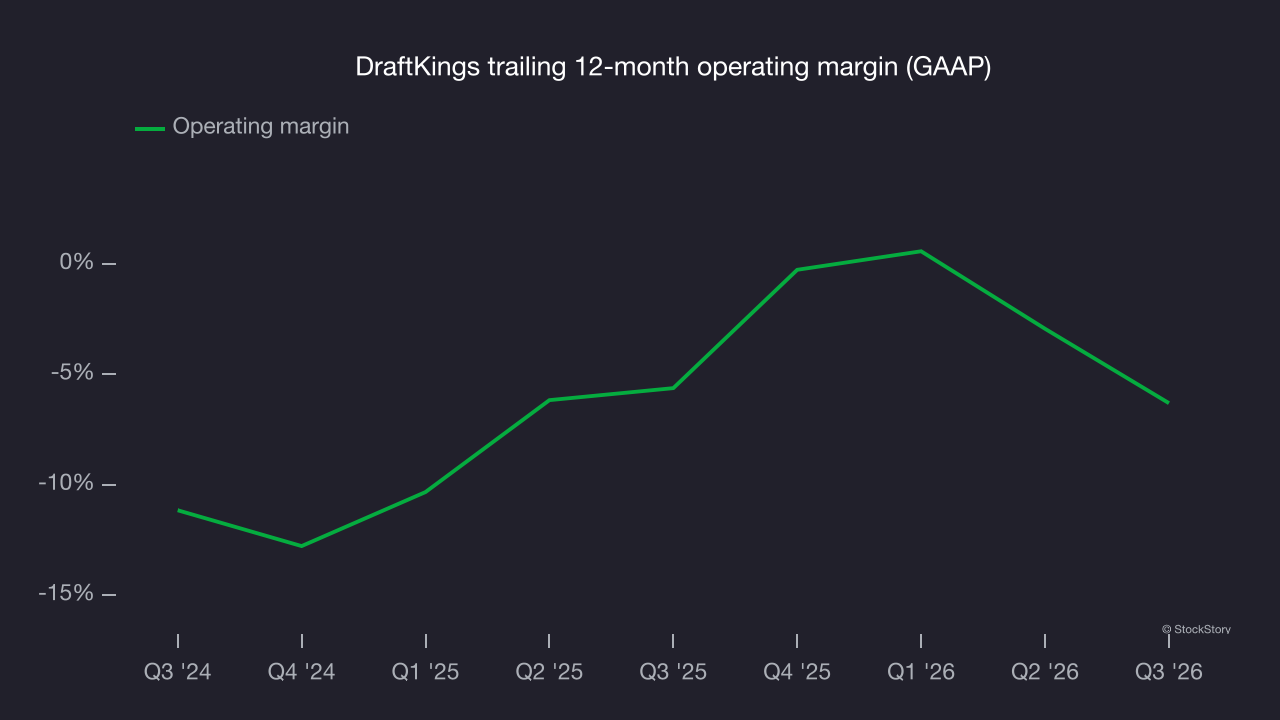
In Q3, DraftKings generated a negative 37.1% operating margin.
Earnings per share
Revenue trends explain a company’s historical growth, but the long-term change in earnings per share (EPS) points to the profitability of that growth – for example, a company could inflate its revenue through excessive spending on advertising and promotions.
DraftKings’s full-year EPS flipped from negative to positive over the last five years. That is a positive sign and marks a critical point in the company’s development.
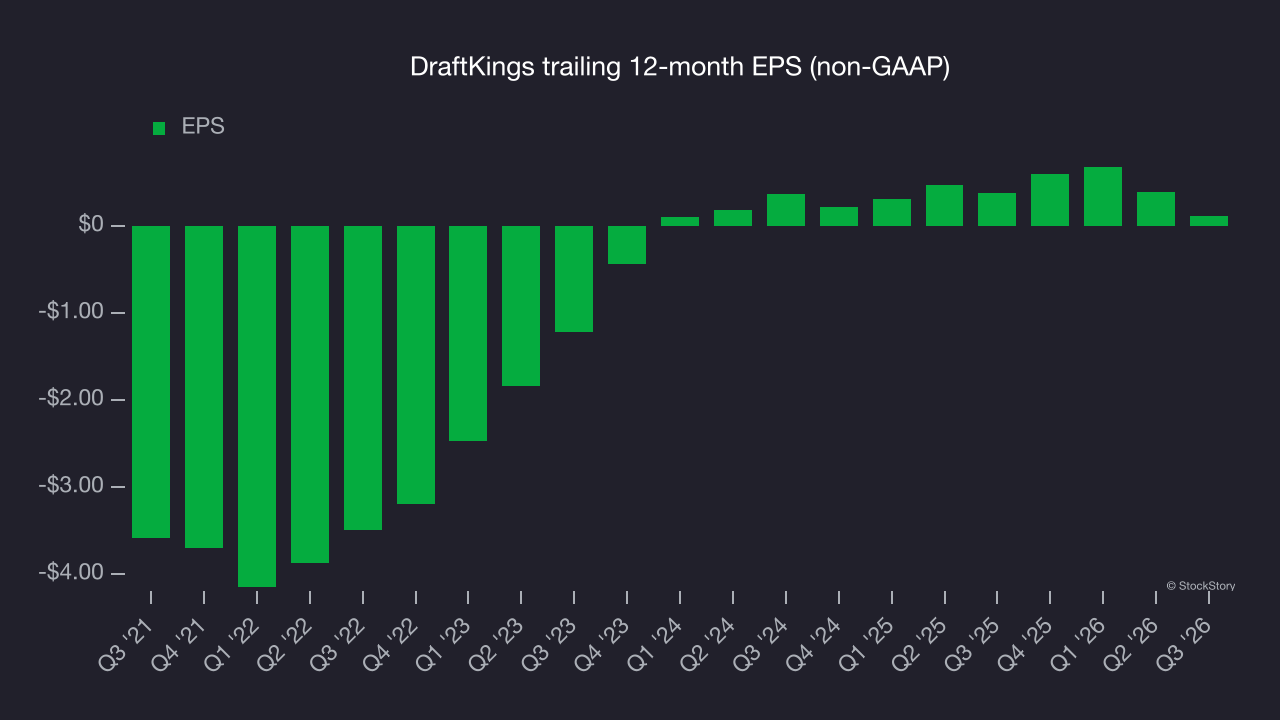
In Q3, DraftKings reported adjusted EPS of negative $0.53, down from negative $0.26 in the same quarter last year. This result missed analysts’ consensus estimates. There is insufficient data to assess expected EPS growth based on Wall Street analysts’ consensus projections.
Key takeaways from DraftKings’s Q3 results
DraftKings delivered a softer quarter with few positives: Full-year revenue guidance missed expectations, and full-year EBITDA guidance also fell short of Wall Street’s consensus estimates. Shares plunged 23% to $18.08 immediately after the report.
DraftKings’s earnings report left more to be desired. A closer look can help determine whether this quarter has created an opportunity to buy the stock. When making that decision, it’s important to consider its valuation and business qualities, as well as what has happened in the latest quarter. For more on those factors, read the full research report here (it’s free).