


EN
Companies Like ReproCELL (TSE:4978) Are In A Position To Invest In Growth
Just because a business does not make any money, does not mean that the stock will go down. For example, biotech and mining exploration companies often lose money for years before finding success with a new treatment or mineral discovery. But while the successes are well known, investors should not ignore the very many unprofitable companies that simply burn through all their cash and collapse.
So should ReproCELL (TSE:4978) shareholders be worried about its cash burn? In this article, we define cash burn as its annual (negative) free cash flow, which is the amount of money a company spends each year to fund its growth. First, we'll determine its cash runway by comparing its cash burn with its cash reserves.
Does ReproCELL Have A Long Cash Runway?
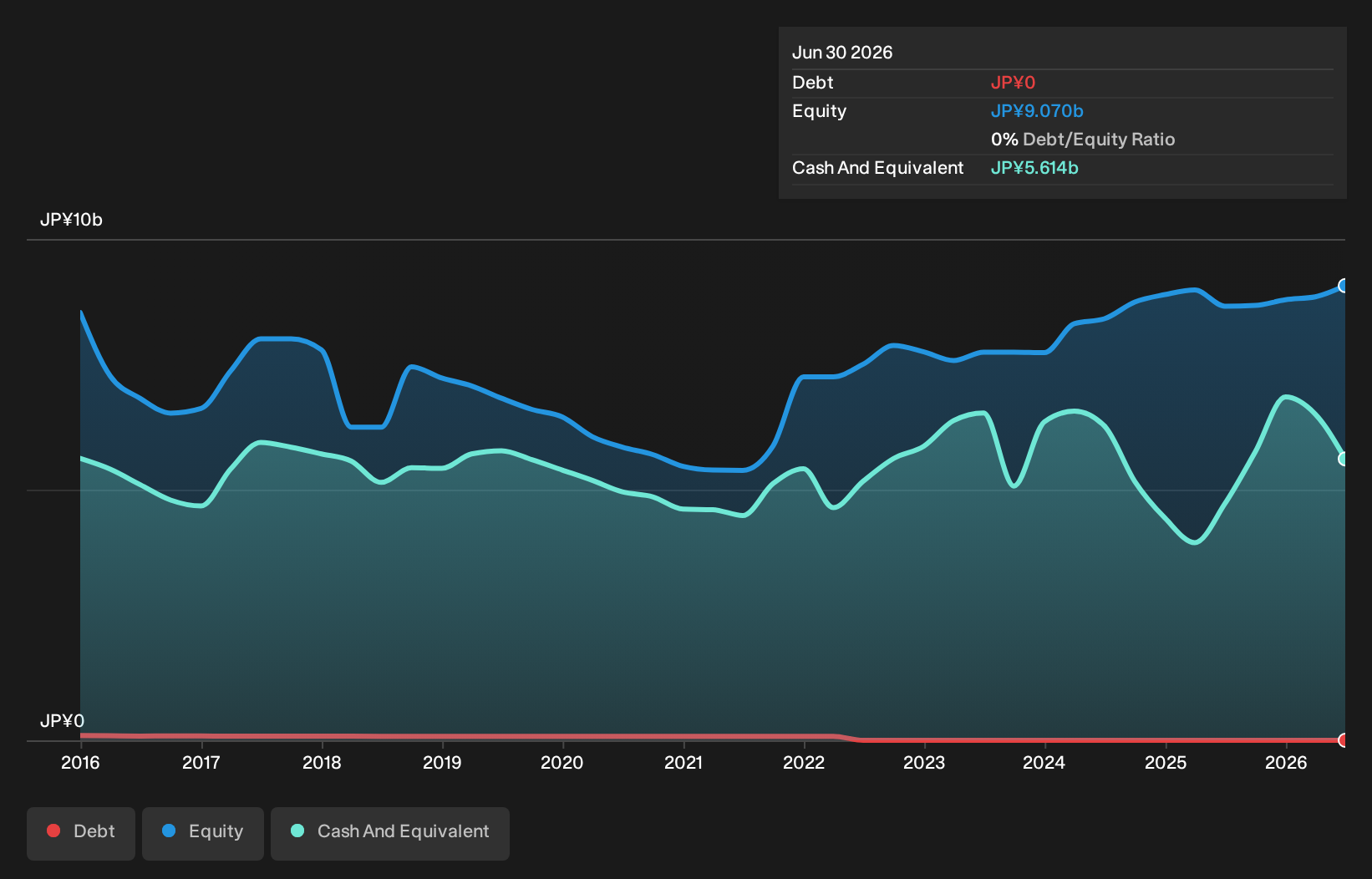
A company's cash runway is the amount of time it would take to burn through its cash reserves at its current cash burn rate. As at June 2026, ReproCELL had cash of JP¥5.6b and no debt. Looking at the last year, the company burnt through JP¥481m. So it had a very long cash runway of many years from June 2026. Even though this is but one measure of the company's cash burn, the thought of such a long cash runway warms our bellies in a comforting way. You can see how its cash balance has changed over time in the image below.
See our latest analysis for ReproCELL
How Well Is ReproCELL Growing?
Notably, ReproCELL actually ramped up its cash burn very hard and fast in the last year, by 135%, signifying heavy investment in the business. As if that's not bad enough, the operating revenue also dropped by 19%, making us very wary indeed. In light of the above-mentioned, we're pretty wary of the trajectory the company seems to be on. In reality, this article only makes a short study of the company's growth data. You can take a look at how ReproCELL has developed its business over time by checking this visualization of its revenue and earnings history.
How Easily Can ReproCELL Raise Cash?
While ReproCELL seems to be in a fairly good position, it's still worth considering how easily it could raise more cash, even just to fuel faster growth. Generally speaking, a listed business can raise new cash through issuing shares or taking on debt. Commonly, a business will sell new shares in itself to raise cash and drive growth. By looking at a company's cash burn relative to its market capitalisation, we gain insight on how much shareholders would be diluted if the company needed to raise enough cash to cover another year's cash burn.
Since it has a market capitalisation of JP¥12b, ReproCELL's JP¥481m in cash burn equates to about 4.0% of its market value. Given that is a rather small percentage, it would probably be really easy for the company to fund another year's growth by issuing some new shares to investors, or even by taking out a loan.
Is ReproCELL's Cash Burn A Worry?
On this analysis of ReproCELL's cash burn, we think its cash runway was reassuring, while its increasing cash burn has us a bit worried. Considering all the factors discussed in this article, we're not overly concerned about the company's cash burn, although we do think shareholders should keep an eye on how it develops. An in-depth examination of risks revealed 2 warning signs for ReproCELL that readers should think about before committing capital to this stock.
Of course, you might find a fantastic investment by looking elsewhere. So take a peek at this free list of companies with significant insider holdings, and this list of stocks growth stocks (according to analyst forecasts)
Have feedback on this article? Concerned about the content? Get in touch with us directly. Alternatively, email editorial-team (at) simplywallst.com.