


EN
The Bet Starbucks Holders Made
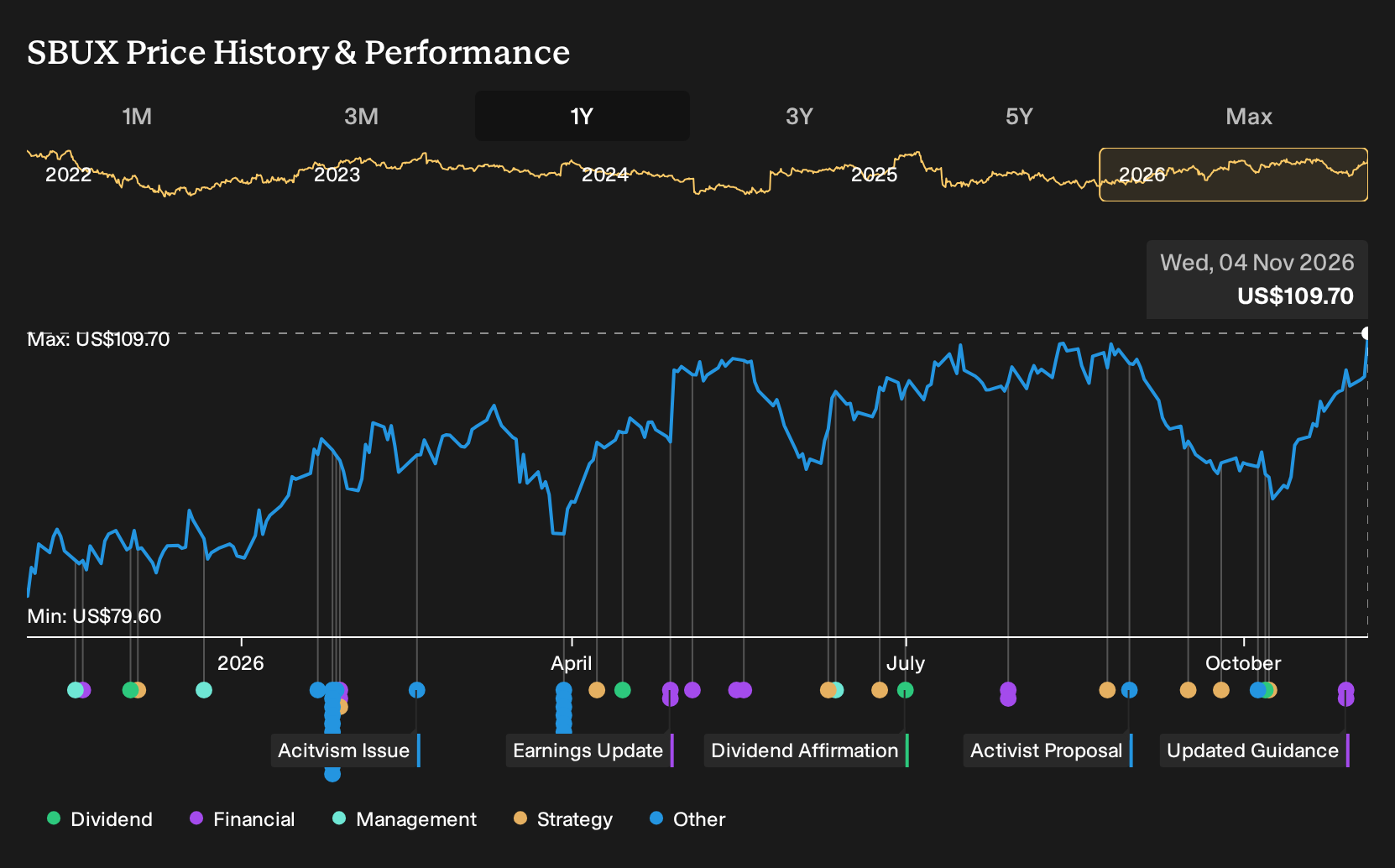
If you had bought Starbucks on 4 November 2025 and simply sat tight, the result might surprise you. Investors who held Starbucks over the past year are up 35.7%, including dividends. That kind of move invites a second look. At the time, analysts were split between a bullish story built on the Back to Starbucks plan and a bearish view focused on rising labor costs and slower growth. Which of those competing forecasts looked more convincing on the record that day?
Narratives are how investors here put a case on the record, with explicit assumptions about revenue, margins and the multiple. Those assumptions imply an estimated Fair Value.
Starbucks has already moved. See which of 35 high quality undervalued stocks still trade below our estimates.
The Two Starbucks Stories Investors Had To Weigh
The shares cost US$79.6 at the start of the period, and anyone looking at Starbucks then had to decide which story felt more credible.
On the upbeat side, analysts put Fair Value at US$98.81, or 24% above the start price. That view leaned on the Back to Starbucks plan, the Green Apron model and an assumption that yearly revenue growth could reach 7.5% with profit margins rising to 10.1%.
The more cautious narrative pointed to a Fair Value of US$69.94, or 12% below the start price. Bears focused on labor cost inflation, union pressure and a 5.5% revenue growth assumption paired with a 9.6% margin.
What The Starbucks Results Actually Tested
Starbucks reported Q4 2026 net income of US$677.2 million on US$9,141.2 million of revenue, compared with US$133.2 million on US$9,569 million a year earlier. Net margin moved from 1.4% to 7.4%, which supported the optimistic view that the Back to Starbucks plan could lift profitability. The cautious case on revenue held up, since sales did not grow.
The hinge assumption here was whether higher spending on staff and store upgrades would eventually show up in earnings. For another retailer, you would check the trend in net margin and absolute profit against past commentary on wage pressure and refurbishment plans before trusting any upbeat story.
What Starbucks Buyers Are Assuming After A 36% Run
Starbucks now trades at US$110, well above the level where the selected Narrative’s Fair Value estimate sits below the market. That view leans on the idea that remodel spending, restructuring charges and store closures could keep pressure on operating profitability even as sales trends look healthy.
The Narrative argues today’s quote already bakes in sustained margin gains and earnings delivery. Anyone paying US$110 is effectively assuming those margin improvements stick, so the key question is how remodel and labor related costs might interact with that expectation.
"The main thing that has to go right is that Starbucks converts its cost savings program, store uplifts, and capital light international structure into sustained operating margin expansion while absorbing the impact of remodel and restructuring charges. The numbers imply the share price already reflects a view that Starbucks is fairly valued on the assumption that recent margin gains, earnings guidance, and higher return growth projects can be maintained over time."
Not everyone reads the same price the same way. → See the lower figure this Narrative lands on, and how it gets there
Looking Beyond Starbucks Cups
Once you have a view on Starbucks, you can look sideways. Coffee routines often sit near travel plans, meetings and restaurant bookings.
Another quiet business appears in that planning moment. It handles your payment when you lock in a future trip or dinner.
Those advance payments can sit on its balance sheet for a while. The cash pile can look generous, even though it is spoken for.
Separating true earnings from customer prepayments can reshape how you see that business. It leaves an unresolved question about how durable those profits really are.
The case is on the record, with the assumptions it rests on. → See the Narrative that values this company 89% above its price
Have feedback on this article? Concerned about the content? Get in touch with us directly. Alternatively, email editorial-team@simplywallst.com