


EN
What Bears Saw Before JK Lakshmi Cement Slid
If you had looked at JK Lakshmi Cement in late 2025 and decided to sit it out, the choice may feel very different today. Holding JK Lakshmi Cement over the past year would have meant a 43.0% loss, including dividends. That result now sits alongside fresh Q1 2027 numbers where revenue was higher but net profit and margin were weaker than Q1 2026. Which early clues, if any, pointed you toward that margin squeeze risk?
Narratives are how investors here put a case on the record, with explicit assumptions about revenue, margins and the multiple. Those assumptions imply an estimated Fair Value.
JK Lakshmi Cement has already moved. See which of 194 high quality undervalued stocks still trade below our estimates.
The Argument You Would Have Been Weighing Up On JK Lakshmi Cement
The shares cost ₹852 at the start of the period, and anyone looking at JK Lakshmi Cement then was choosing between two very different stories about what that price implied.
The bullish narrative put fair value at ₹1,169, anchored in the idea that rapid expansion in Eastern and Northeastern India and a push toward premium cement could support higher revenue and structurally stronger margins.
The bearish view saw fair value at ₹685, built around rising environmental and royalty costs, including royalty rates more than doubling on a Northeast project, as a long term drag on profitability.
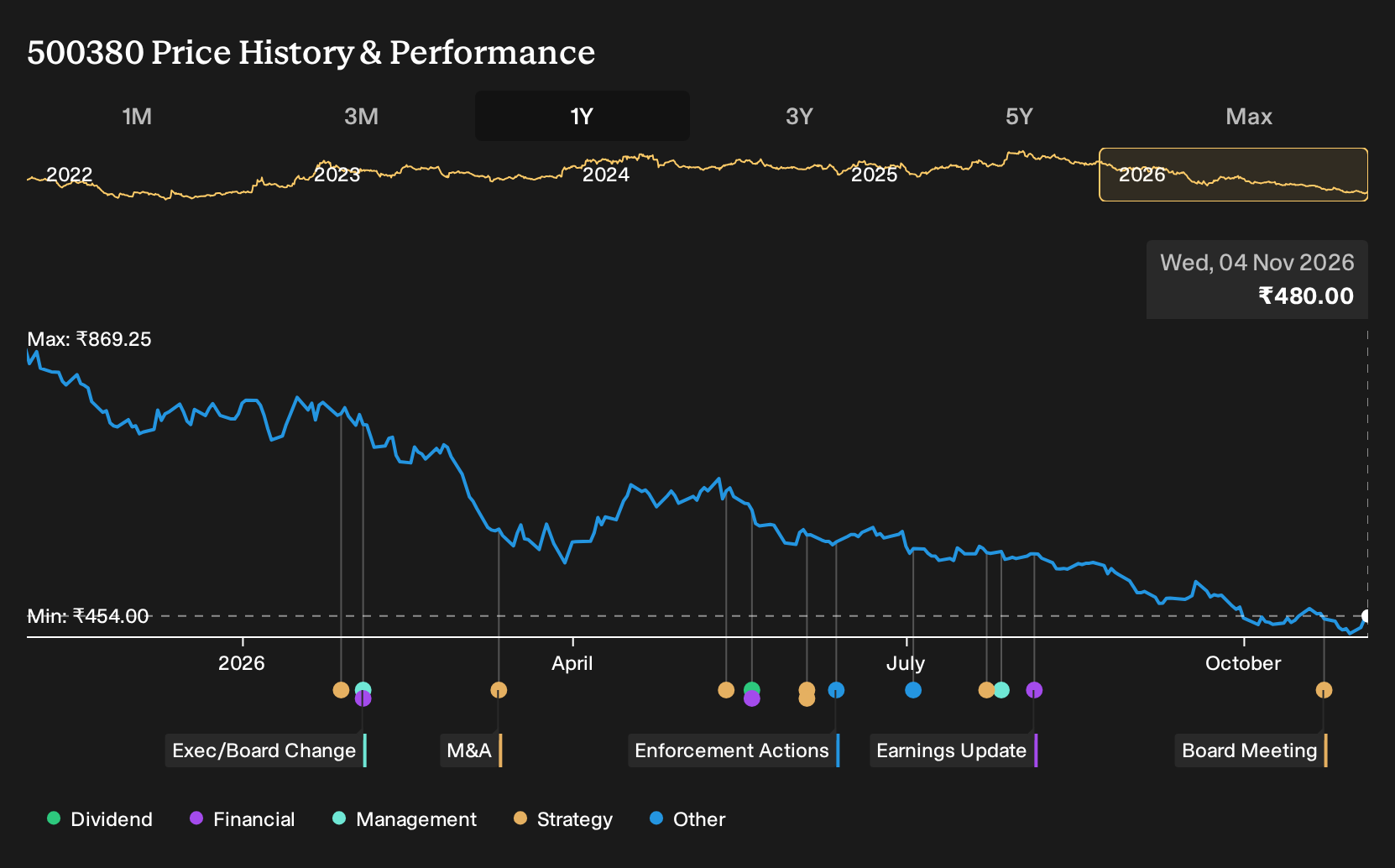
What The Results Changed For JK Lakshmi Cement
The cleanest signal came from the Q1 2027 earnings print. JK Lakshmi Cement posted revenue of ₹19,047.8m against ₹17,409.3m in Q1 2026, but net income slipped to ₹1,080.2m and net margin moved from 8.6% to 5.7%. That pattern challenged the bullish promise of structurally higher profitability and gave more weight to the cautious, cost focused argument.
The lesson to carry to other stocks is simple. When a thesis leans on margin expansion, track net margin alongside sales each quarter and test whether extra revenue is actually turning into extra rupees of profit.
What You Would Be Paying For In JK Lakshmi Cement Today
JK Lakshmi Cement now trades at ₹480 after a 43.0% loss over the past year. The selected Narrative’s Fair Value sits above the current price, reflecting a view that capacity additions, product mix and energy savings can still reshape how this business earns every rupee.
A buyer today would need to believe that heavy capex, fuel inflation and softer pricing can be offset by higher blended and premium cement volumes, rising renewable power usage and a growing non cement revenue stream. That is the hurdle for this fall to look like an opportunity rather than a warning.
"The main execution risk is whether JK Lakshmi Cement can carry out its heavy CapEx plan while containing rising fuel and packaging costs through higher renewable energy usage, digital efficiency measures and a better geographic mix. The current valuation suggests that the market applies a clear discount to JK Lakshmi Cement despite its capacity expansion plans, increasing renewable power contribution and growing non-cement revenue base. Within the article’s framework, this is why the narrative presents the stock as undervalued and positive in outlook."
That disagreement has a full argument behind it. → Uncover the higher Fair Value this Narrative argues for
Where JK Lakshmi Cement Points Next
Looking at JK Lakshmi Cement, you are really testing one idea. Heavy projects need reliable inputs far beyond limestone and power.
Every new plant, grinding unit and logistics hub relies on complex equipment. Behind that sits another bottleneck, the materials that keep motors and electronics working.
One specialist producer focuses on those critical elements. It mines, processes and then turns them into magnets for advanced hardware.
Those components end up in electric vehicles, turbines and high performance machines. If demand for that hardware keeps broadening, this upstream position could matter far more.
It is written up in full, assumptions and all. → Explore the Narrative that puts this company 87% above its price
Have feedback on this article? Concerned about the content? Get in touch with us directly. Alternatively, email editorial-team@simplywallst.com