


EN
Eurozone inflation soared to 4%, doubling the central bank's target! Lagarde signals austerity, Nagle says interest rate hikes may still be needed next month
The Zhitong Finance App notes that inflation in the Eurozone has accelerated to double the ECB's target, providing a basis for further interest rate hikes. Eurostat announced on Wednesday that consumer prices rose 4% year on year in October, up from 3.8% in the previous month. This is the highest level since September 2023, and is in line with the survey's median estimate.
Excluding energy and other items, core inflation (energy is the main driver of price pressure in this round) remained at 2.5% of expectations, while the service sector index rose slightly to 3.3%.
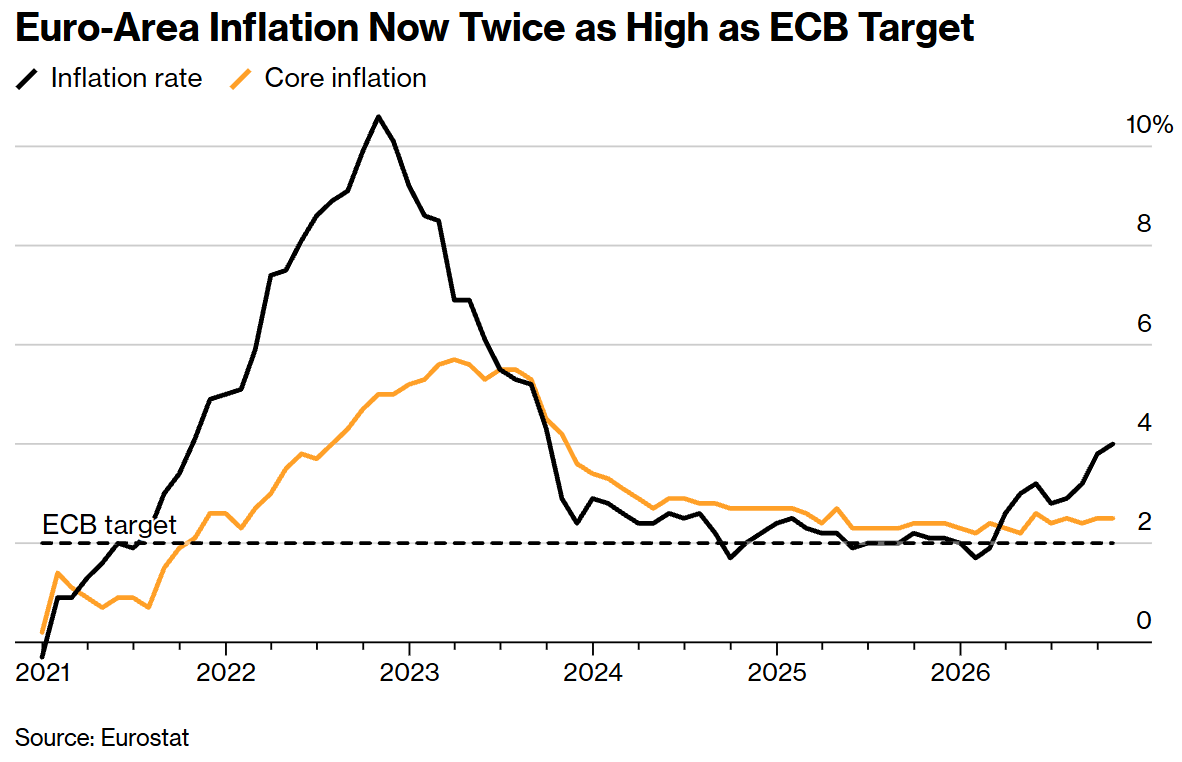
Eurozone inflation is currently double the ECB's target
Although the ECB kept borrowing costs unchanged last month, officials have sent a signal that they are preparing to raise interest rates for the third time since the outbreak of the war in Iran if the outlook for prices does not improve.
Governor Lagarde has stated that the policy direction is “clear and clear,” and several members of the management committee said this week that staying on hold in October does not mean that monetary tightening is over. Bundesbank President Joachim Nagel went a step further, saying that if the inflation situation does not improve, it is likely that interest rates will probably be raised again next month.
Investors and analysts expect the ECB to act in December, when the latest quarterly forecast will provide a more comprehensive picture of the health of the 21-nation Eurozone economy. The former expects deposit interest rates to rise to 3% or higher next year from the current 2.5%.
David Powell, a senior economist in the Eurozone, said, “Although inflation in the Eurozone soared to 4% in October, the broader conclusion of this report is that the energy shock has continued for more than six months, and potential price pressure is still moderate. At its October meeting, the ECB focused on the fact that rising energy prices have limited transmission to core inflation. This further confirms our judgment: the Management Committee is nearing the end of the current rate hike cycle after the last rate hike in December.”
So far, inflation has remained confined to the energy sector. However, the ECB remains vigilant, hoping to prevent the impact from spreading through sharp increases in wages and corporate sales prices. Its internal salary dynamic tracking indicators show that the salary growth rate will slow drastically in 2027.
The key question is how much austerity this 21-nation economy can withstand. So far, it has withstood the impact of the Middle East conflict very well, and has survived Trump's tariffs before. In the third quarter, the economy overcame France's financial and political difficulties, and growth exceeded expectations.
However, another rate hike by the ECB will push interest rates to the top of a range that is considered to have a positive economic effect. Other negative factors include rising global bond yields and low levels of natural gas inventories at the beginning of winter.