


EN
SFL (SFL) Expands Its Charter Backlog Following Fleet Deals As Valuation Comes Into Focus
SFL (NYSE:SFL) is back on investor radar after agreeing to acquire two large container vessels and a dual fuel ammonia carrier, all tied to multi year time charters with established clients.
Recent trading shows SFL giving back some steam in the short term, with a 30 day share price return down 8.33% and a 7 day share price return down 2.91%. At the same time, the year to date share price return is 56.27% and the 1 year total shareholder return is 82.50%, suggesting strong longer term momentum while investors weigh the new vessel commitments and the upcoming Q3 2026 results on 4 November.
Scan other shipping and infrastructure plays with similar contract depth by reviewing the hand picked list of solid balance sheet and fundamentals (23 results) alongside SFL's latest fleet expansion story.
SFL now has a larger, longer dated charter book and a share price that has already moved sharply over the past year. The real work is figuring out whether that maritime platform is fairly valued today.
Most Popular Narrative: 6% Undervalued
SFL last traded at $12.33, while the most followed narrative pins fair value at about $13.17, leaving a mid single digit gap that depends on how much weight you put on its contracted backlog and newer vessels.
The company’s expanding long term charter backlog, which reached roughly US$4.6b with about US$750 million added from the Hapag Lloyd container extensions and a large share contracted to investment grade counterparties, supports visibility on future revenue and provides a base for steady earnings and dividend coverage.
See why 15 investors see SFL as 6% undervalued.
Result: Fair Value of $13.17 (UNDERVALUED)
Still, the SFL story can unravel if the US$1.2b growth capex strains financing options, or if container and offshore demand weakens against its contracted backlog.
Find out about the key risks to this SFL narrative.
Another View: What SFL’s P/E Says
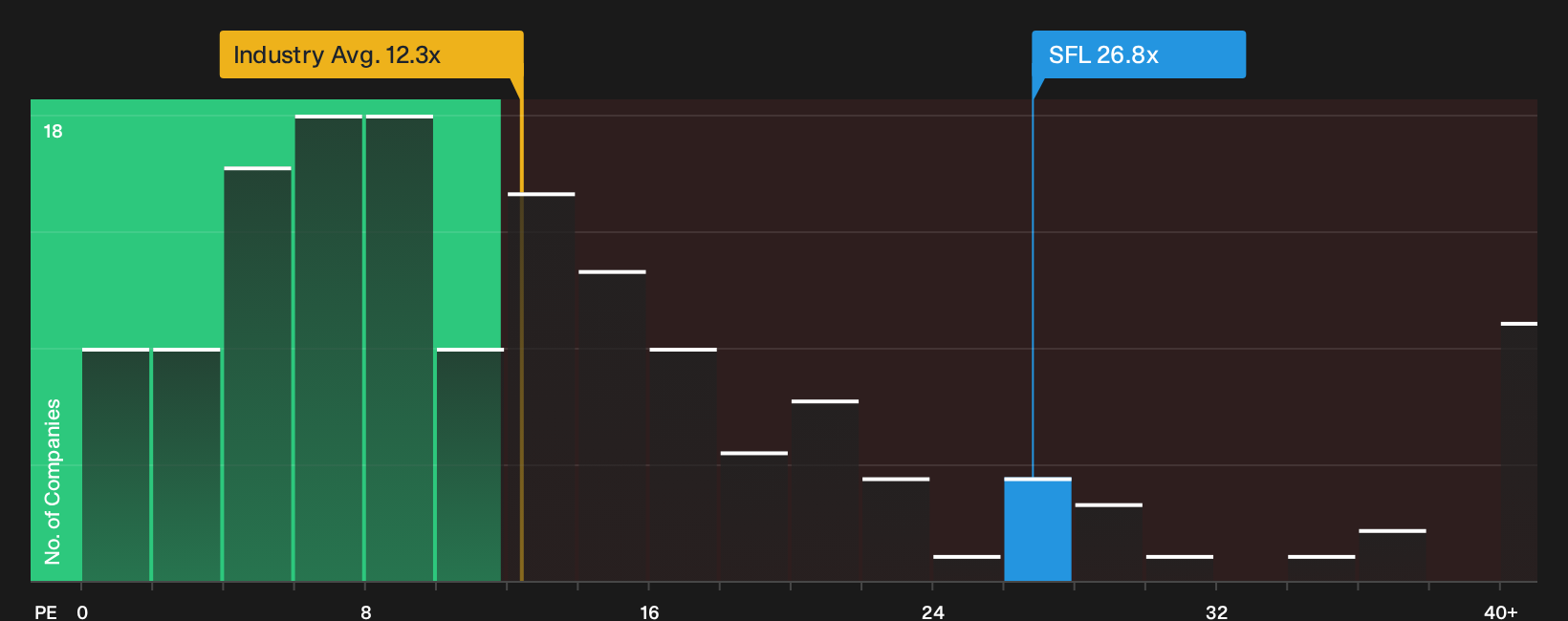
The fair value narrative suggests SFL is modestly undervalued, yet the market is already paying a rich earnings multiple. SFL trades on a P/E of 26.8x, compared with 12.6x for the US Oil and Gas industry, 10.3x for peers, and a fair ratio of 22.3x that the market could eventually lean toward.
Those gaps point to valuation risk rather than a clear bargain. Any move closer to industry or fair ratio levels would mean the same earnings support a lower price. The question for investors is how comfortable they are with paying this kind of premium for SFL today.
See what the numbers say about this price — find out in our valuation breakdown.
Next Steps
Feeling mixed about SFL after all that detail? Use the latest data, weigh those growth projects against the premium P/E, then go straight to the 2 key rewards and 2 important warning signs.
Looking for more investment ideas beyond SFL?
If SFL has sharpened your focus on valuation and risk, do not stop here. Broaden your watchlist with other opportunities built from clear data and disciplined filters.
- Target quality at a discount by scanning companies that combine strong balance sheets with attractive pricing through the 35 high quality undervalued stocks.
- Lock in potential income streams by reviewing reliable payers screened as 4 dividend fortresses.
- Get ahead of the crowd by tracking future favourites inside the 19 high quality undiscovered gems.
Have feedback on this article? Concerned about the content? Get in touch with us directly. Alternatively, email editorial-team@simplywallst.com