


EN
How Oracle Cloud Integration At Snowflake (SNOW) Has Changed Its Investment Story
- Oracle, ZoomInfo and Jade Global each announced deeper integrations with Snowflake's AI Data Cloud, including Oracle hosting Snowflake as a native Oracle Cloud Infrastructure service and partners delivering in-account AI, enrichment and monitoring tools for joint customers.
- These moves widen Snowflake's role inside large enterprises, since data, go-to-market and cost governance workflows can now run closer to where customers already keep core operational systems.
- We will look at how Snowflake's integration as a native Oracle Cloud Infrastructure service reshapes the investment narrative around its AI Data Cloud.
Snowflake Investment Narrative Recap
To own Snowflake, you need to believe the AI Data Cloud can keep attracting more mission critical workloads and turn that usage into improving unit economics over time. The short term hinge point is execution around AI products like CoCo and CoWork while managing mix pressure on the reduced 74% non GAAP product gross margin outlook.
The biggest near term risk is that AI usage grows in ways that weigh on profitability or lead customers to consume less than their US$9b remaining performance obligation. The Oracle, ZoomInfo, and Jade Global moves deepen integration but do not, by themselves, change that basic risk reward equation yet.
The Oracle Cloud Infrastructure announcement looks most relevant right now because it directly affects how easily large enterprises can adopt Snowflake. Having Snowflake sold and billed as a native Oracle service, with access via Oracle Universal Credits, can simplify procurement and budgeting for existing Oracle customers.
That matters for the near term catalyst around AI workload adoption because more Oracle centric organizations can test and scale Snowflake with fewer commercial hurdles. It also touches a key risk. If these users do not ramp usage or push harder on pricing, the step up in access could add complexity without bringing the product mix or gross margin relief shareholders are hoping for.
What The Current Snowflake Forecasts Assume
On current analyst assumptions, Snowflake's story hangs on a sharp swing in profitability as AI Data Cloud usage scales. Forecasts point to revenue expanding at 29.9% a year over the next three years, while profit margins are expected to move from a 20.1% loss position today to a 1.8% profit level in roughly the same time frame.
Those projections sit behind a wide earnings range. Consensus points to earnings of US$211.0 million, or US$0.32 per share, by around 2029, compared with a loss of US$1.1b today. The gap between the most optimistic estimate at US$766.1 million and the most pessimistic at a loss of US$1.0b shows how divided the analyst community is on whether Snowflake can convert AI heavy workloads and Oracle centric demand into durable profitability.
Equity issuance is part of that picture. Forecasts imply the share count grows about 2.99% a year over the next three years, which means any improvement in net income has to work harder to translate into earnings per share once potential dilution from equity grants and convertible notes is considered.
Valuation work in these reports leans on a discount rate of 9.3% to 9.31% and assumes Snowflake can reach around US$11.9b in annual revenue and US$211.0 million in earnings by 2029. To line up with the current analyst consensus, investors would have to be comfortable with the stock trading on a P/E of 1,016.1x those estimated 2029 earnings, compared with a current sector P/E reference point of 21.3x for US IT companies.
Snowflake's narrative projects US$11.9b revenue and US$211.0 million earnings by 2029. This requires 29.9% yearly revenue growth and an earnings increase of roughly US$1.3b from a loss of US$1.1b today.
That gap between the implied future P/E and the wider sector means a lot of the AI Data Cloud upside is already built into expectations. For readers, the key question is whether the Oracle integration, plus tools like CoCo and CoWork, make it more realistic that Snowflake hits those margin and earnings targets while managing the lower contribution from AI workloads and the drag from new convertible debt.
Explore why Snowflake's fair value points to a 45% potential upside to its current price, a gap that may not persist for long.
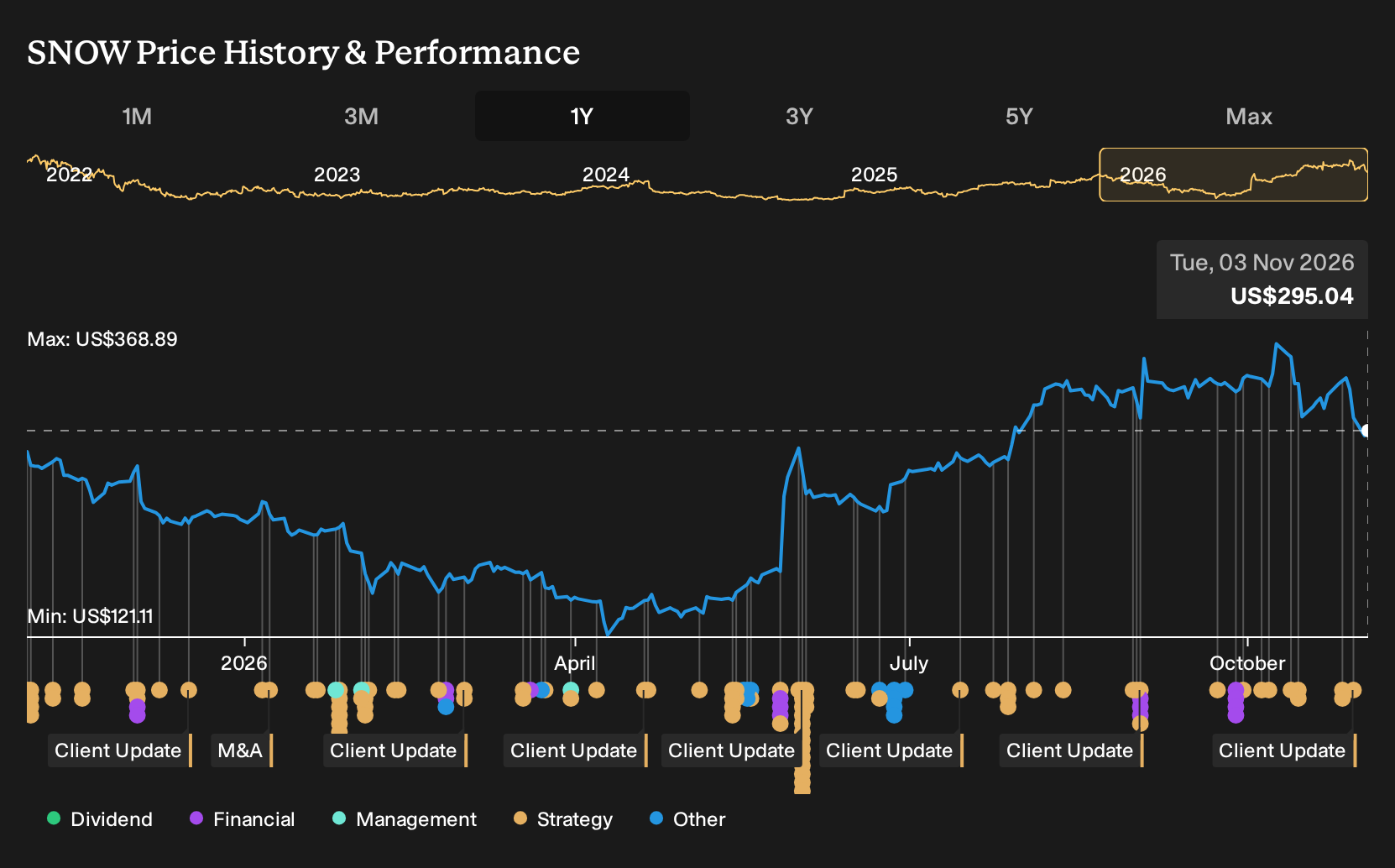
Exploring Other Perspectives
You can read Snowflake very differently. The most cautious analysts lean into the risk that AI partnerships like Oracle and ZoomInfo pull more low margin workloads onto the platform without enough pricing power. This feeds their view that US$9.7b revenue and up to a US$1.0b loss by 2029 were still on the table before this news. Those pre news forecasts show how far opinions can stretch, so it makes sense to compare several narratives and decide which assumptions fit your own view as these integrations start to get reflected in fresh models.
Explore 6 other Snowflake fair value estimates, including one that suggests as much as 73% downside from the current price!
Form Your Own Verdict
Disagree with existing narratives? Extraordinary investment returns rarely come from following the herd, so go with your instincts.
- A great starting point for your Snowflake research is our analysis highlighting 1 key reward and 1 important warning sign that could impact your investment decision.
- See our latest analysis for Snowflake. The report includes a comprehensive fundamental analysis summarized in a single visual, the Snowflake, making it easy to evaluate Snowflake's overall financial health at a glance.
Looking For More Ideas Beyond Snowflake?
If the Snowflake story leaves you wanting a broader watchlist, it can help to scan a few focused stock groups that match different risk and return profiles. The Simply Wall St Screener pulls these together so you can compare fundamentals side by side and spot patterns that fit your own approach.
- For investors who care most about valuation support and quality fundamentals, start with a curated pool of 34 high quality undervalued stocks that already combine stronger balance sheets with cash flow strength.
- If capital preservation and steadier profiles matter more to you than rapid expansion, filter for 30 resilient stocks with low risk scores to see which businesses have tighter risk scores and potentially smoother return paths.
- Readers hunting for less crowded ideas with solid metrics can scan a focused set of 19 high quality undiscovered gems that may not be widely followed yet but still clear basic quality hurdles.
Have feedback on this article? Concerned about the content? Get in touch with us directly. Alternatively, email editorial-team@simplywallst.com