


EN
Sabra Health Care REIT (SBRA) Q3 Results Put SHOP Growth In Focus
Sabra Health Care REIT just printed Q3 2026 numbers that put its core engine in the spotlight. The stock closed at US$20.35, up 3.2% on the day, as traders rushed to reward a clean beat in the metric that actually matters for a healthcare landlord. Normalized funds from operations per share landed at US$0.39, with adjusted funds from operations at US$0.41, and both tied directly to a strong quarter from senior housing operating properties. The short term price cheer now meets a deeper question for you: Is this a rational vote on a real trend or a mood swing chasing one very strong quarter?
Love the clean Sabra Health Care REIT FFO beat but are unsure how many healthcare landlords can pair income stability with solid balance sheets. Scan the list of solid balance sheet and fundamentals stocks (24 results) to see which real estate stocks aim for that mix of cash generation and financial strength.
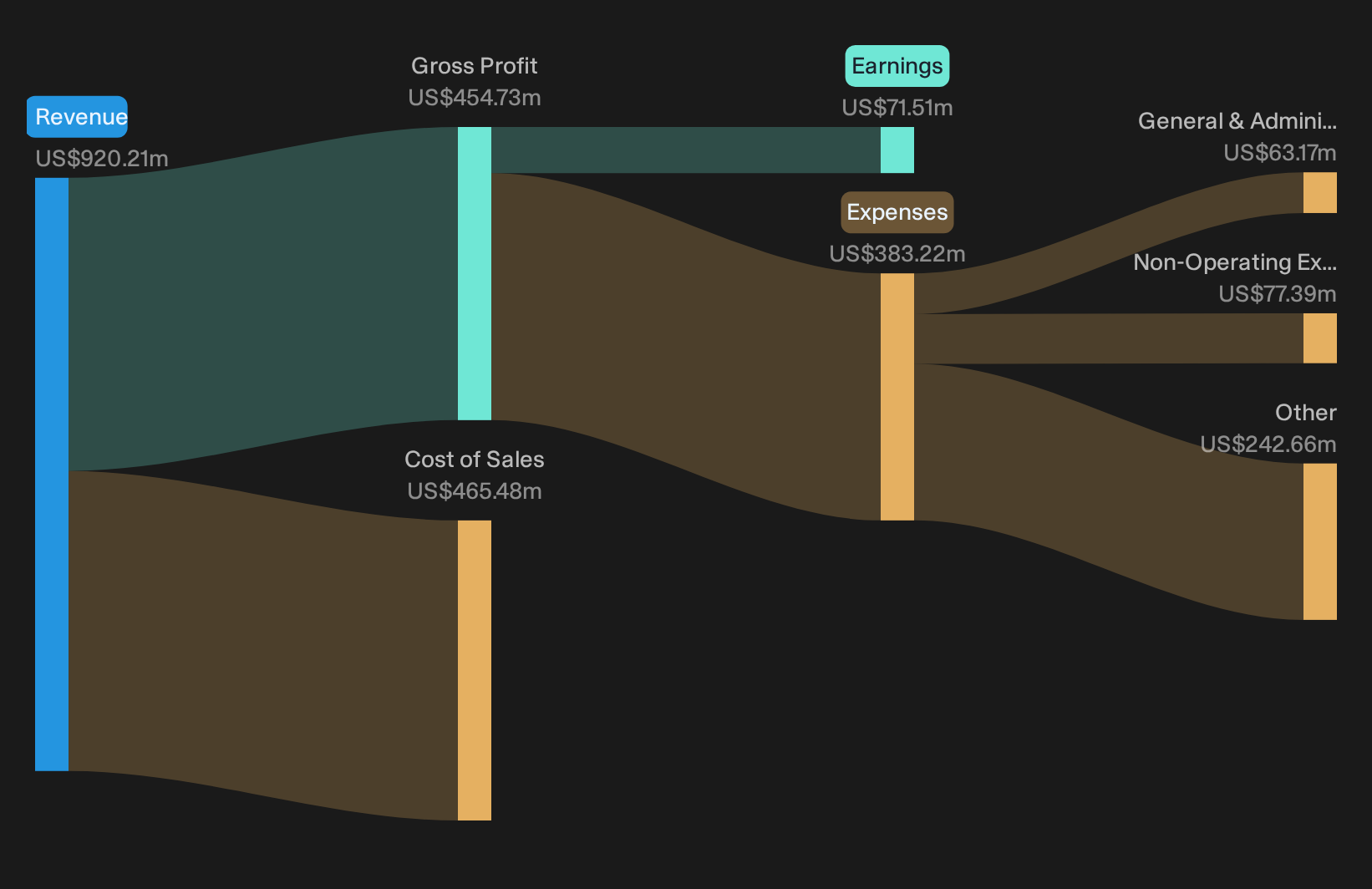
Q3 2026 Earnings Summary
- Total Revenue (Q3 2026 vs Q3 2025): US$249.57m vs. US$191.26m (up about 30%)
- Net Income (Excl. Extra Items, Q3 2026 vs Q3 2025): US$28.61m vs. US$22.54m (up about 27%)
- Basic EPS (Q3 2026 vs Q3 2025): US$0.112 vs. US$0.094 (up about 19%)
- Funds From Operations, FFO (Q3 2026 vs Q3 2025): US$95.86m vs. US$79.73m (up about 20%)
Sabra’s senior housing margins hit 34.9% with rising occupancy. Ask Charlie what makes Sabra’s SHOP margins best in class.
Sabra SHOP Ambition Meets Near-Term Milestones
The bullish story says Sabra Health Care REIT can lean on SHOP growth and balance sheet flexibility to turn operating progress into cash flow.
"Improving balance sheet flexibility, with net debt to adjusted EBITDA moving from 5.04x to 4.61x and over US$1.2b of liquidity available, gives Sabra Health Care REIT room to fund additional investments around a 7.5% initial cash yield and support future FFO and AFFO growth."
Q3 shows this roadmap in motion. Net debt to adjusted EBITDA is 4.54x, liquidity is about US$1.2b, normalized FFO per share is US$0.39, AFFO per share is US$0.41, and 2026 FFO guidance was lifted after a quarter where SHOP same store cash NOI grew double digits.
Sabra Execution Risks Still On The Table
The bear side questions whether aggressive SHOP expansion and portfolio recycling can avoid operational strain and credit drag.
"The portfolio shakeup risk around operator transitions remains live in the broader Sabra Health Care REIT platform because the company is still recycling assets and re-tenanting properties such as the Avamere portfolio. If new or existing operators underperform during these changes, occupancy and NOI at those facilities could weaken and weigh on revenue growth and margin trends."
Q3 results lean against this concern for now. Same store SHOP occupancy is 89.2%, SHOP cash NOI grew 14.6%, Avamere rent resets are contributing to higher NOI, and normalized FFO and AFFO guidance for 2026 moved up, suggesting transitions are currently adding rather than subtracting.
One Narrative has put a figure on that disagreement. → See the Narrative with its higher Fair Value, assumptions and all.
Hunt For Quiet FFO Cousins
Sabra Health Care REIT just showed how one quarter can reset expectations without changing the underlying business. The real opportunity sits in finding stocks that could be undervalued before the market closes the gap.
- Company 1 - 42% below our estimate - uses new manufacturing and supply chain build out to support higher margin film and service mix.
- Company 2 - 45% below our estimate - builds a focused aviation aftermarket platform that depends on integrating a recent acquisition and deepening engine service programs.
- Company 3 - 38% below our estimate - shifts fresh capital into high-horsepower power projects and data center linked engines while working to contain newer technology losses.
Those are three of them. See all 35 potentially undervalued companies →
Have feedback on this article? Concerned about the content? Get in touch with us directly. Alternatively, email editorial-team@simplywallst.com