


EN
Should AirisOne Launch Require Action From Compass Group (LSE:CPG) Investors?
- Compass Group has launched AirisOne, an AI powered managed services platform that unifies facility data and connects clients with Compass support and third party vendors through a marketplace across sectors such as education, manufacturing and data centers.
- The AirisOne rollout gives Compass Group another way to digitise facility operations and operational decision making. This could matter for how it converts outsourcing demand and manages efficiency across its broad customer base.
- We will look at how Compass Group's investment narrative is influenced by AirisOne's AI driven facility operations and service marketplace model.
Scan how Compass Group's AI move compares with other facilities focused plays by zeroing in on 53 AI infrastructure stocks tied to real world operations rather than pure software stories.
Compass Group Investment Narrative Recap
For Compass Group, a core belief is that outsourced food and support services can continue to compound through steady contract wins, disciplined capital spending and tight cost control. In the near term, an important swing factor is whether net new business can remain in the 4% to 5% range while margins are supported by technology and procurement scale.
AirisOne fits into that approach by aiming to make facilities contracts stickier and more efficient rather than changing the overall story immediately. The more immediate risk still lies with execution in slower areas such as North America healthcare and with elevated leverage, which could limit room for error if growth in contract wins or margins weakens.
The AirisOne launch is one of the clearest recent moves that aligns with Compass Group's broader use of digital tools such as kiosks and pre order systems. All of these sit in the same category of efforts to extract more productivity and better service quality from a very large on site workforce and complex client estates.
For potential catalysts, this matters because analysts are already framing margin expansion partly around technology and process gains. The key question is whether platforms such as AirisOne and the existing digital toolkit can scale effectively across sectors such as education, manufacturing and data centers without increasing complexity or capital expenditure to a level that diminishes the expected efficiency gains.
What AirisOne Means Against Compass Group’s Analyst Framework
Compass Group’s analyst story already assumes a sizeable step up in scale, and AirisOne slots into that as a potential operational tool rather than the main driver. Consensus numbers point to Compass Group reaching US$60.0b in revenue and US$3.0b in earnings by 2029, built on revenue growth assumptions of 7.3% a year and a lift in margins from 4.2% today to 4.9% in three years.
Within that context, AirisOne looks like one of the ways management is trying to support those higher profitability targets. The platform aims to tighten how facilities data, Compass services and third party vendors connect on each site. If that makes contracts more embedded and reduces waste, it could help the group work toward the forecast earnings profile without relying purely on volume growth or price.
Compass Group’s narrative projects US$60.0b revenue and US$3.0b earnings by 2029. This sits on an assumed 7.3% yearly revenue growth rate and implies a US$1.0b earnings increase from US$2.0b today.
Investors weighing AirisOne against these expectations may want to focus less on the AI label and more on whether the system can be rolled out cleanly across thousands of client locations. Higher technology spend, extra training requirements or vendor complications could all eat into the margin uplift that analysts are baking into their models. The balance between better data and added complexity is likely to be a key watchpoint.
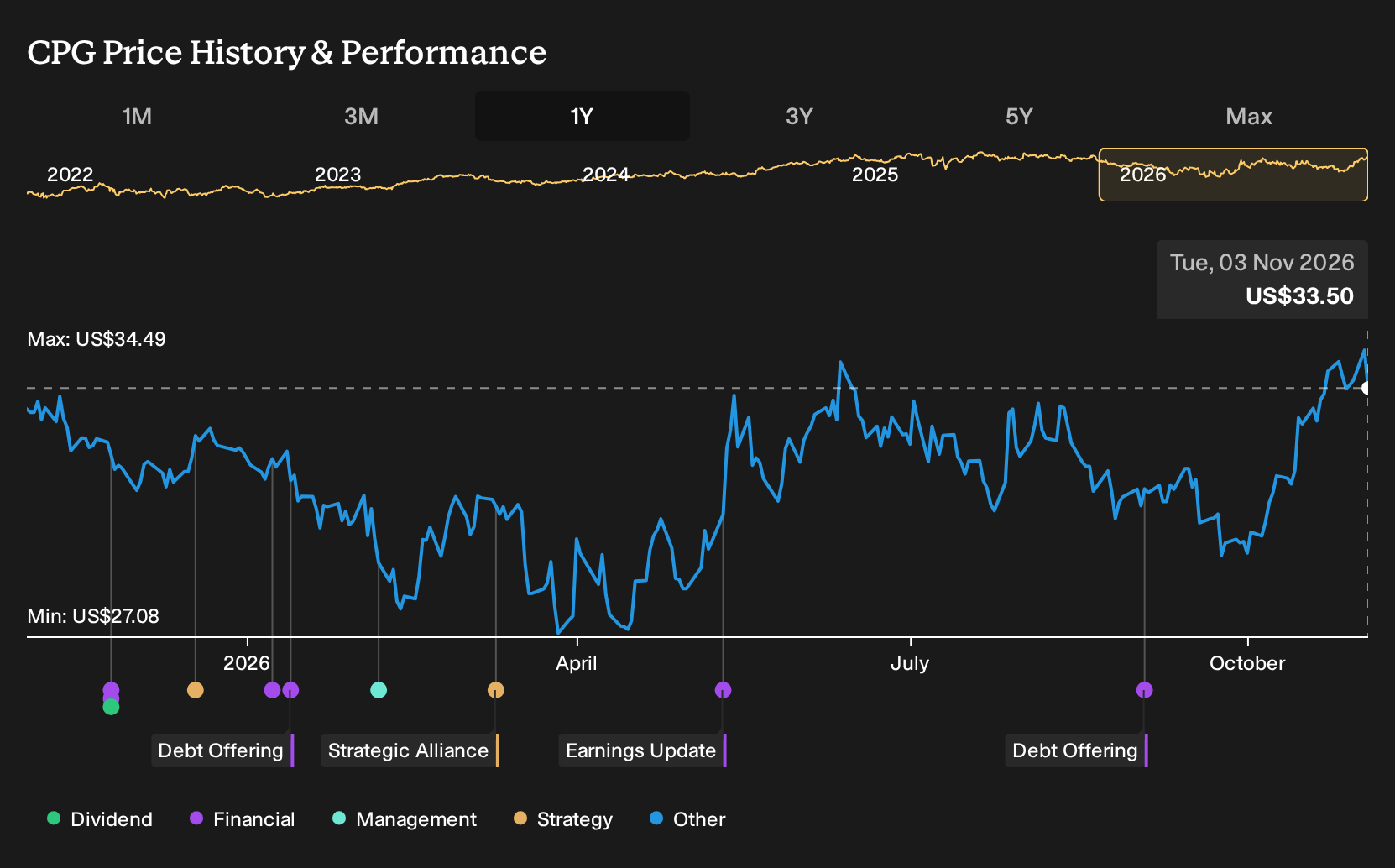
Valuation targets already assume Compass Group can turn this operational toolkit into higher earnings quality. The consensus price target of US$38.06 rests on those US$60.0b of revenues and US$3.0b of earnings in 2029, along with a P/E multiple of 28.8x on those forecast profits. AirisOne does not change those headline numbers on its own, but it could influence how realistic they look as evidence of traction or friction starts to appear in reported margins and contract retention metrics over the next few years.
Uncover why Compass Group's fair value indicates a 14% potential upside to its current price that may not last much longer.
Exploring Other Perspectives
One alternate view focuses on margin risk rather than growth. The more cautious analysts already expected Compass Group to reach about US$60.6b of revenue and US$2.8b of earnings by 2029, with a lower 4.6% margin assumption. You can use the AirisOne news to test whether that more conservative story still feels right or needs updating.
Explore 3 other Compass Group fair value estimates, including one that suggests as much as 25% downside from the current price.
The Verdict Is Yours
Disagree with existing narratives? Extraordinary investment returns rarely come from following the herd, so go with your instincts.
- A great starting point for your Compass Group research is our analysis highlighting 2 key rewards and 1 important warning sign that could impact your investment decision.
- See our latest analysis for Compass Group. The report includes a comprehensive fundamental analysis summarized in a single visual, the Snowflake, making it easy to evaluate Compass Group's overall financial health at a glance.
Looking for more investment ideas beyond Compass Group?
If the Compass Group story has you thinking about where else disciplined execution and clear financial footing might matter, it can help to widen the net and compare it with other businesses that fit different risk and return profiles.
- For readers who want potential mispricing with quality in mind, start with a curated pool of companies screened for strong fundamentals and attractive valuations through the 15 high quality undervalued stocks.
- If capital preservation and financial resilience sit higher on your checklist, filter for companies with robust balance sheets and healthy fundamentals using the list of solid balance sheet and fundamentals (10 results).
- Those hunting for less crowded ideas can focus on smaller, underfollowed businesses with solid metrics by scanning the 5 high quality undiscovered gems.
Have feedback on this article? Concerned about the content? Get in touch with us directly. Alternatively, email editorial-team@simplywallst.com