


EN
Freshworks (NASDAQ:FRSH) posts Q3 2026 sales in line with estimates but stock drops
Business software provider Freshworks (NASDAQ:FRSH) met Wall Street’s revenue expectations in Q3 2026, as revenue rose 14.1% year on year to $245.4 million. The company expects next quarter’s revenue to be around $254 million, close to analysts’ consensus estimates. Its non-GAAP profit of $0.22 per share was 21.6% above analysts’ consensus estimates.
For more on Freshworks, read our free full research report.
Freshworks (FRSH) Q3 2026 highlights:
- Revenue $245.4 million vs S&P analysts’ consensus estimates of $245.1 million (14.1% year-on-year growth, in line)
- Adjusted EPS $0.22 vs S&P analysts’ consensus estimates of $0.18 (21.6% beat)
- Adjusted operating income $73.15 million vs analysts’ consensus estimates of $60.13 million (29.8% margin, 21.6% beat)
- Revenue guidance $254 million at the midpoint for Q4 2026, roughly in line with what analysts were expecting
- Adjusted EPS guidance Management raised its full-year adjusted EPS guidance to $0.71 at the midpoint, a 6% increase
- Operating margin 11.5%, up from -3.5% in the same quarter last year
- Free cash flow margin 30.1%, up from 24.3% in the previous quarter
- Customers 25,498 customers paying more than $5,000 annually
- Net revenue retention rate 104%, in line with the previous quarter
- Billings $249.5 million at quarter end, up 11.4% year on year
- Market capitalization $3.71 billion
“Our upmarket strategy delivered another strong quarter,” said Dennis Woodside, CEO & President of Freshworks. “We delivered a 30% non-GAAP operating margin and grew adjusted free cash flow by 29%. Our momentum upmarket accelerated, with new multi-product EX deals increasing over 35% and partners participating in more than half of our new business. Customers want a unified platform and single data model for service operations, and they are increasingly choosing Freshworks.”
Revenue growth
A company’s long-term revenue performance is one signal of its overall quality. Any business can put up a good quarter or two, but many enduring ones grow for years. Freshworks’s 22.5% annualized revenue growth over the last five years was solid. Its growth outpaced that of the average software company, showing its offerings resonate with customers.
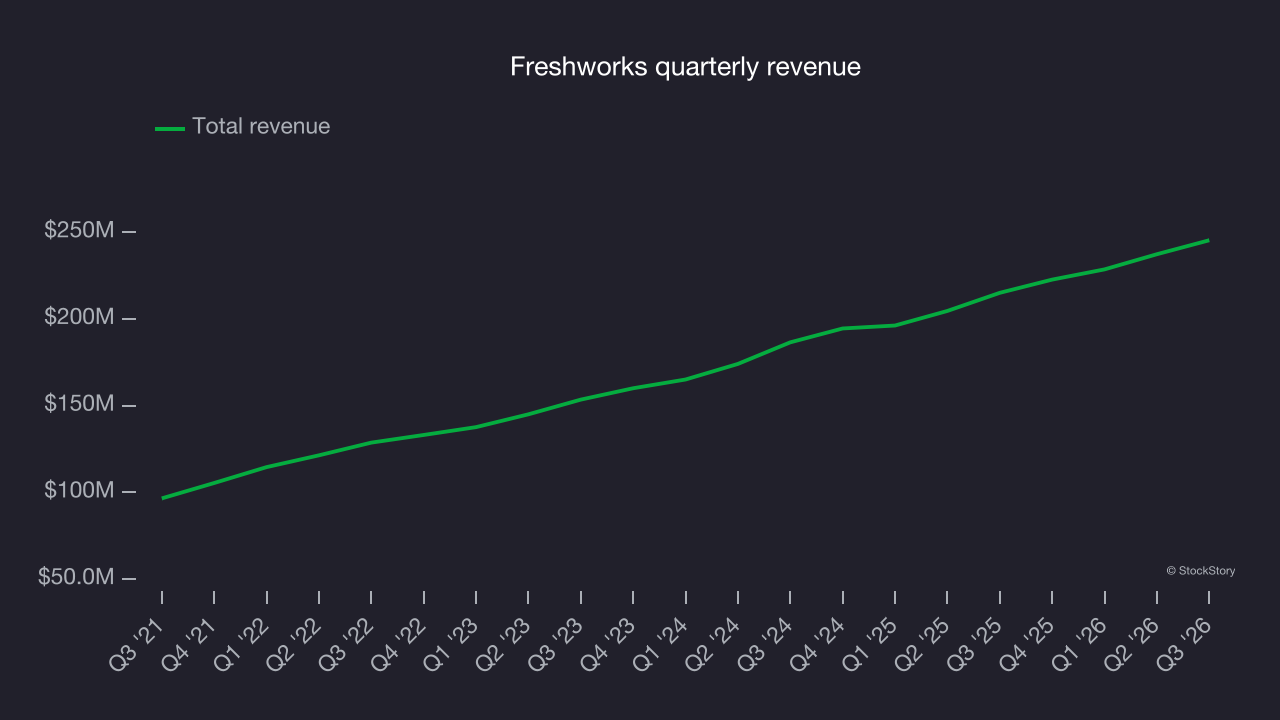
Long-term growth matters the most, but within software, a half-decade historical view may miss recent innovations or disruptive industry trends. Freshworks’s annualized revenue growth of 16.7% over the last two years is below its five-year trend, but the results were still respectable. 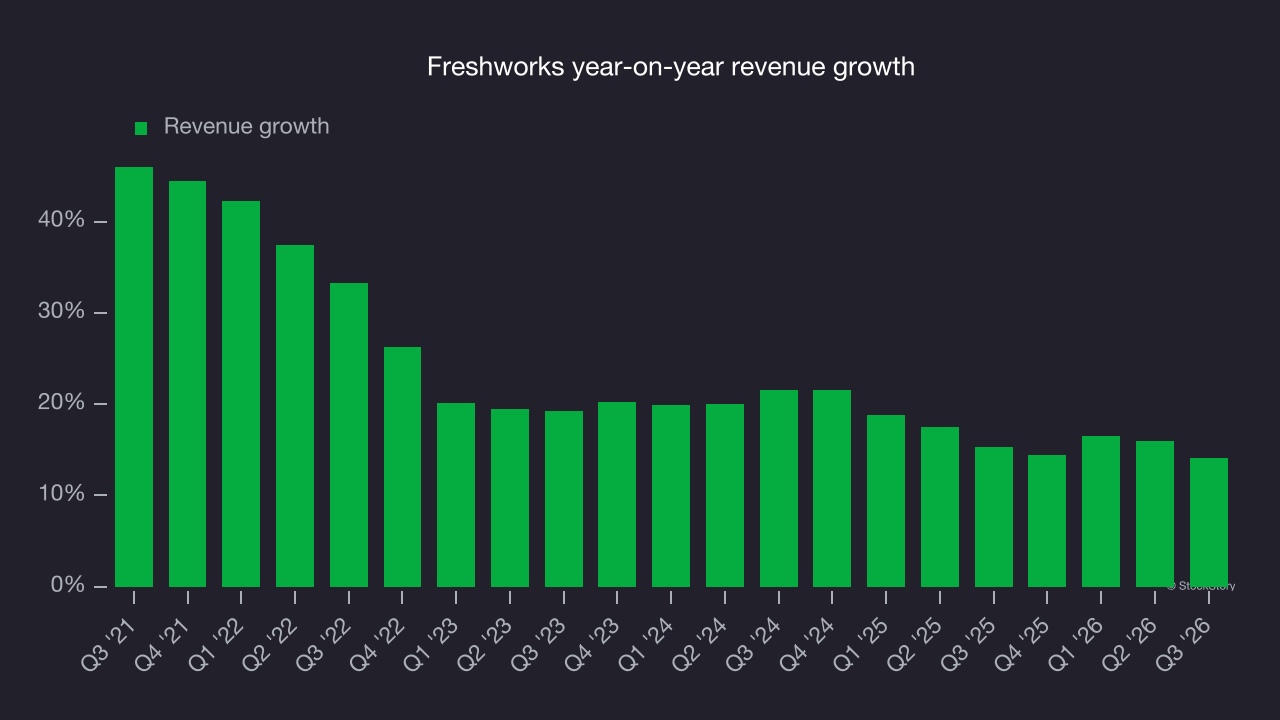
This quarter, Freshworks’s year-on-year revenue growth was 14.1%, and its $245.4 million of revenue was in line with Wall Street’s consensus estimates. Management is guiding for a 14% year-on-year increase in revenue next quarter.
Looking further ahead, sell-side analysts expect revenue to grow 14% over the next 12 months, according to S&P, a slight deceleration versus the last two years. This underwhelming projection indicates its products and services will see some demand headwinds. Still, the company is tracking well in other measures of financial health.
Billings
Billings is a non-GAAP metric that is often called “cash revenue” because it shows how much money the company has collected from customers in a certain period. This is different from revenue, which must be recognized in pieces over the length of a contract.
Freshworks’s billings came in at $249.5 million in Q3, and over the last four quarters, its growth slightly lagged the sector as it averaged 14.8% year-on-year increases. This performance mirrored its total revenue and suggests that increasing competition is making it harder to acquire and retain customers. 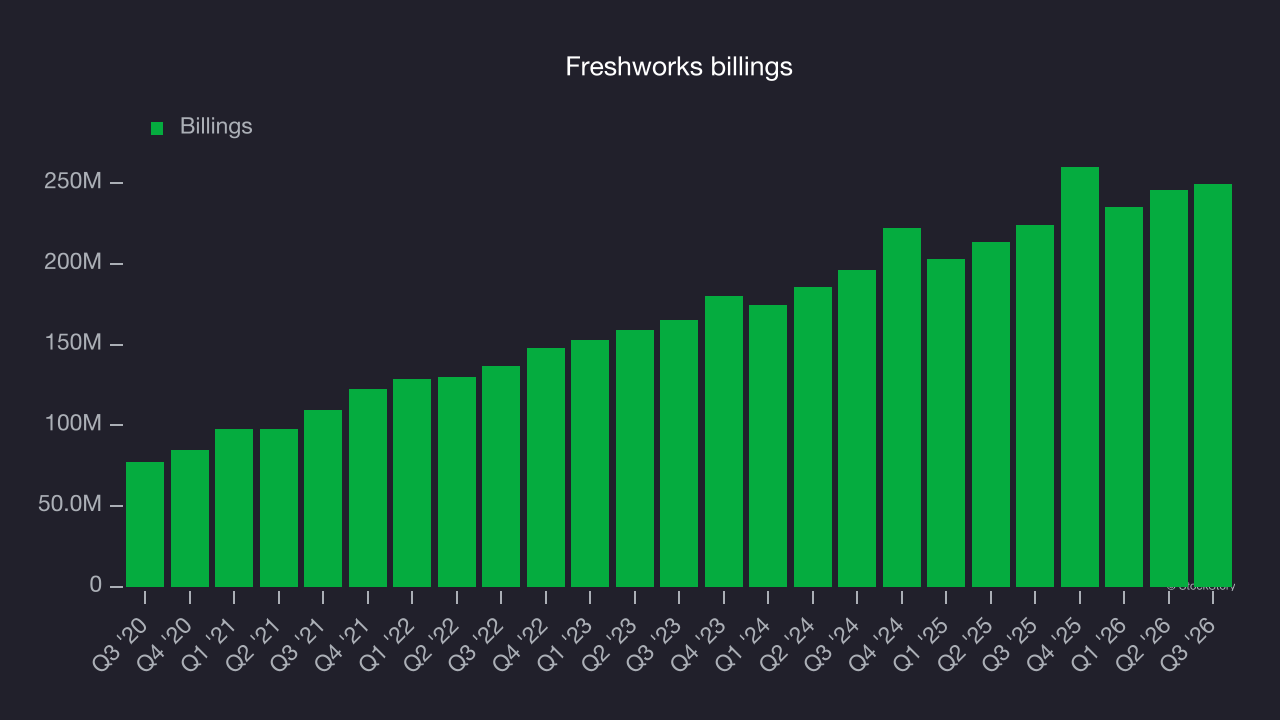
Customer retention
A benefit of the software-as-a-service business model (and one reason these companies trade at high valuation multiples) is that customers typically spend more on a company’s products and services over time.
Freshworks’s net revenue retention rate, a key performance metric measuring how much money existing customers from a year ago are spending today, was 104% in Q3. This means Freshworks would’ve grown its revenue by 4% even if it didn’t win any new customers over the last 12 months.
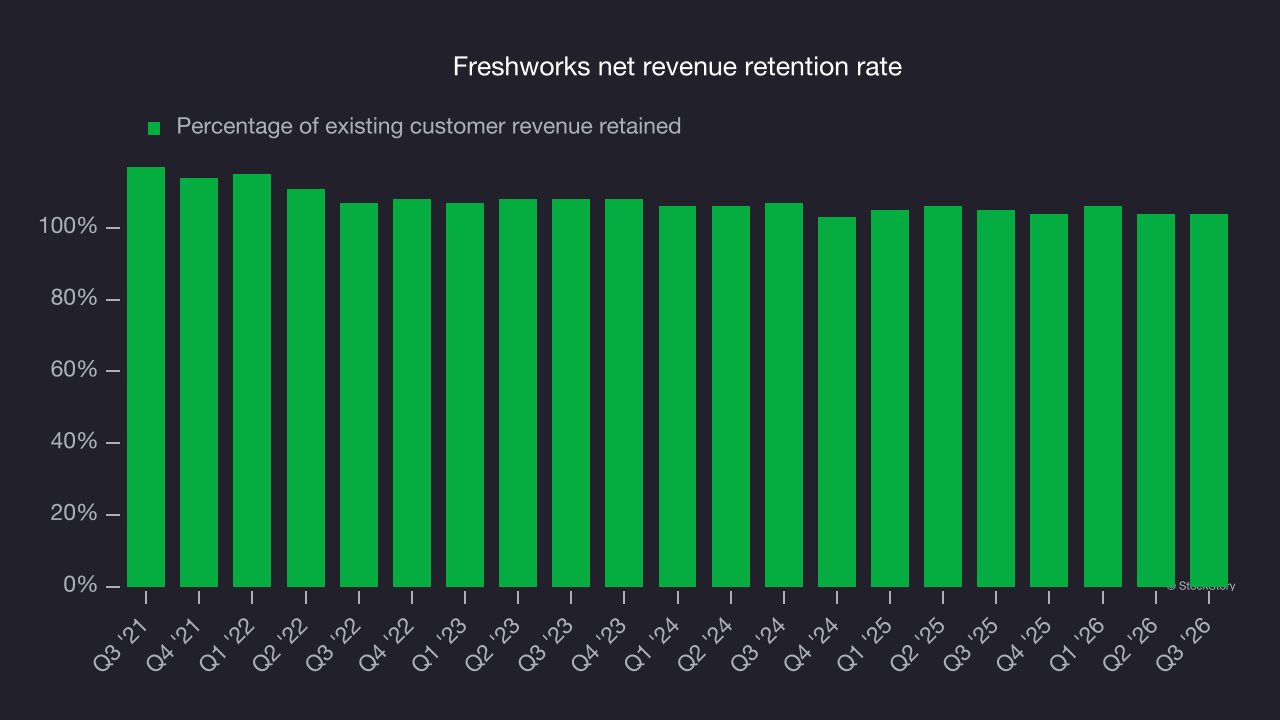
Freshworks has an adequate net retention rate, indicating that it generally keeps customers but lags behind the best software-as-a-service businesses, which routinely post net retention rates of 120% or more.
Key takeaways from Freshworks’s Q3 results
Freshworks delivered a mixed quarter with some key positives: Adjusted operating income beat analysts’ consensus estimates by a wide margin, and full-year EPS guidance topped Wall Street’s consensus. But new large contract wins slowed and billings missed consensus estimates. Investors were likely hoping for more, as shares tumbled 6.9% to $13.18 immediately after the results.
The latest quarter is only one part of assessing longer-term business quality. Quality, when combined with valuation, can help determine if the stock is a buy. For more, read our full research report here (it’s free).