


EN
Distressed Asset Manager Stocks Retail Investors May Be Missing Right Now
When a Todd Boehly consortium circles a securities swap that could reshape ownership of more than $22b of Lukoil assets, distressed finance steps out of the footnotes and into the spotlight. Frozen securities bought at deep discounts might suddenly sit next to functioning oil and retail operations, and that kind of shift can reward preparation. This piece walks through three stocks that could be exposed to this restructuring wave.
The stocks covered below are just a starting sample, and the full investing screen surfaces 30 more listed distressed and special situations asset managers with equally detailed narratives that are not covered here.
If you want to identify patterns across the full universe and analyze which distressed specialists best fit your own risk profile, head straight to the Listed Distressed and Special Situations Asset Managers screener.
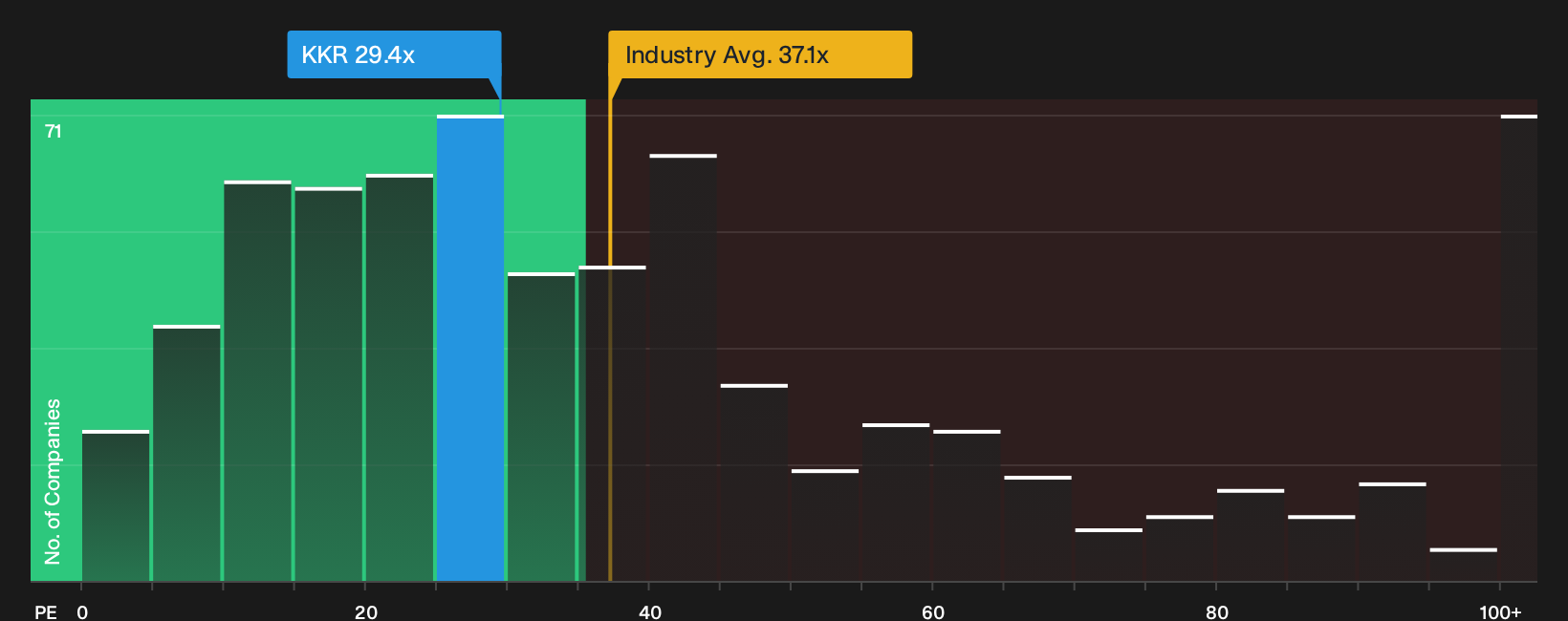
KKR (KKR)
Overview: KKR is a global alternative investment firm that raises capital to buy, finance, and restructure businesses, assets, and complex credit situations.
Operations: KKR generates about US$12.6b from Insurance plus a US$6.9b segment adjustment, reflecting large-scale balance sheet and fee activity.
Market Cap: US$84.7b
For a screen focused on distressed and special situations asset managers, KKR matters because its credit and restructuring engines can turn stressed assets into long term fee streams and potential upside for investors who understand the trade offs.
Expansion of credit and asset-based finance platforms, with KKR now a leader in a $6 trillion+ market that some observers view as poised for further growth, provides a broader and more durable base of fee-related earnings while also increasing the potential for performance fees as these businesses scale.
What really moves the needle from here is how one unseen pressure shapes future fee margins as this much larger platform matures.
That unseen pressure is exactly what sits at the heart of the full narrative for KKR, where fee durability, capital cycles and optionality are all unpacked in full detail.
Mutares SE KGaA (XTRA:MUX)
Overview: Mutares SE KGaA is a Munich based private equity group that buys distressed and special situations businesses and aims to turn them around.
Operations: Mutares SE KGaA generates about €2.7b from Automotive & Mobility, plus €1.5b from Goods & Services, €1.4b from Engineering & Technology and €1.2b from Infrastructure & Special Industry.
Market Cap: €703.2 million
Mutares SE KGaA matters for this distressed and special situations screen because its whole model is built around buying troubled assets, fixing them and ultimately exiting them into more conventional owners when the heavy lifting is done.
The structured realignment, optimization and harvesting cycle, combined with an explicit 7x to 10x return target over 3 to 5 years on acquired assets, is intended to support further value creation from portfolio companies such as NEM, Efacec and Magirus that is not yet fully reflected in net earnings. If exit timing, pricing or buyer interest weaken relative to expectations, disposal proceeds may fall short and limit future revenue growth and cash generation.
What really matters for investors now is how a single shift in the balance between new deals and actual exits filters through to future cash generation.
That balance shift is exactly what the full narrative for Mutares SE KGaA unpacks in detail, revealing how Mutares SE KGaA’s deal machine could accelerate or stall future cash generation.

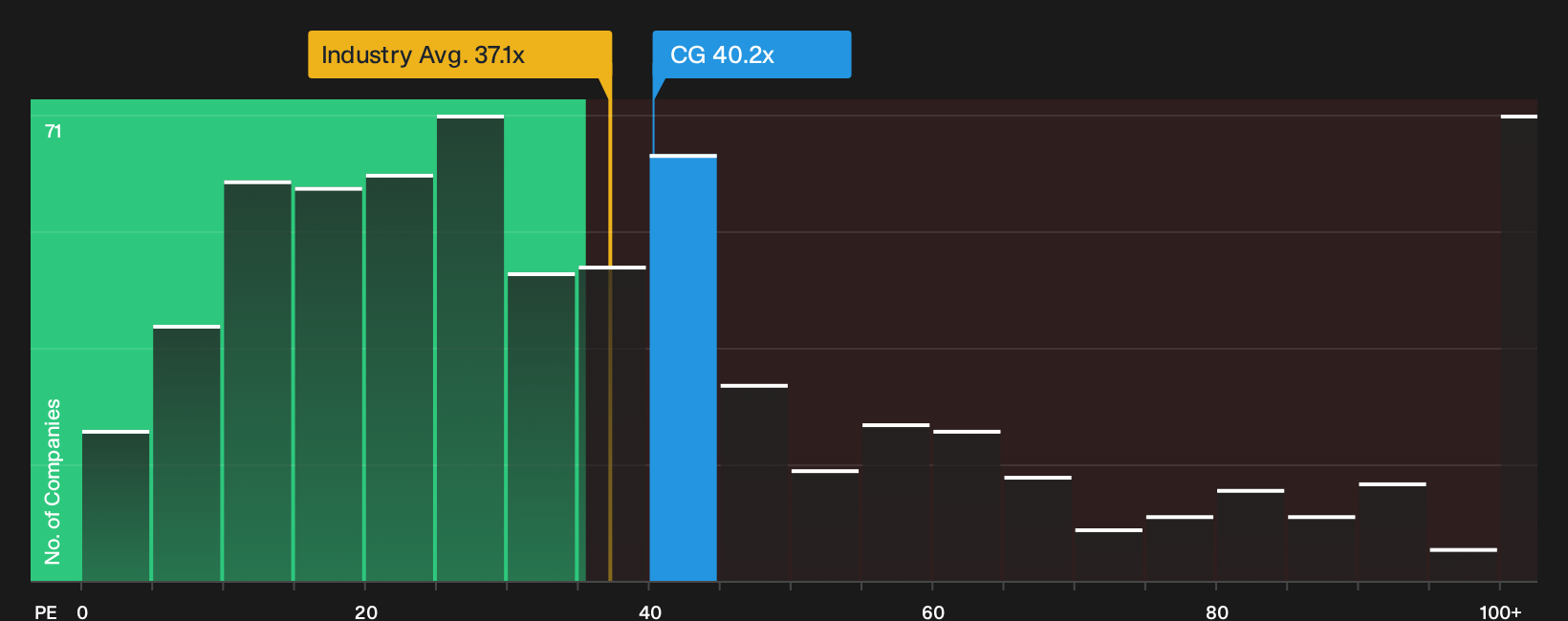
Carlyle Group (CG)
Overview: Carlyle Group is a global alternative asset manager that raises and invests capital across private equity, real assets and opportunistic credit, including distressed and restructuring-focused strategies.
Operations: Carlyle generates about US$1.8b from Global Private Equity, US$1.1b from Global Market Strategies, US$711 million from Consolidated Funds and US$678 million from Carlyle AlpInvest, offset by US$837 million of reconciling items.
Market Cap: US$14.3b
For a screen built around distressed and special situations asset managers, Carlyle Group matters because its credit and opportunistic platforms can turn stressed balance sheets and complex restructurings into fee streams tied to how well those deals are sourced, structured and exited.
"AlpInvest is the strongest part of the growth story. Its flagship secondaries fund reached its $15 billion fundraising cap in 2025."
What could reshape the picture is how one unresolved shift in where Carlyle earns its fees affects future payout capacity and resilience.
That fee mix shift is exactly what the full narrative for Carlyle Group breaks down, separating durable payout capacity from short term noise to show where Carlyle Group could be accelerating or stalling.
Seeking Alternatives Before Others Catch On
Fresh opportunities keep moving. Some are building quiet breakout momentum, others are still under the radar for now. Before the crowd catches up and prices start flying, consider taking a closer look.
- Spot resilient payers that can help steady a portfolio while markets keep shifting by running the 4 dividend fortresses before yields change.
- Explore potential infrastructure leaders and follow the capital going into grid upgrades with the curated 42 power grid technology and infrastructure stocks while it still flies under most radars.
- Review companies involved in compute and related technologies by scanning the 53 AI infrastructure stocks as spending moves toward data centers, chips and networking, and before valuations fully reflect that activity.
Have feedback on this article? Concerned about the content? Get in touch with us directly. Alternatively, email editorial-team@simplywallst.com