


EN
What DoorDash Bears Spotted Before The Slide
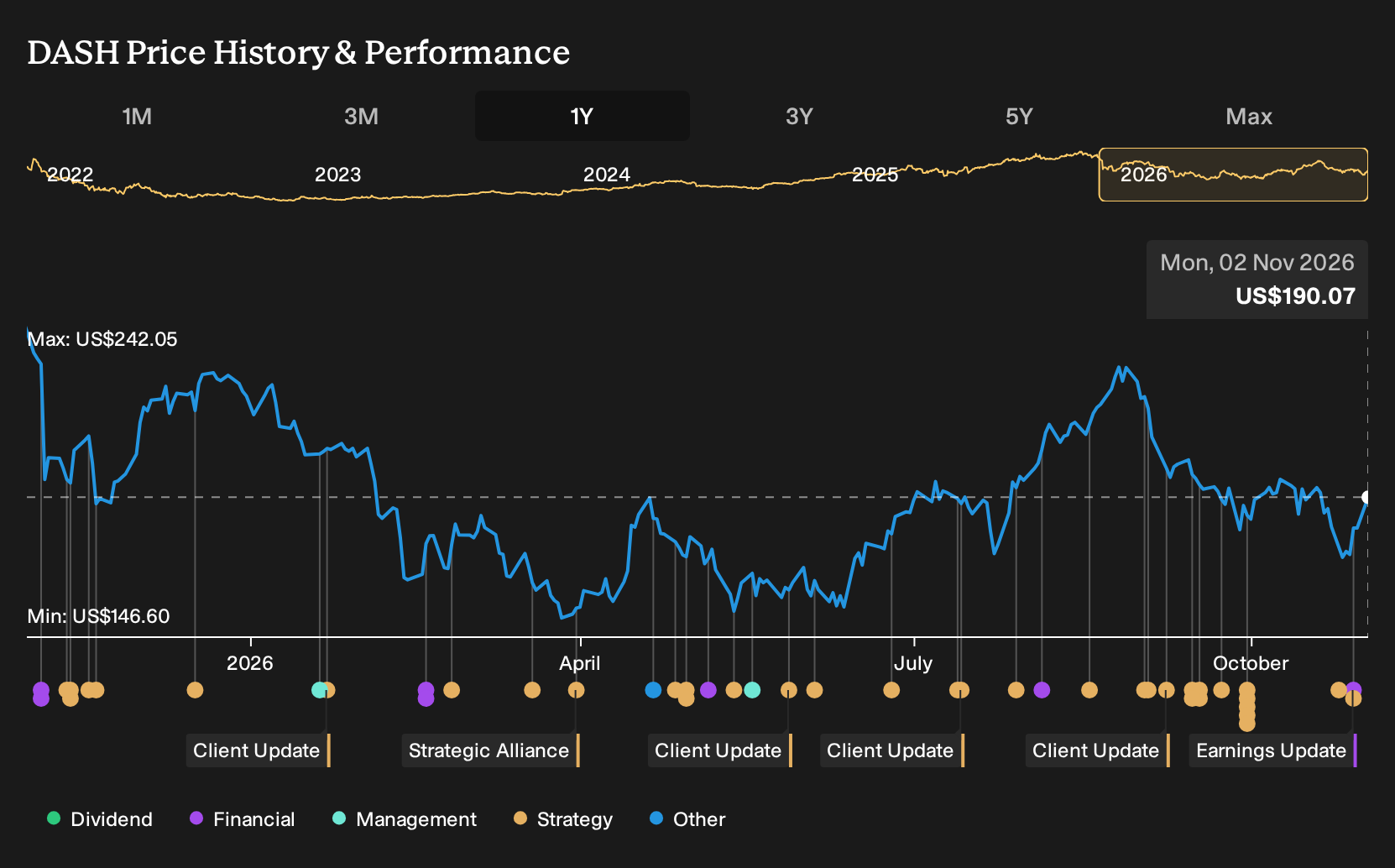
DoorDash spent the past year piling up headlines about drones, acquisitions and new software, yet the share chart told a different story. For DoorDash shareholders, the loss over the past year was 21.5%, including dividends. If you had bought on 2 November 2025, when bullish analysts were pencilling in 19.6% annual revenue growth, a 15.5% profit margin and a 55.2x future P/E, what exactly did that upbeat script fail to account for?
The easy part of this move is behind DoorDash. Zero in on 34 high quality undervalued stocks for companies trading below our estimates.
The Two DoorDash Stories Investors Were Really Pricing In
The shares cost US$254 at the start of the period, and anyone looking at DoorDash then had to pick between two very different stories about where the business might head next.
The bullish narrative pointed to a Fair Value of US$294, a price implied by models that assumed revenue growth of 19.6% a year and profit margins climbing to 15.5% on a 55.2x future P/E.
The bearish view saw Fair Value at US$183, with investors focused on the risk that tighter labor rules and higher costs could limit margins even if revenue still grew.
What The Results Changed For The DoorDash Story
DoorDash’s Q3 2026 report showed revenue of US$4,616m and net income of US$466m, with net margin at 10.1% compared with 7.1% a year earlier. That margin is below the 15.5% level in the earlier optimistic case, so profitability progress supported the bullish script but did not fully meet it. The evidence cut both ways.
The key assumption that got tested was how fast margins might climb. For any other stock built on efficiency gains, track the gap between forecast margin targets and the actual percentage reported each year.
What You Would Be Paying For In DoorDash Today
DoorDash now trades at US$190, down 21.5% over the past year, while the selected Narrative’s Fair Value sits above the current price based on its own assumptions about the business.
The bullish case leans on grocery, retail and higher margin services at scale. For the Narrative’s higher figure to hold, DoorDash would need to grow these newer lines and automation tools into meaningfully more profitable operations.
"Bullish analysts expect DoorDash to expand beyond restaurant delivery into grocery, retail, and higher margin services such as subscriptions, advertising, and fulfillment in a way that supports structurally higher earnings power over time. The main factor that has to go right is that DoorDash successfully scales its global tech stack, AI tools, and autonomous delivery while keeping regulatory, affordability, and competitive pressures from eroding the benefits."
That disagreement has a full argument behind it. → Uncover the higher Fair Value this Narrative argues for
How Could You Get There Earlier?
This company's disappointment is already part of the story. Your next idea could come from looking where the price and the possibilities still seem far apart. Here are three companies priced below our estimates.
- Company 1 - 37% below our estimate - turn shorter subsea tieback timelines into higher margin service work.
- Company 2 - 38% below our estimate - tie long reserve life and exploration work to concentrated gold production.
- Company 3 - 36% below our estimate - link demand for AI training power to high value GPU systems.
That is three of the list. See the full list of 24 financially solid companies →
Have feedback on this article? Concerned about the content? Get in touch with us directly. Alternatively, email editorial-team@simplywallst.com