


EN
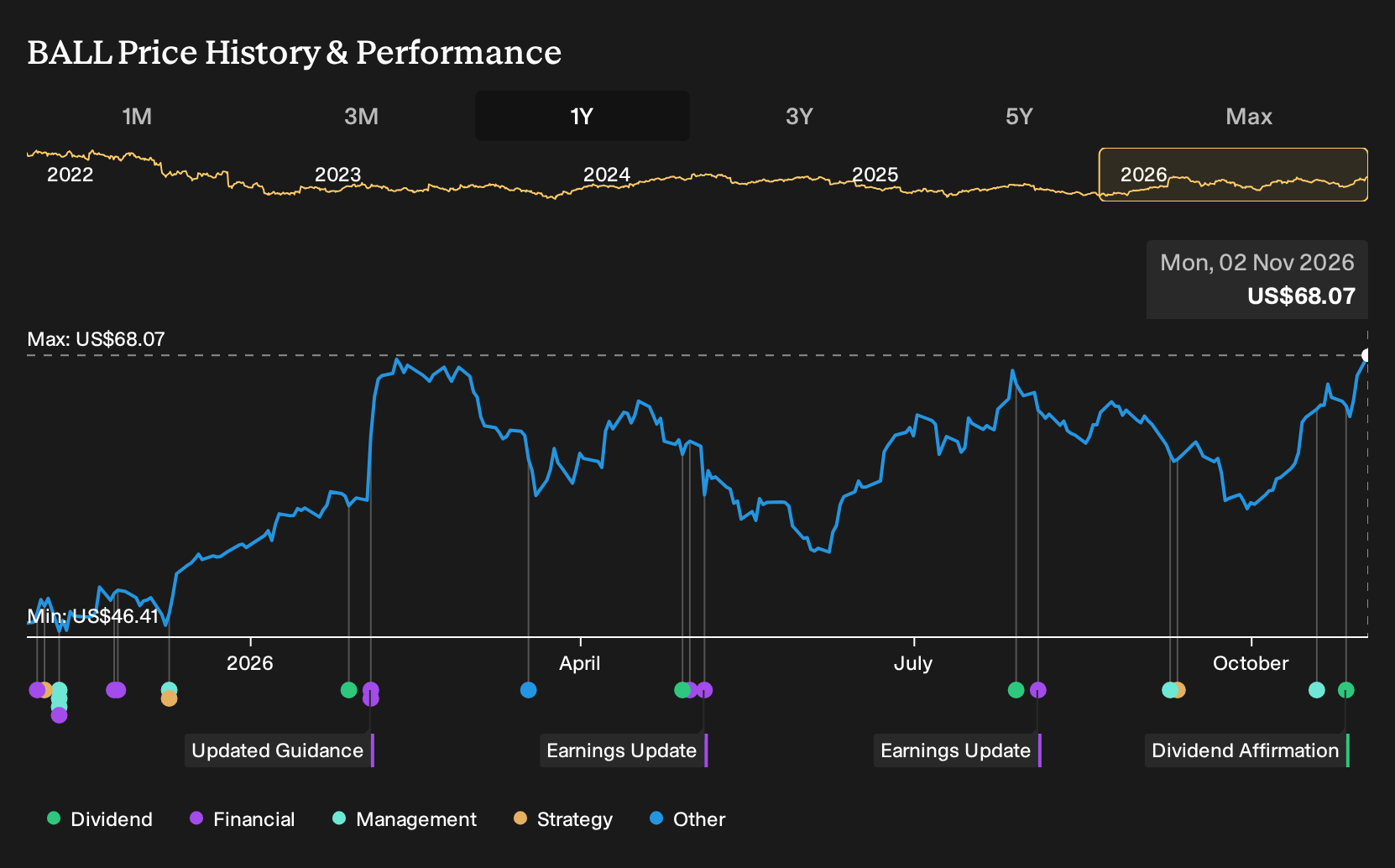
Ball (BALL) Is Down 5.6% What's Changed Earnings Loss Despite Sales Growth
- Ball Corporation reported Q3 2026 sales of US$4,188 million compared with US$3,379 million a year earlier, but moved from a net income of US$321 million to a net loss of US$94 million, with basic and diluted loss per share of US$0.36.
- Over the first nine months of 2026, Ball generated higher sales of US$11,788 million versus US$9,814 million in the prior period while net income declined to US$332 million and earnings per share fell to US$1.25, highlighting pressure on profitability despite revenue growth.
- This article examines how Ball Corporation's shift to a quarterly loss, despite higher sales, affects the existing investment narrative around margins.
Ball Investment Narrative Recap
To stay invested in Ball, you need to believe the core aluminum packaging story still works, and that higher volumes can eventually translate into healthier earnings. The Q3 loss challenges that belief in the near term. It points to margin pressure, cost issues, or one off items that are currently overpowering sales momentum.
The key near term catalyst remains execution on the Ball Business System and efficiency gains in North America as new capacity ramps. The biggest risk looks like prolonged cost and operational pressure that keeps net income subdued while capital remains tied up in growth projects. This quarter makes that risk feel more immediate, but does not yet rewrite the long term packaging demand thesis.
The most relevant fresh data point here is the Q3 2026 earnings report itself. Ball posted higher quarterly and nine month sales, but profit for the quarter swung to a US$94 million loss and earnings per share for the period turned negative, while year to date earnings per share dropped to US$1.25. That creates a very different earnings trend than many holders were tracking.
When you line that result up against the existing catalysts, the picture becomes more balanced. Stronger demand for cans and tight contracted capacity still underpin potential volume and pricing support, yet the latest figures highlight how cost volatility, operational inefficiencies, and debt coverage concerns can interrupt the margin improvement story. Execution on productivity, rather than demand, is now the focal point to watch over the next few quarters.
Ball's current analyst narrative points to forecast revenue of US$16.1b and expected earnings of US$1.3b by 2029. These figures are built on an assumed 3.9% yearly revenue growth rate and an earnings increase of about US$355 million from current earnings of US$945.0 million.
Uncover why Ball's fair value indicates a 7% potential upside to its current price, which could narrow quickly.
Exploring Other Perspectives
One alternate angle on Ball leans hard into free cash flow risk. The most cautious analysts were only pencilling in revenue of about US$15.9b and earnings of roughly US$1.2b by 2029 before this Q3 loss. That is a much more pessimistic story. Use this quarter as a prompt to compare those views yourself.
Explore 4 other Ball fair value estimates, including one that suggests up to 7% downside from the current price.
Decide For Yourself
Don't just follow the ticker. Dig into the data and build a conviction that's truly your own.
- A great starting point for your Ball research is our analysis highlighting 3 key rewards and 1 important warning sign that could impact your investment decision.
- See our latest analysis for Ball. The report includes a comprehensive fundamental analysis summarized in a single visual, the Snowflake, making it easy to evaluate Ball's overall financial health at a glance.
Looking for more investment ideas beyond Ball?
Once the Ball story is clear in your mind, it can help to widen the lens and compare it with other opportunities that better fit your goals on value, income, or resilience. The Simply Wall St Screener lets you filter for exactly the kind of companies you want to research next.
- For investors who care most about quality at a reasonable price, you can line up a curated set of potential value opportunities using the 34 high quality undervalued stocks.
- If income reliability matters more to you than headline growth, you can narrow in on companies with stronger yield profiles by reviewing the 4 dividend fortresses.
- When capital preservation and sturdier financial positions sit at the top of your checklist, you can stress test ideas against the list of solid balance sheet and fundamentals (24 results).
Have feedback on this article? Concerned about the content? Get in touch with us directly. Alternatively, email editorial-team@simplywallst.com