


EN
Learn Why The Bull Case For Barclays Shares Could Change Following Debt Refinancing
- Barclays has redeemed its US$1.75b 2.279% senior callable notes due 2027 at par plus accrued interest and has issued new fixed to floating rate, unsecured, subordinated notes with a variable coupon.
- The shift from senior fixed rate debt to subordinated, variable rate funding provides additional information on how Barclays is managing interest costs and capital structure risk.
- We will examine how Barclays' move into new subordinated variable rate funding influences the broader investment narrative around efficiency.
Scan how Barclays is reshaping its balance sheet, then size up banks taking similar steps on our curated list of list of solid balance sheet and fundamentals (10 results).
Barclays Investment Narrative Recap
To own Barclays, you need to be comfortable with a large universal bank that is trying to squeeze more earnings out of existing franchises rather than chase rapid expansion. The key short term swing factor is still execution on efficiency plans and mix shift into higher return UK, corporate and US consumer lines. The latest move to redeem senior notes and issue subordinated variable rate paper looks incremental for now, not a change that rewrites the near term story.
The biggest operational risk remains credit and fraud losses in complex books, together with legal and conduct issues that could pull capital and management focus away from those efficiency goals. Higher reliance on external borrowing also matters. Any sign that funding is getting structurally more expensive, or that bad loan trends force bigger provisions, would work against the margin improvement investors are hoping Barclays can deliver.
The earnings update for the nine months to 30 September 2026 is the clearest operational backdrop for this funding decision. Net interest income of £11,568m and net income of £6,578m, both above the prior year levels given, show a business that is already carrying more income through to the bottom line, with basic EPS from continuing operations at £0.43 versus £0.351.
That context matters for the new subordinated, fixed to floating notes. A group that is generating higher profit and higher net interest income has more flexibility to fine tune where it sits in the capital stack and how much it pays for that funding. For you, the link back to catalysts is simple. Continued delivery on earnings, together with the AI and digital projects now under a dedicated chief AI officer, gives Barclays more choices on how and when it reworks its liabilities without overloading the main efficiency narrative with extra risk.
What The Barclays Forecasts Assume
Barclays' current analyst storyline ties the new funding mix back to a fairly specific earnings and revenue path. Consensus projections point to revenue growing at about 7.1% a year over the next three years and to earnings moving from £6.8b today to £9.2b by 2029, with some analysts modelling as much as £10.8b. That shift in profit implies roughly a £2.4b uplift from current earnings to the 2029 consensus estimate, alongside a modest step up in profit margins from 24.3% to 26.4%, assuming execution stays on track.
On those same numbers, the analyst case has Barclays reaching about £34.6b of revenue and £9.2b of earnings by 2029. This is underpinned by a forecast P/E of 9.8x versus roughly 8.3x today and an expected 3.42% annual reduction in shares outstanding over the next three years. You can think of it as a compact checklist: higher top line, slightly fatter margins, fewer shares and a higher earnings multiple all need to show up together for that narrative to hold.
Barclays' narrative projects £34.6b revenue and £9.2b earnings by 2029. This requires 7.1% yearly revenue growth and roughly a £2.4b earnings increase from £6.8b today.
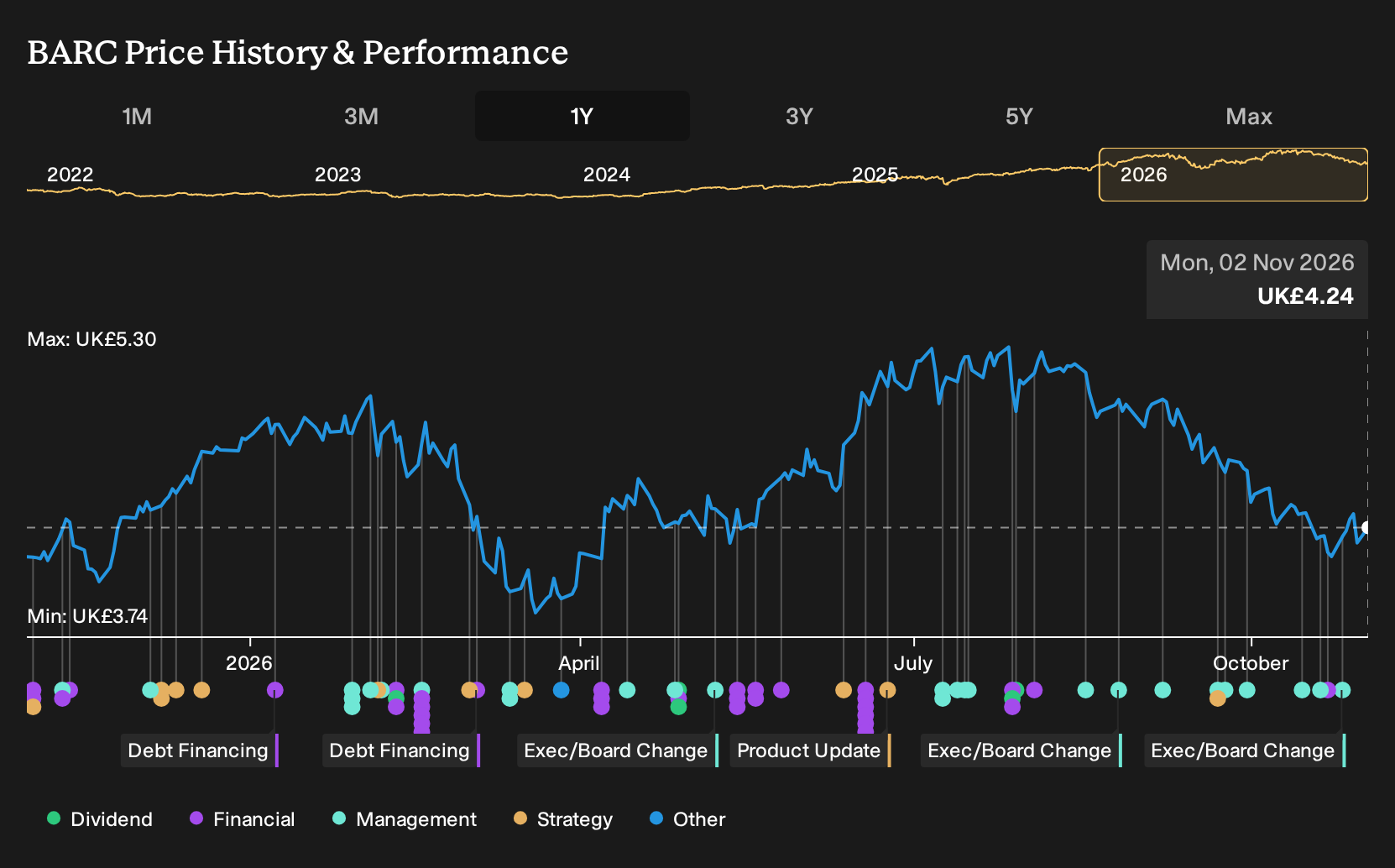
Discover how Barclays' fair value indicates a 36% potential upside to its current price that could close more quickly than many investors expect.
Exploring Other Perspectives
One alternate view focuses less on efficiency and more on credit and conduct risk. The most cautious analysts were already pencilling in about £35.1b of revenue and £9.1b of earnings by 2029 before this Barclays funding shift. That group sees higher loan losses and legal costs as a real brake, so this refinancing could prompt them to revisit assumptions. You do not need to pick a side today. However, it helps to compare these more pessimistic forecasts with the consensus baseline and see which story fits your own expectations.
Explore 8 other Barclays fair value estimates, including one that suggests it could be worth just £4.60.
Decide For Yourself
Disagree with existing narratives? Extraordinary investment returns rarely come from following the herd, so go with your instincts.
- A great starting point for your Barclays research is our analysis highlighting 5 key rewards and 4 important warning signs that could impact your investment decision.
- See our latest analysis for Barclays. The report includes a comprehensive fundamental analysis summarized in a single visual, the Snowflake, making it easy to evaluate Barclays' overall financial health at a glance.
Looking For More Investment Ideas Beyond Barclays?
If you want to stress test your Barclays thesis against other opportunities, it can help to line it up next to peers with very different balance sheets, payout profiles and risk scores. The Simply Wall St Screener lets you do that quickly by filtering for specific traits that match how you like to invest.
- If you care most about strength and resilience, start with companies that appear built to handle shocks using the 5 resilient stocks with low risk scores.
- If reliable income is a priority, compare Barclays with businesses offering higher yields and consistent payouts through the 5 dividend fortresses.
- If you want to hunt for potential mispricings, line up Barclays against other financially solid candidates on the 13 high quality undervalued stocks.
Have feedback on this article? Concerned about the content? Get in touch with us directly. Alternatively, email editorial-team@simplywallst.com