


EN
3 U.S. Consumer Discretionary Stocks Built For Higher Rates
Consumers are still spending, household wealth is higher, yet inflation and the prospect of stickier interest rates are quietly reshaping which U.S. Consumer Discretionary stocks feel comfortable and which feel squeezed. That mix of healthy demand and tighter financial conditions creates a rare window in which quality matters more than hype. This article walks through three stocks from our screener that appear aligned with this environment.
The three stocks below are a sample of that quality focused Consumer Discretionary theme, while the full screen surfaces 38 more U.S. listed companies with equally compelling narratives that are not covered here. To see the rest, head straight into the U.S. Consumer Discretionary Stocks screener to identify, filter and analyze the ideas that best fit your own conviction.
Burlington Stores (BURL)
Overview: Burlington Stores is an off price retailer selling branded apparel, home goods, toys and beauty products to value focused U.S. shoppers.
Operations: Burlington Stores generates about US$12.2b in revenue from apparel focused retail across its U.S. store base and online channels.
Market Cap: US$14.9b
For a consumer discretionary screen that leans toward larger, lower risk retailers, Burlington Stores offers direct exposure to everyday fashion and home spending as shoppers trade brand aspirations for sharper pricing.
"Accelerated small box expansion and relocations, with 178 gross new stores opened in the 12 months to Q2 2026 and the fleet up 13% to 1,287 locations, give Burlington Stores more selling capacity that can support higher total revenue and store level earnings over time."
What happens to that earnings potential if one unseen pressure on Burlington Stores pricing power and merchandise margins starts to bite harder?
If that pressure is what worries you, read the full narrative for Burlington Stores to see how Burlington Stores could still turn pricing friction into a longer term advantage.

TJX Companies (TJX)
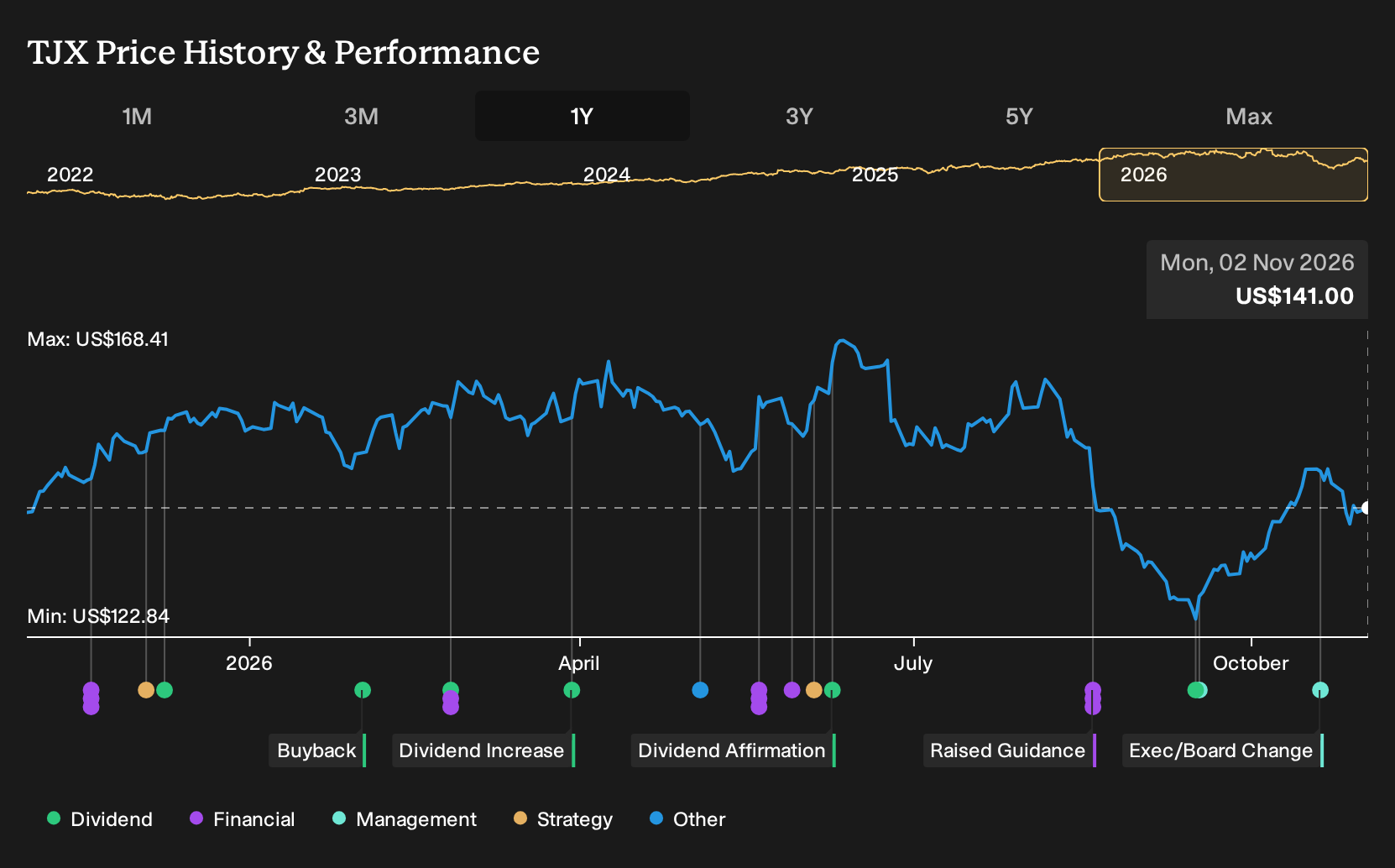
Overview: TJX Companies runs off price apparel and home fashions stores and e commerce sites that sell branded products at discounted prices to value conscious shoppers worldwide.
Operations: TJX Companies generates about US$37.5b from Marmaxx, US$10.6b from U.S. HomeGoods, US$8.4b from TJX International, and US$5.9b from TJX Canada.
Market Cap: US$154.3b
Within a consumer discretionary screen built around larger, resilient retailers, TJX Companies is a pure play on everyday apparel and home spending as households with different incomes keep reaching for branded products at off price levels.
"Management’s plan to lift long-term store potential to 7,500 locations worldwide and accelerate unit growth to 4% a year adds a concrete expansion path that can widen TJX Companies’ off price footprint and support higher consolidated revenue and earnings over time."
The real swing factor is how one subtle shift in shopper behavior could influence both traffic quality and merchandise margins over time.
That shopper shift is the real hinge, and the full narrative for TJX Companies explains how TJX Companies could turn changing traffic patterns into accelerating scale and stronger brand pull.
Best Buy (BBY)
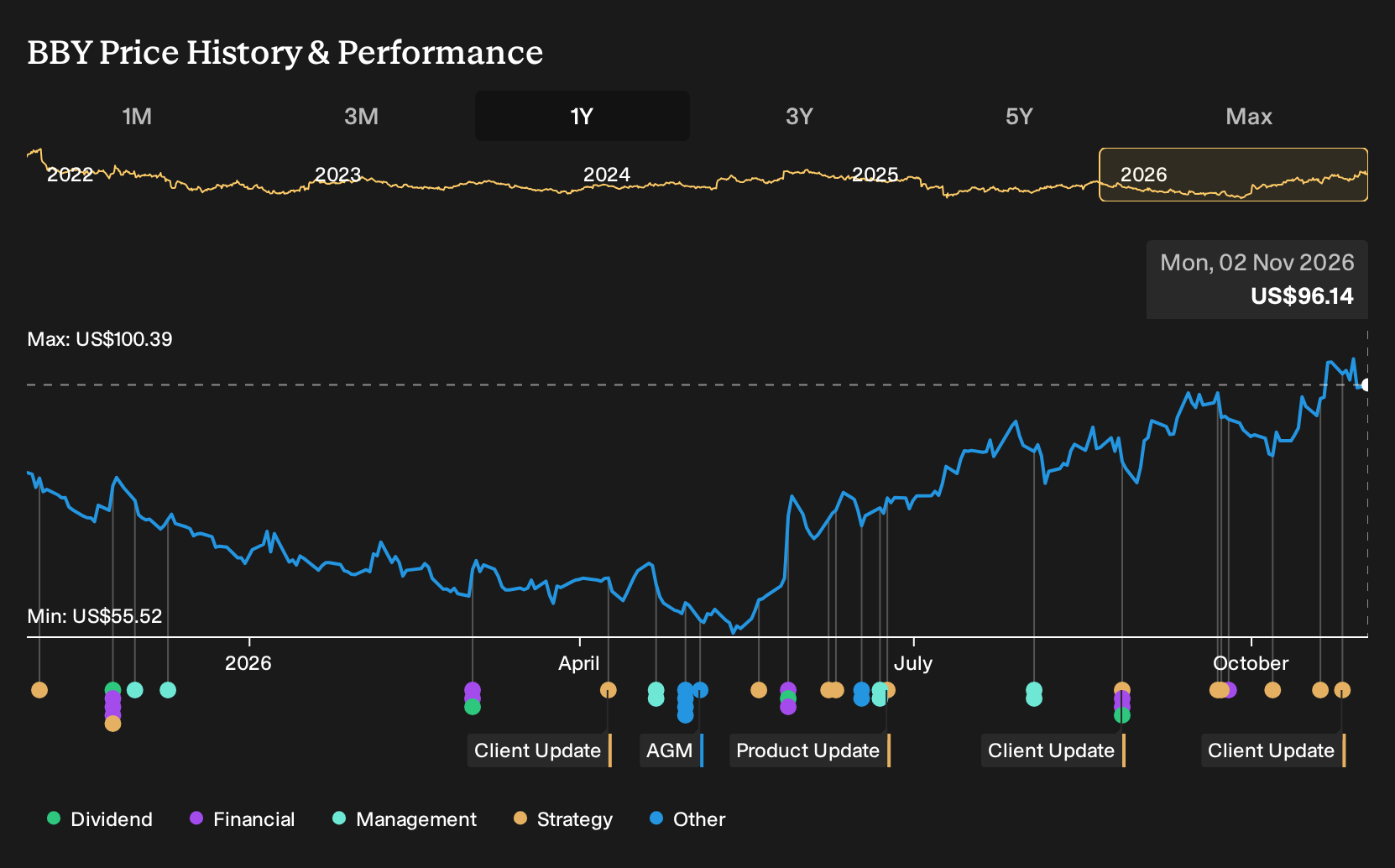
Overview: Best Buy is a large U.S. electronics retailer selling consumer tech, appliances and related services to households and businesses across North America.
Operations: Best Buy generates about US$38.8b from its Domestic segment and roughly US$3.4b from its International business.
Market Cap: US$20.1b
Within a Consumer Discretionary screen built around bigger, steadier retailers, Best Buy links resilient household wealth directly to tech upgrades and higher value service bundles that can keep customers coming back.
"Best Buy is positioned to capitalize on ongoing upgrade and replacement activity in computing and TVs, supported by customer interest in product innovation such as RGB televisions and higher performance laptops, which can support future revenue and service attachment and help sustain operating income."
What really decides how that plays out is whether one underappreciated shift in where tech shoppers see value lands in Best Buy’s favor.
That value shift is the real question, and the full narrative for Best Buy shows how Best Buy could turn changing upgrade habits into accelerating, higher margin loyalty flywheels.
Seeking Alternatives Before The Crowd?
Fresh ideas move first. Breakout stories gain momentum while the best entry points quietly drop out of reach. Scan under the radar for now and consider acting before conditions change.
- Look for cash rich balance sheets before momentum accelerates by reviewing the curated list of solid balance sheet and fundamentals (24 results), which filters for financial strength when it may matter most.
- Track early AI leaders while they are still building traction by using the hand picked 40 profitable AI stocks that aren't just burning cash, which focuses on companies with earnings rather than narratives alone.
- Explore companies that could benefit from a potential nuclear build out by reviewing the focused 16 nuclear energy infrastructure stocks, which highlights infrastructure players while broader attention may still be limited.
Have feedback on this article? Concerned about the content? Get in touch with us directly. Alternatively, email editorial-team@simplywallst.com