


EN
True Health Care (02697) supports the healthcare industry's digital intelligence annual conference, grass-roots application of piercing robots shows promotion potential
The Zhitong Finance App learned that on November 1, the “AI Empowers Medicine to Strengthen Clinical Application Exchange Conference and 'True Health' Health Industry Digital Intelligence Annual Conference” was held at the Zhangjiang Campus of Fudan University. As a joint supporter, True Health Medical (02697) shares innovative practices around businesses such as puncture and ablation surgery robots and multi-organ perfusion systems. At the conference, county hospitals introduced the clinical application of the company's products and presented progress in expanding domestic surgical robots to primary care scenarios.
Ding Xuan, director of the People's Hospital of Zheng'an County, Guizhou Province, explained that the hospital introduced real health care puncture and ablation surgery robots in 2025, and has now helped nearly 100 patients receive robot-assisted puncture diagnosis and treatment. In response to problems such as traditional manual puncture reliance on doctors' experience and difficulties in locating tiny lesions, relevant equipment supports hospitals in carrying out standardized minimally invasive diagnosis and treatment to help patients obtain accurate diagnosis and treatment services nearby.
This case provides a specific sample for observing the marketing of surgical robots. For innovative medical device companies, whether the products can meet the clinical needs of hospitals at different levels is an important part of commercial expansion. The continuous use of county hospitals helps to accumulate real application feedback and provides a basis for further improving clinical training, equipment services and grass-roots promotion plans.
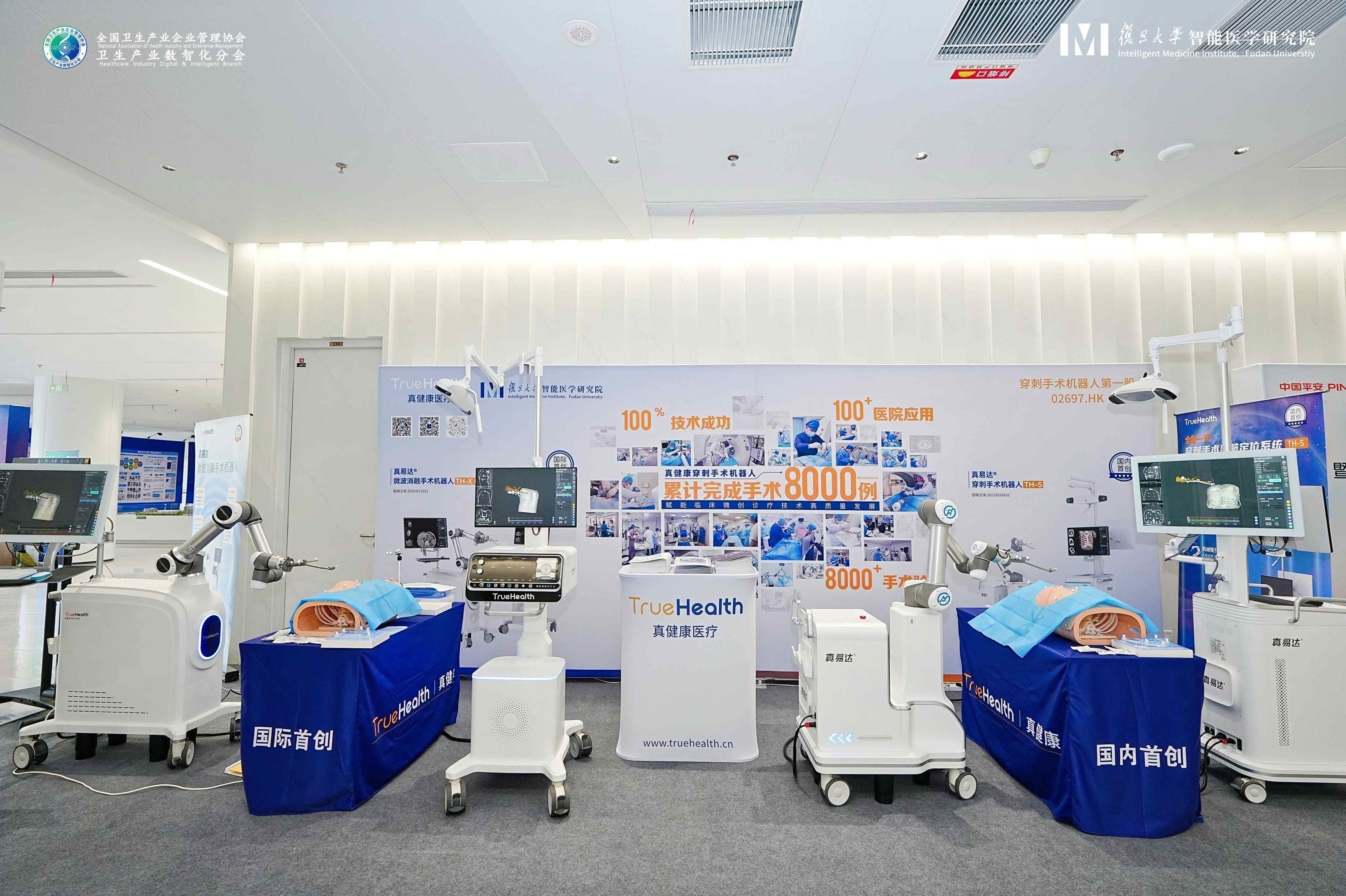
The conference was hosted by the Health Industry Digital Intelligence Branch of the National Health Industry Enterprise Management Association, and was jointly supported by the Fudan University Intelligent Medicine Research Institute and True Health Care, bringing together representatives from medical institutions, research institutes, industry and investment fields to focus on clinical application of artificial intelligence and surgical robots, innovation in organ medicine, and primary care capacity building.
The connection between clinical needs and technological innovation became the focus of the conference exchange. CCB, director of the Guangzhou Respiratory Health Research Institute and head of the National Respiratory Medicine Center, introduced the application of soft-tissue puncture robots and other technologies in accurate location of pulmonary nodules through actual cases. Chen Yanwei of the First Affiliated Hospital of Guangzhou Medical University shared the value of intelligent surgical robots in improving operation accuracy, shortening the learning curve, and promoting standardization of minimally invasive diagnosis and treatment in combination with respiratory interventional diagnosis and treatment practices.
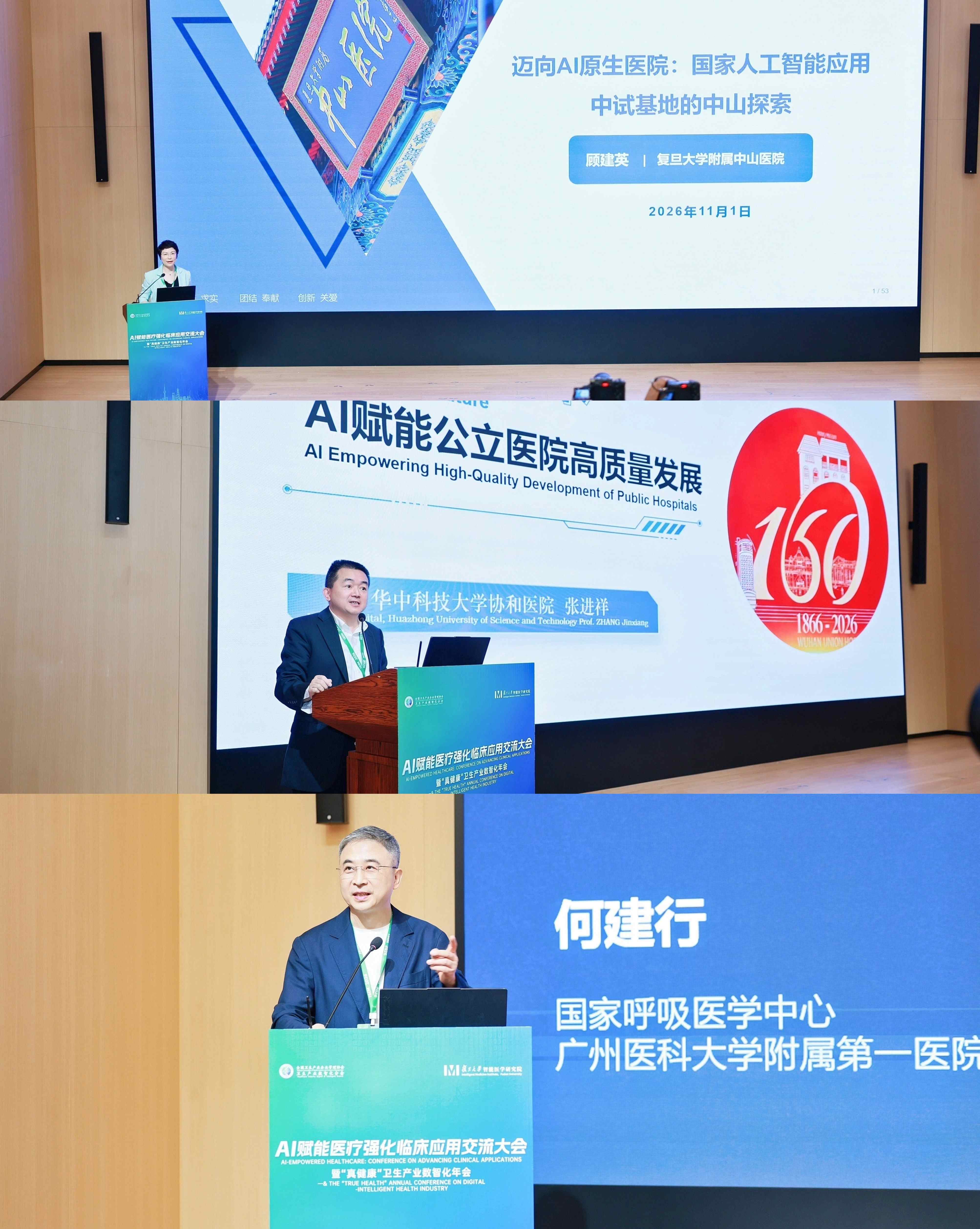
Regarding the large-scale application of medical AI, Gu Jianying of Zhongshan Hospital affiliated to Fudan University introduced the exploration of system integration at the National Artificial Intelligence Application Pilot Base; Zhang Jinxiang of Union Medical College Hospital affiliated to Tongji Medical College of Huazhong University of Science and Technology shared construction experiences such as intelligent computing power platforms and medical models. Relevant exchanges further extended the focus from individual technical capabilities to practical application in hospitals and optimization of diagnosis and treatment processes.
During the industry exchange session, Zhang Haoren, founder and chairman of True Health Care, reviewed the company's exploration in the fields of robotics and organ medicine for puncture and ablation surgery, and introduced the future development direction. The company's relevant business leaders shared the company's layout in the fields of accurate minimally invasive diagnosis and treatment and external organ support, sharing the company's layout on multi-organ perfusion systems, intelligent surgical robot technology innovation, and innovative medical platform construction.
From the perspective of industrial development, large-scale applications of surgical robots require collaborative promotion of products, clinical pathways, training, and service capabilities. The round table participants discussed clinical value, grass-roots implementation, and commercialization. They believed that the relevant equipment had shown application value in improving operational accuracy and supporting primary diagnosis and treatment, and that payment mechanisms and training systems still need to be continuously improved in the future. For real health care, communication with clinical experts and hospital managers helps to more accurately grasp application requirements and provides reference for product iteration and marketing.
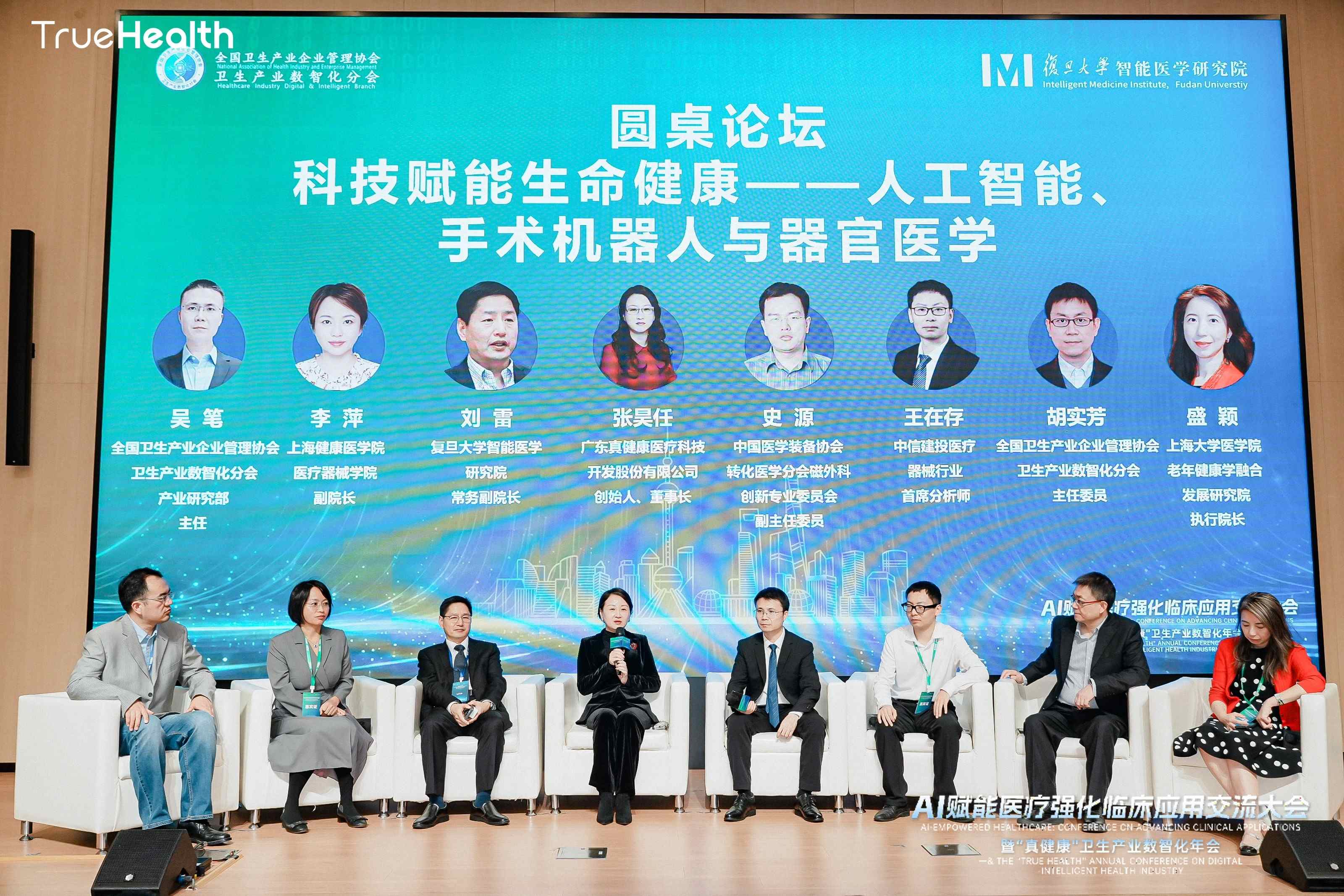
Wang Zaicun, chief analyst of the medical device industry at CITIC Construction Investment, pointed out from a capital market perspective that surgical robots have room for long-term development, there are few domestic comparable companies in the field of organ medicine, and overseas related cases can be used as a reference for observing commercial value. He then shared topics on medical device innovation, internationalization, and mergers, acquisitions and restructuring trends.
According to reports, the conference also invited representatives from various central and western provinces and regions in Shanghai to promote the connection between advanced medical equipment and regional medical needs. Through county application cases, clinical experience exchanges, and cutting-edge product displays, True Health Care has further presented the business path of driving innovation through clinical needs, and has also provided an exchange foundation for further expanding hospital cooperation, deepening scientific research collaboration, and improving the product service system.