


EN
RadNet (RDNT) M And A Call Puts Its Undervalued Narrative Back In Focus
RadNet (RDNT) moved into focus after management scheduled an M&A call on 26 October 2026 to discuss a transaction, prompting investors to reassess how the imaging and digital health business is currently valued.
Over the past year, RadNet’s share price returns have been modest, with a 1-year total shareholder return that declined 6.1%. However, the 3-year total shareholder return of about 156% and 5-year figure of roughly 119% point to a strong longer run for investors, and the recent 7-day and 90-day share price gains suggest the M&A call arrives as momentum has been rebuilding rather than fading.
Scan beyond RadNet and see how other imaging and healthcare AI players are lining up for their own potential deals with a curated set of 33 healthcare AI stocks.
RadNet now trades well below both analyst targets and one estimate of fair value after a sharp pre call move. Is that a margin of safety, or a warning that the market’s caution on this lossmaking imaging group is justified?
Most Popular Narrative: 23% Undervalued
RadNet last closed at $73.10, while the most followed narrative pegs fair value around $94.63. This frames the upcoming M&A call against a backdrop of perceived mispricing and heavy investment in imaging software.
The key requirement is that RadNet converts its heavy AI and digital health investment, including acquisitions and joint ventures with health systems, into sustainably higher margins and free cash flow despite ongoing labor and capital cost pressures.
The current valuation analysis suggests that the share price does not fully reflect the company’s record Q2 2026 revenue and adjusted EBITDA, growing advanced imaging contribution and rapidly scaling DeepHealth ARR, which this narrative views as consistent with RadNet being undervalued and the stock setup being favorable.
See why 9 investors see RadNet as 23% undervalued.
Result: Fair Value of $94.63 (UNDERVALUED)
Still, the RadNet story can break if heavier digital health spending keeps Digital Health EBITDA under pressure or if added imaging capacity fails to attract enough volume.
Find out about the key risks to this RadNet narrative.
Another View: What Multiples Say About RadNet
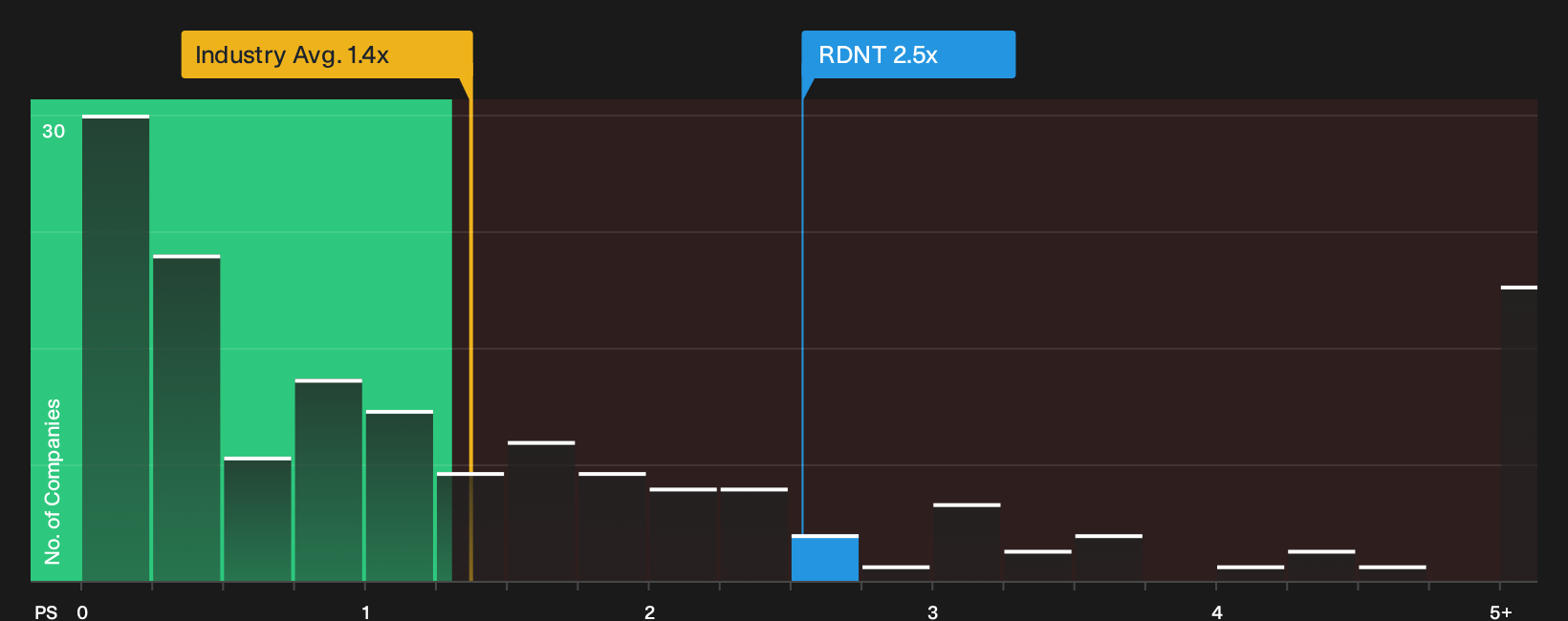
There is a different read when you swap fair value models for simple sales multiples. RadNet trades on a P/S of 2.5x, above the US Healthcare average of 1.4x and its own fair ratio of 1.2x, yet below peers at 4.9x. Is that a safety net or a warning flag for valuation risk?
To see how this pricing gap stacks up in plain numbers, take a look at See what the numbers say about this price — find out in our valuation breakdown.
Next Steps
Mixed signals around RadNet can easily pull you in either direction, so move quickly, review the numbers, then weigh the 3 key rewards and 1 important warning sign.
Looking for more investment ideas beyond RadNet?
RadNet might be front of mind today, but a few minutes spent scanning other opportunities can reshape your watchlist faster than most earnings calls.
- Target dependable cash generators by using the 4 dividend fortresses to focus on income strength with higher yields.
- Hunt for quality at a discount with the 34 high quality undervalued stocks to highlight strong fundamentals at compressed prices.
- Prioritise resilience in choppy conditions through the 29 resilient stocks with low risk scores to filter for sturdier balance sheets and lower risk scores.
Have feedback on this article? Concerned about the content? Get in touch with us directly. Alternatively, email editorial-team@simplywallst.com