


EN
Trulieve Stock In Focus After DEA Registrations for Medical Marijuana Dispensaries
- Trulieve Cannabis received some of the first DEA registrations for its state licensed medical marijuana dispensaries under the new federal framework following the Attorney General's order and the rescheduling of medical marijuana to Schedule III.
- This early federal recognition positions Trulieve Cannabis to participate in regulated clinical research and to operate within a clearer national compliance structure, which could influence how it allocates capital across cultivation, production and retail.
- Attention now turns to how Trulieve Cannabis's investment narrative could shift as DEA registration reshapes its regulatory footing and operating options.
Trulieve Cannabis Investment Narrative Recap
To own Trulieve Cannabis, you need to believe its multi state medical footprint can turn regulatory clarity into a cleaner tax profile and more efficient operations over time. The DEA registration is one step in that direction. The near term focus still sits on execution in core states, controlling costs and keeping pricing pressure from eroding unit economics.
The biggest short term swing factor remains how quickly federal tax treatment and compliance rules translate into cash retained in the business. The main risk is that heavier capex, new projects and any M&A run ahead of demand or remain exposed to softer consumer spending, which would keep profitability and returns under strain.
The DEA registration itself is the key announcement here. It directly connects to earlier expectations that Schedule III status could eventually allow ordinary expense deductions and a more standardized compliance framework. That does not rewrite Trulieve Cannabis’s investment case overnight, but it starts to align day to day operations with the policy backdrop analysts had been modelling.
In practical terms, the registration opens the door for Trulieve Cannabis to participate in clinical research and operate under a defined federal framework. The company already has US$353 million in cash and US$290 million of debt on the balance sheet. Execution now hinges on how effectively management converts this regulatory footing and its existing retail, wholesale and tech investments into steadier margins while the business is still loss making.
Trulieve Cannabis' narrative projects US$933.9 million in revenue and US$183.7 million in earnings by 2029. This projection embeds a 6.4% yearly revenue decline and an earnings change of about US$651.5 million, shifting from a loss of US$467.8 million today to the forecast profit level.
Uncover why Trulieve Cannabis' fair value indicates a 64% potential upside to its current price, which could narrow quickly.
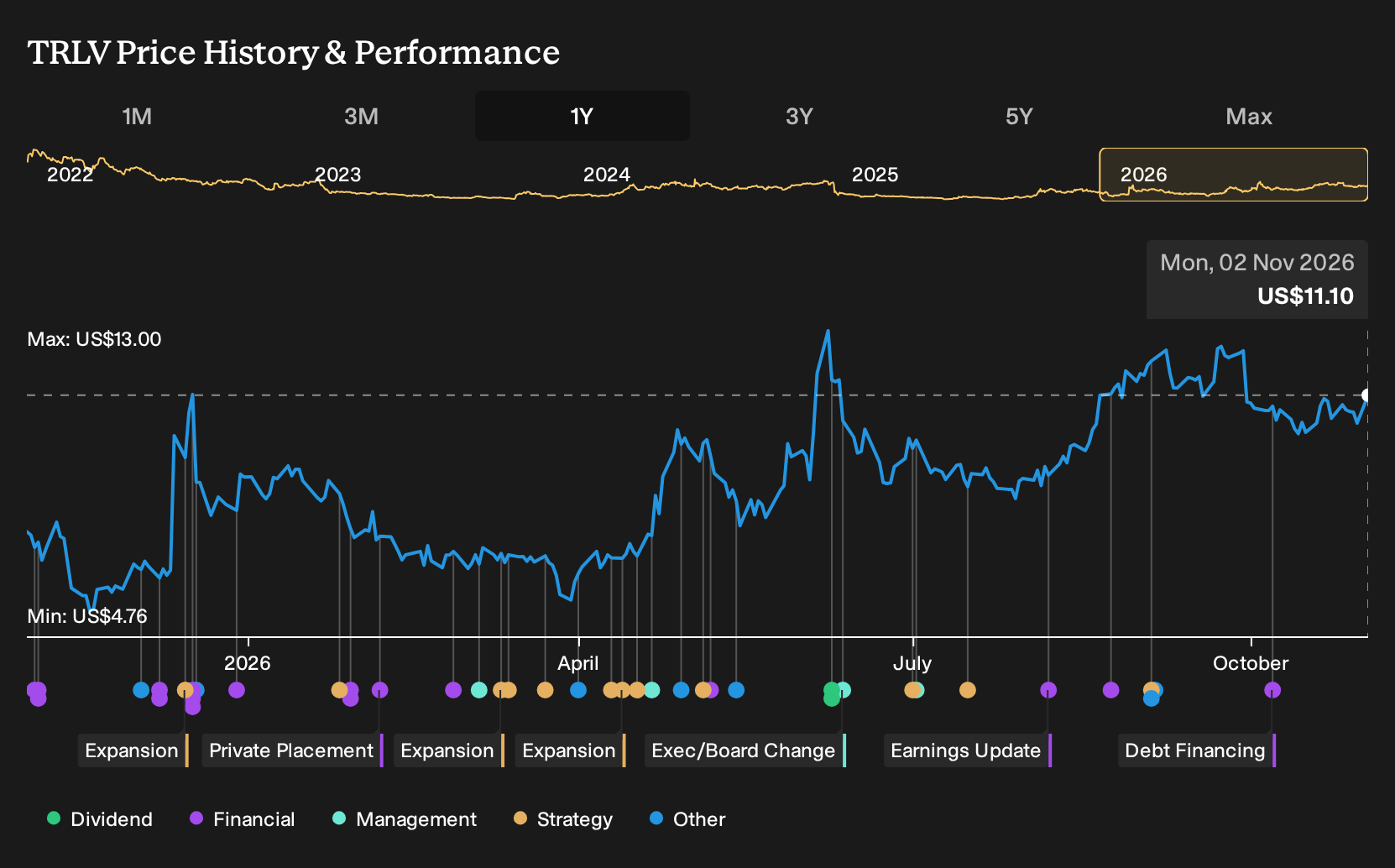
Exploring Other Perspectives
Not every analyst sees the DEA move as the key driver for Trulieve Cannabis. The most cautious group focuses on slower top line expectations, with revenue assumptions of about US$869.6 million by 2029 and US$250.1 million in earnings. These views were set before the registration news, so you may see those narratives adjust from here.
Explore 3 other Trulieve Cannabis fair value estimates, including one that suggests it could be worth just $15.00!
Form Your Own Verdict
Don't just follow the ticker. Dig into the data and build a conviction that's truly your own.
- A great starting point for your Trulieve Cannabis research is our analysis highlighting 3 key rewards and 1 important warning sign that could impact your investment decision.
- See our latest analysis for Trulieve Cannabis. The report includes a comprehensive fundamental analysis summarized in a single visual, the Snowflake, making it easy to evaluate Trulieve Cannabis' overall financial health at a glance.
Looking for more investment ideas beyond Trulieve Cannabis?
If the Trulieve Cannabis story has sharpened your view on regulation and balance sheets, you can use that lens to widen your watchlist with companies that match your risk and return preferences.
- For investors who want potential bargains that still screen well on fundamentals, start with a curated set of 34 high quality undervalued stocks that already clear quality filters.
- If capital preservation matters just as much as return, focus on resilience first and scan a group of 29 resilient stocks with low risk scores that score well on financial strength and stability.
- When balance sheet strength is non negotiable for you, anchor your research in a list of solid balance sheet and fundamentals (24 results) and build ideas from companies with room to absorb setbacks.
Have feedback on this article? Concerned about the content? Get in touch with us directly. Alternatively, email editorial-team@simplywallst.com