


EN
3 U.S. Cyclical Stocks to Watch as Investors Rotate Beyond AI
Tech-focused AI stocks are taking a breather, and that pullback is forcing investors to rethink where the real drivers of the U.S. market might sit next. Capital that once chased a narrow AI story is now scanning for solid, cyclical businesses tied to the real economy. This article walks through three stocks from our U.S. Non-AI Cyclical Sector Leaders screener that are directly exposed to this news backdrop and explains why their stories deserve a closer look today.
The three stocks highlighted below are just a sample, and the full screen surfaced 31 more U.S. Non-AI Cyclical Sector Leaders with equally compelling stories that are not covered in this article. If you want to identify and analyze your own highest-conviction ideas in this space, head straight to the US Non-AI Cyclical Sector Leaders screener.
Timken (TKR)
Timken gives this screener direct exposure to old-fashioned industrial demand, with bearings and motion products tied to real-world capex rather than AI budgets. It is also a useful case study in how an established manufacturer tries to reshape its economics from the inside.
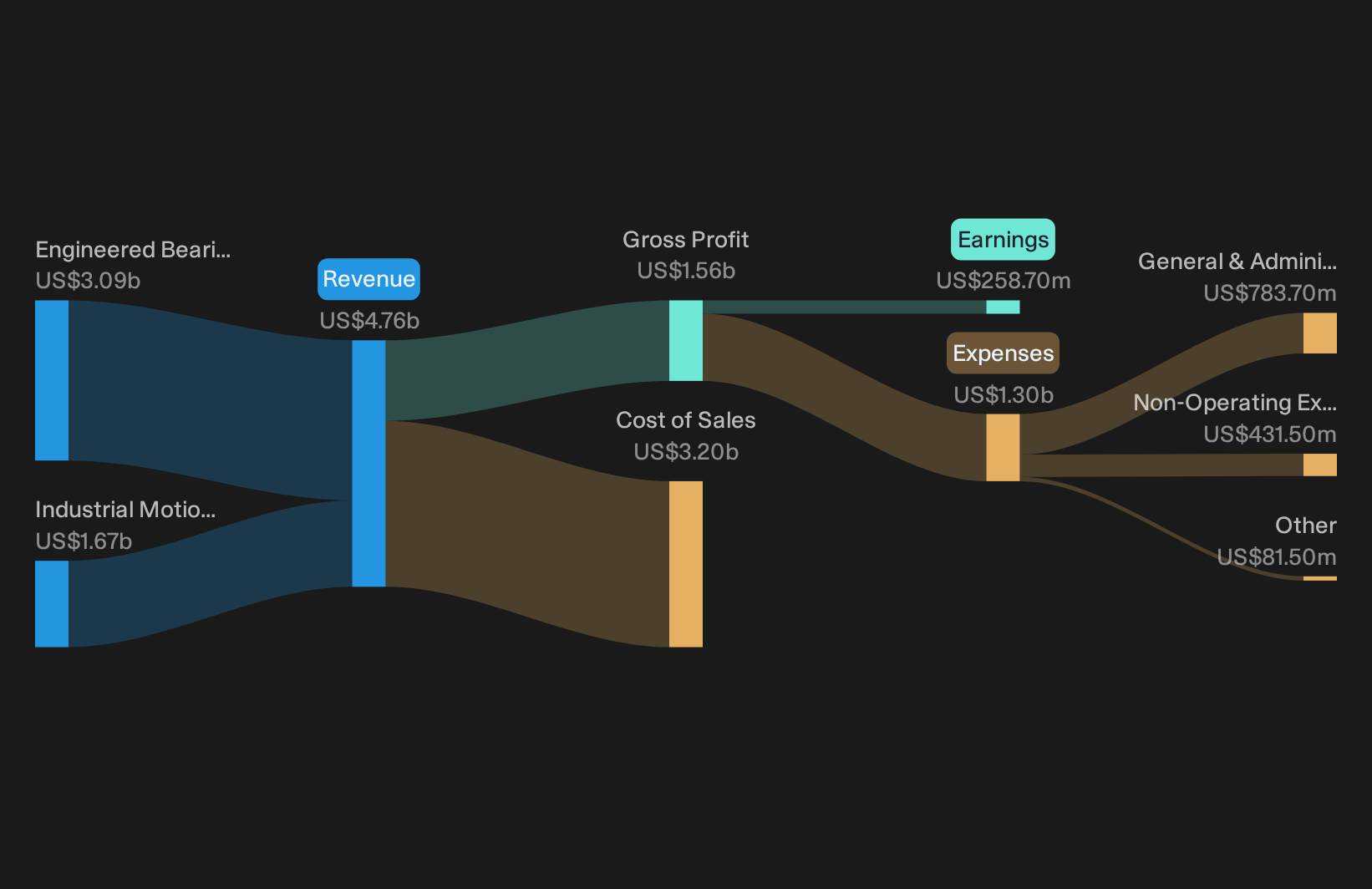
Timken designs and services engineered bearings and industrial motion gear for sectors like energy, construction, agriculture and transportation, classic cyclical activity that anchors it in this non AI industrial screen. The Engineered Bearings segment generates about US$3.1b of revenue and Industrial Motion adds roughly US$1.7b, and the business carries a market value near US$7.7b.
"Timken is rolling out its Elevate to Outperform and 80/20 simplification program across the full revenue base, with SKU and customer rationalization and stranded cost removal tied to a planned 500 bps uplift in adjusted EBITDA margin to a range of 21 to 23% by 2028."
The real test will come if one quiet shift inside that plan changes how much of each future industrial dollar Timken actually keeps.
If that margin shift is what really matters to you, the full narrative for Timken explains what could be accelerating, stalling, or quietly masking Timken's next chapter.
Landstar System (LSTR)
Landstar System is a pure transportation cyclical story, with an asset light freight brokerage model that closely tracks real world shipping demand rather than AI spending. This is exactly why it shows up in this U.S. Non AI Cyclical Sector Leaders screen.
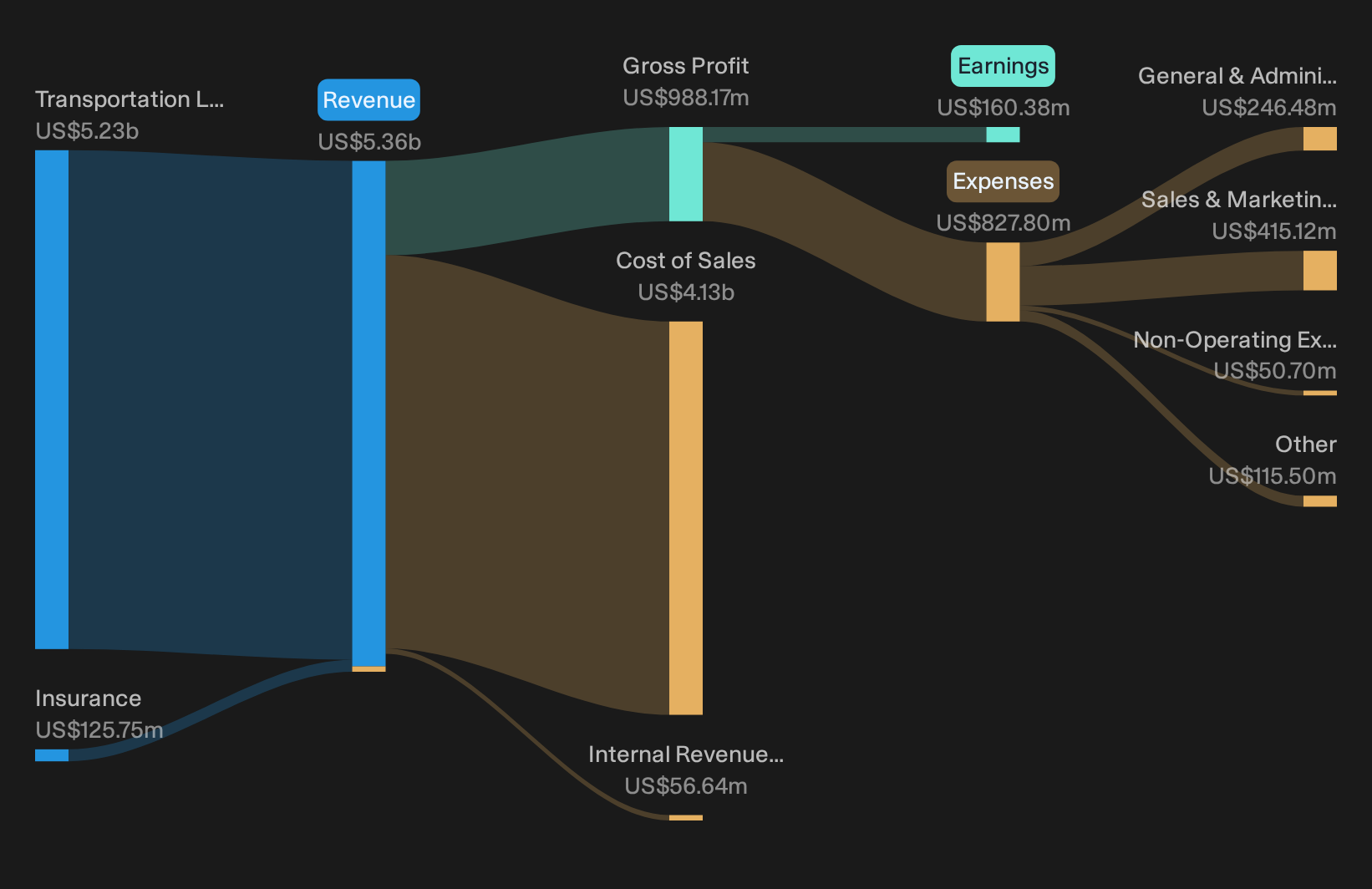
Landstar System runs an asset light transportation management network that coordinates truck, rail, air and ocean freight for shippers, generating about US$5.2b from Transportation Logistics and roughly US$126 million from Insurance, with a small internal revenue offset and a market value near US$4.8b.
Freight investors looking for exposure to the real economy rather than the AI trade are watching Landstar System as a bellwether for how U.S. goods movement responds if capital rotates into non tech sectors.
"Robust growth in infrastructure related and data center freight, supported by heavy haul revenue of about US$134 million in Q1 2026 and US$164 million in Q2 2026 with double digit year over year gains in both quarters and a rising share of unsided and platform freight, continues to support the case that Landstar System can lift revenue per load and future earnings."
What matters next is how one still unresolved cost pressure shapes the gap between headline freight strength and the earnings power Landstar System actually keeps.
That cost tension is exactly where the story gets interesting, and the full narrative for Landstar System describes how Landstar System’s earnings power could be accelerating or quietly capped from this point.
Knight-Swift Transportation Holdings (KNX)
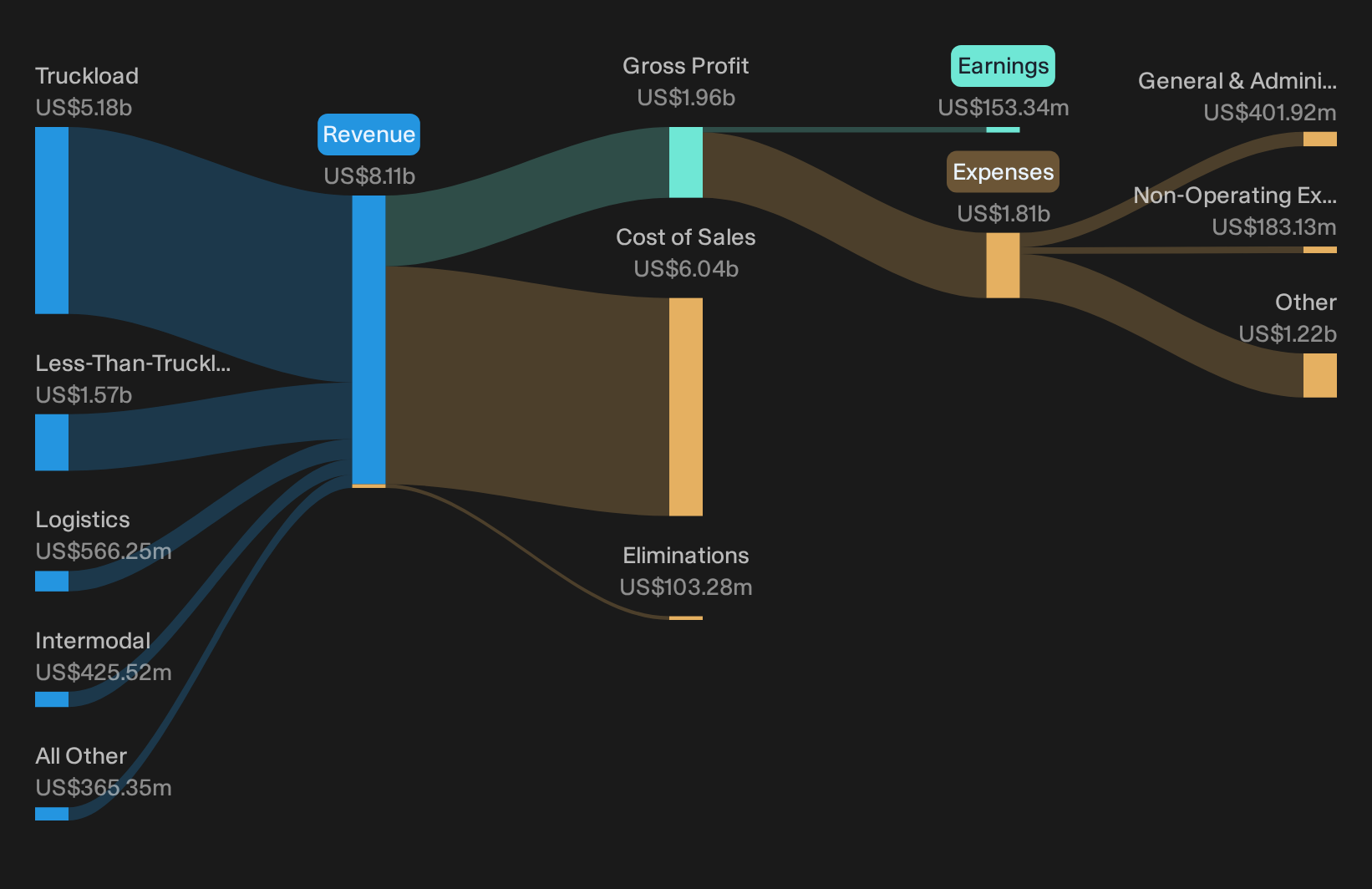
Knight-Swift Transportation Holdings plugs this screener directly into U.S. freight cycles, offering broad truckload, LTL, logistics and intermodal services that generated about US$5.2b from Truckload, US$1.6b from LTL, US$566 million from Logistics and US$426 million from Intermodal, with a market value near US$9.9b.
For investors looking past the AI pullback toward real economy freight, Knight-Swift Transportation Holdings offers a pure play on U.S. trucking. The key question is how much of any future pricing strength actually sticks to the bottom line.
"Although Knight-Swift Transportation Holdings reports better truckload operating ratios and higher revenue per loaded mile, rising brokerage liability insurance premiums following the Montgomery ruling and tighter insurance capacity could keep logistics gross margins structurally weaker, limiting the flow through of pricing gains into consolidated earnings."
What ultimately matters is whether one quiet shift in the cost base lets those improving freight economics translate into the margin profile investors are counting on.
To see how that margin reset could accelerate Knight-Swift Transportation Holdings rather than cap it, read the full narrative for Knight-Swift Transportation Holdings for the full risk and upside story.
Seeking Fresh Alternatives Before They Fly
Some of the sharpest breakout stories start quietly, then momentum hits and prices move before most investors notice. Scan these fresh ideas while it matters and consider them early in your research process.
- Target dependable cash flow by focusing on companies screened for strong balance sheets and resilient fundamentals using the list of solid balance sheet and fundamentals (24 results).
- Look for income opportunities before yields change by tracking curated high payout candidates through the 5 dividend fortresses.
- Evaluate early-stage AI exposure without chasing hype by reviewing hand picked, cash generative contenders inside the 41 profitable AI stocks that aren't just burning cash.
Have feedback on this article? Concerned about the content? Get in touch with us directly. Alternatively, email editorial-team@simplywallst.com