


EN
Japanese Infrastructure Stocks to Watch as Public Private Spending Lifts Demand
Japan is quietly entering a new phase, with the BOJ signaling an end to the deflation era just as Tokyo lines up hundreds of trillions of yen in public and private investment. That mix of tighter money and bigger building plans could reshape which Japanese stocks benefit and which struggle. This article walks through three companies exposed to these shifts so you can judge which stories deserve a closer look.
The stocks covered below are only a small sample of the idea, and the full screen surfaces 20 more Japanese infrastructure and industrial equipment companies with equally compelling narratives that are not detailed here. To identify and analyze the highest conviction ways to play Japan’s public and private build out, head straight into the Japanese Infrastructure and Industrial Equipment Beneficiaries of Public–Private Investment screener.
Ebara (TSE:6361)
Ebara is a Tokyo based industrial group supplying pumps, compressors, turbines, chillers, and waste treatment systems that sit inside water, energy, and industrial infrastructure projects worldwide. Revenue is spread across Precision Machinery at ¥375.4b, Building Service & Industrial at ¥259.5b, Energy at ¥206.4b, Environmental at ¥103.9b, and Infrastructure at ¥56.7b. The stock’s market value is about ¥1.71t.
Ebara ties directly into Japan’s public and private build out because its pumps, turbines, and chillers are the hardware that water systems, power plants, and factories need when capex budgets open up. Investors watching policy driven infrastructure orders and BOJ rate shifts may care most about what happens when one unseen pressure on future project profitability moves either way.
That profitability pressure is exactly why the DCF valuation analysis for Ebara could be worth your next click, with rate and project assumptions laid out before they start to bite.
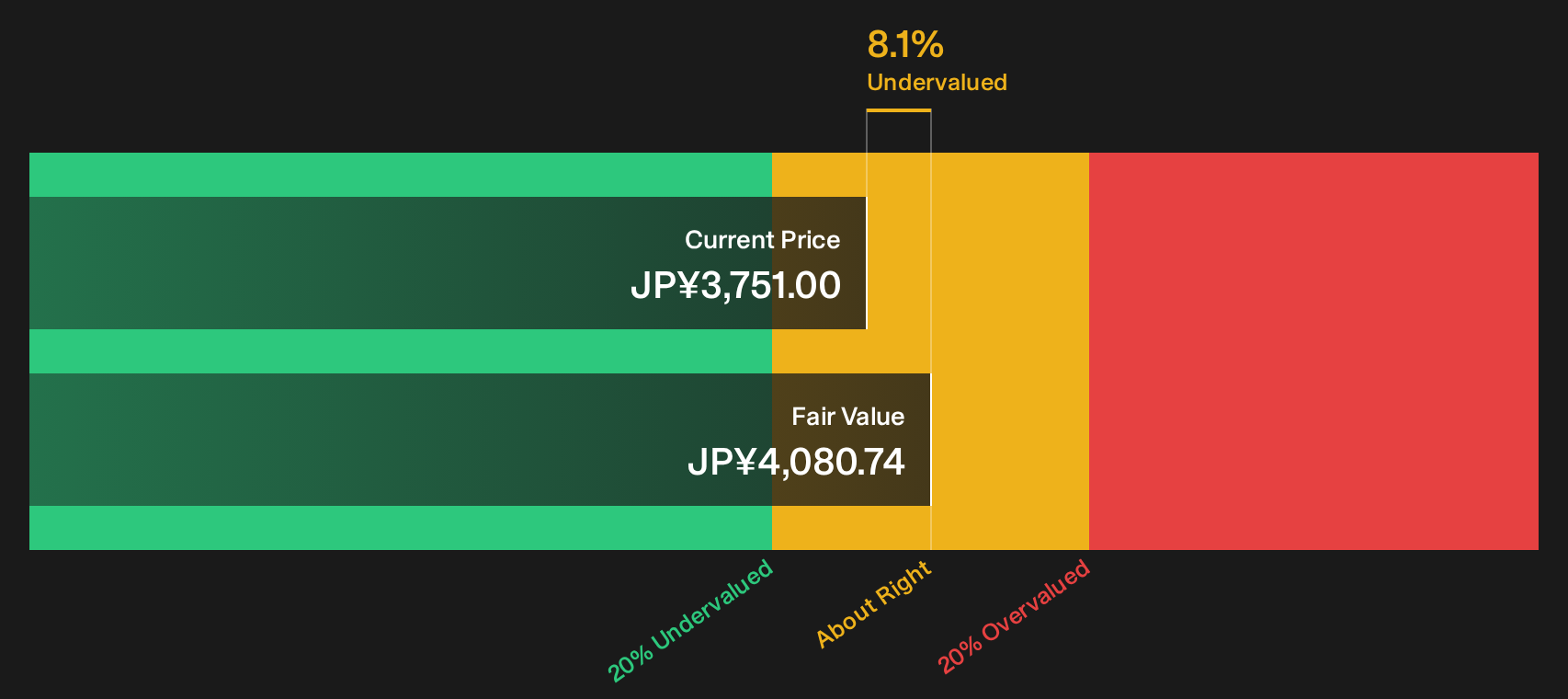
Furukawa Electric (TSE:5801)
Furukawa Electric plugs directly into Japan’s infrastructure push through its optical, digital, and energy components, supplying fiber cables, power lines, and automotive wiring that underpin grid, telecom, and industrial upgrades. The group reports segment adjustments of about ¥1.38t and has a market value near ¥1.97t, putting it firmly in large cap territory.
Furukawa Electric links physical and digital infrastructure, from optical fiber for data centers to high voltage power cables and automotive harnesses that connect vehicles to electrified networks. That mix ties the business closely to public and private capex for grids, telecom backbones, and transport systems.
Those capex links are exactly why the 3 key rewards and 3 important warning signs (2 are major!) before you buy or pass on Furukawa Electric could be worth a few focused minutes.
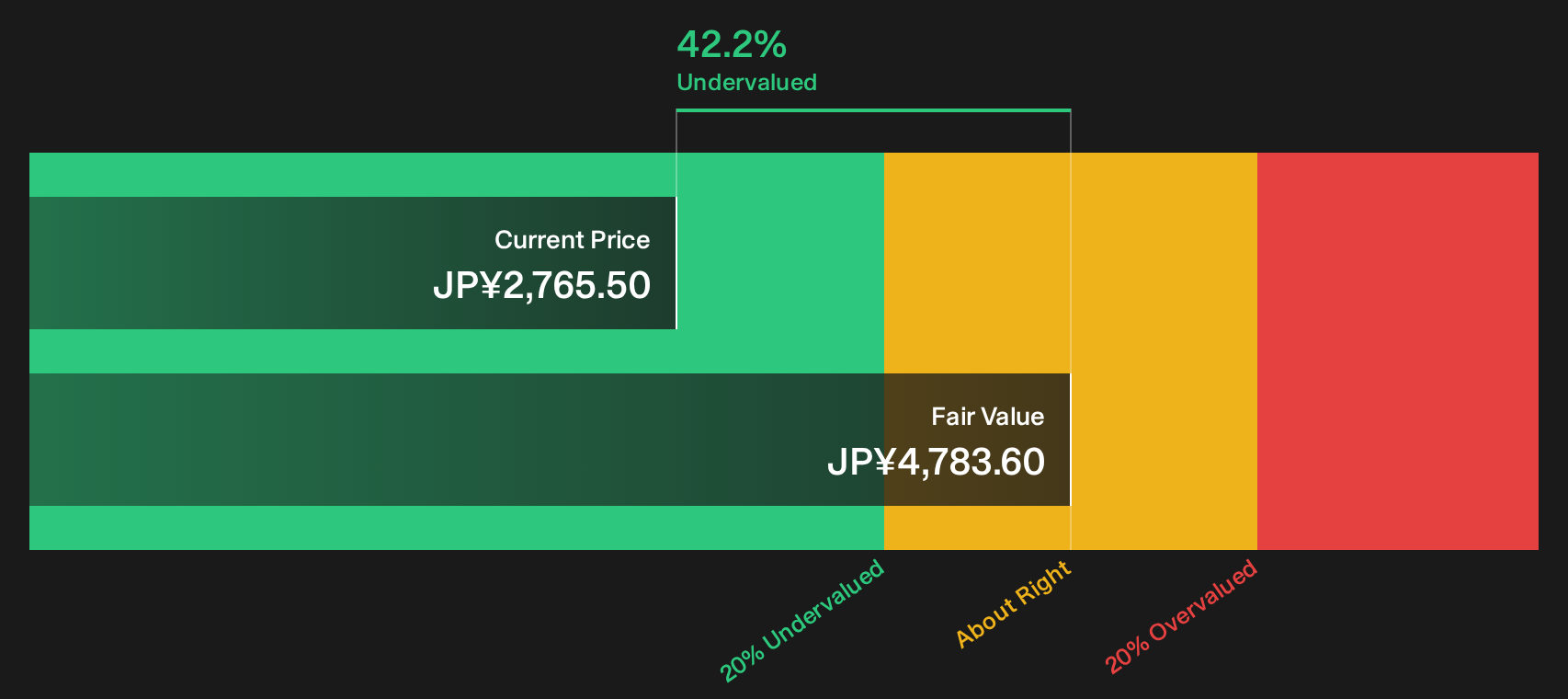
Tokyu Construction (TSE:1720)
Tokyu Construction is a ¥126.6b Tokyo based contractor focused on civil engineering and building projects that line up closely with Japan’s public works and urban renewal push. Most activity relates to large construction and PPP projects, with about ¥335.5b reported as segment adjustments and ¥7.8b from real estate and other services.
Tokyu Construction gives direct exposure to Japan’s rail, road, tunnel, and urban development pipeline just as the government leans on public–private capex. The stock trades on a single digit P/E with a roughly 3.6% yield, so investor attention naturally shifts to what happens when funding costs and project returns pull in opposite directions.
With those funding pressures in mind, the 4 key rewards and 1 important warning sign to see how Tokyu Construction’s upside and contract risk could be decoupling from that headline P/E and yield.
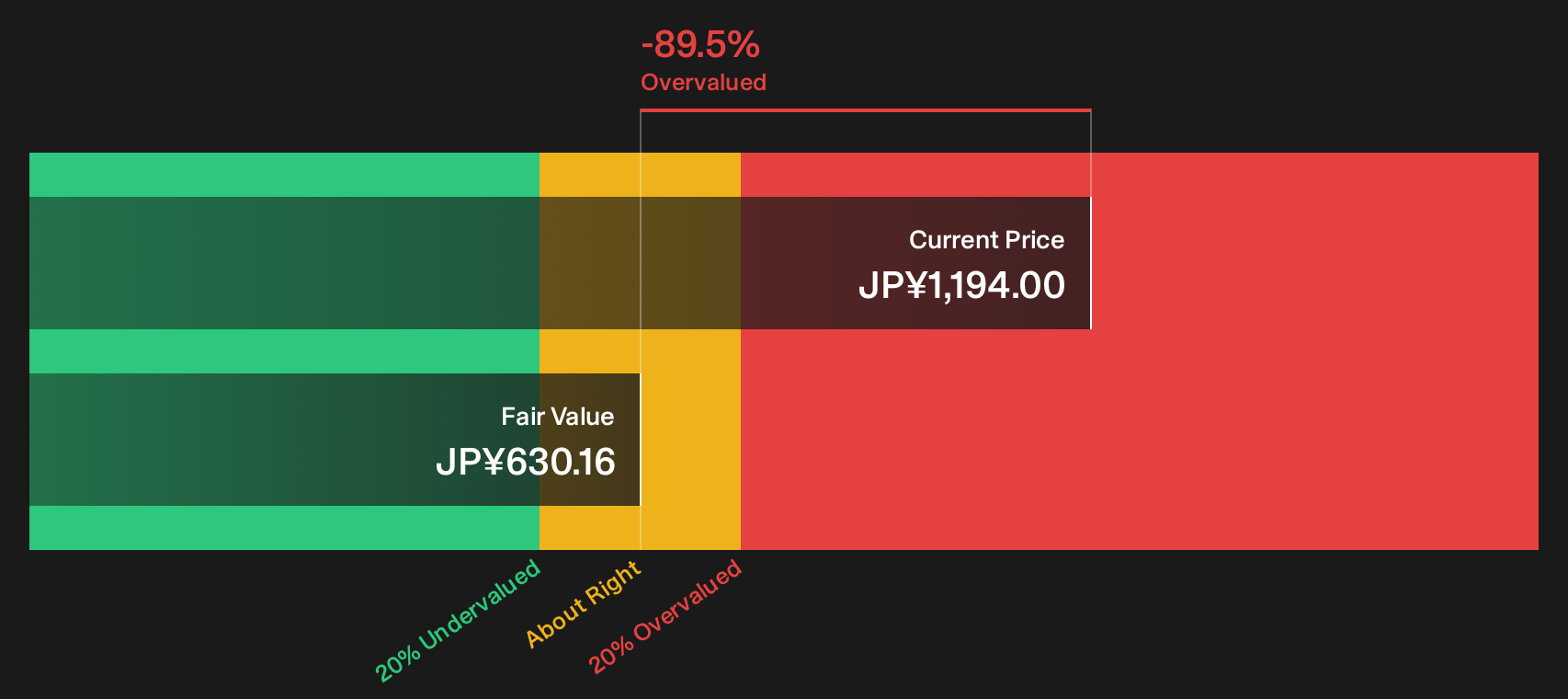
Seeking Alternatives Before Momentum Flies
Fresh ideas move first, and by the time the crowd catches on, the best entry points are often gone. Scan these under the radar lists while it matters and consider acting early.
- Target reliable income streams by scanning a curated set of 30 dividend fortresses designed to keep cash returns front and center while prices are still settling.
- Look for under the radar growth potential through a hand picked 73 high quality undiscovered gems list that the broader market has not fully focused on yet.
- Monitor sector momentum by tracking 54 AI infrastructure stocks that may be positioned to participate as AI demand directs more capital into the infrastructure supporting the trend.
Have feedback on this article? Concerned about the content? Get in touch with us directly. Alternatively, email editorial-team@simplywallst.com