


EN
How Investors Are Reacting To Vodafone (LSE:VOD) Joint Satellite Spectrum Bid
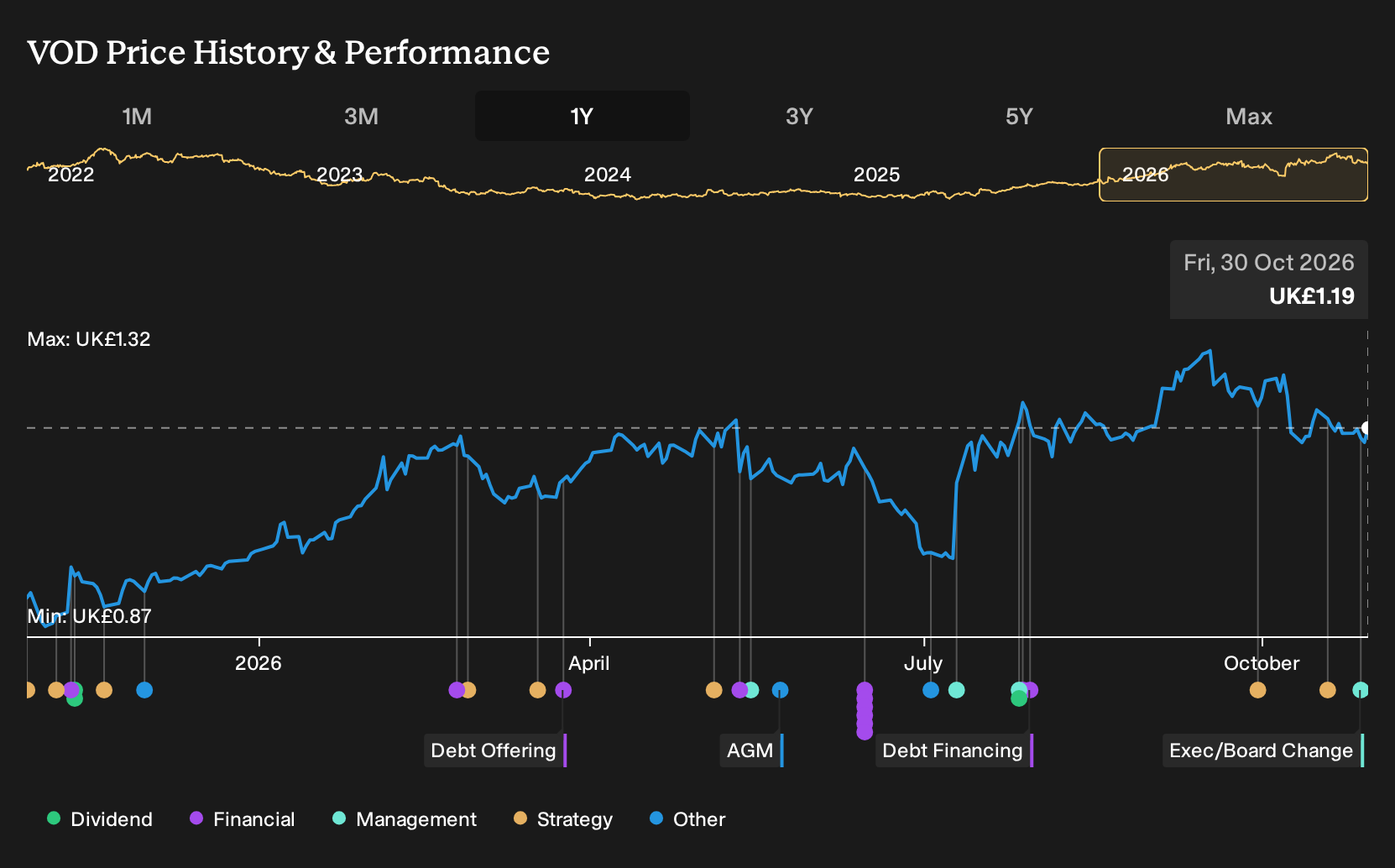
- AST SpaceMobile reported that Deutsche Telekom, Orange, Telefónica and Vodafone signed a Letter of Intent in October 2026 to explore a joint bid for Mobile Satellite Services spectrum in Europe. The initiative would use BlueBird satellites and European ground infrastructure to extend coverage to more than 500 million mobile users.
- For Vodafone Group, participation in a potential shared MSS spectrum bid highlights management’s focus on filling coverage gaps and integrating space based connectivity into existing networks. This is intended to support service reliability and differentiated wholesale and retail offerings across European markets.
- We will look at how Vodafone Group’s investment narrative is shaped by this joint European Mobile Satellite Services spectrum initiative.
Scan beyond Vodafone Group and line up other telecoms and connectivity players positioned for space enabled coverage shifts with the curated 41 power grid technology and infrastructure stocks
Vodafone Group Investment Narrative Recap
To own Vodafone Group, you need to believe the heavy lifting in Germany and the U.K., the Vodafone Three integration and ongoing 5G spend can translate into steadier earnings and eventually cleaner cash generation. The joint MSS spectrum initiative with AST SpaceMobile speaks to that same theme of improving coverage and service quality, although it does not change the core near term story.
The key catalyst still sits in execution on Germany and the U.K. integration, backed by balance sheet flexibility from past asset disposals. The biggest risk remains operational, if German EBITDA pressure lasts longer than management expects or if large restructuring programs run into delays and cost creep.
The most relevant development linked to this space connectivity push is the Letter of Intent with AST SpaceMobile, Deutsche Telekom, Orange and Telefónica. For Vodafone Group, the operational angle is about using shared European MSS spectrum and BlueBird satellites to plug rural and hard to reach coverage gaps without building every tower alone.
If integration with satellite coverage proceeds smoothly, that could support the 5G and network quality story that underpins many of the current catalysts, from U.K. investment plans to B2B and Africa data growth. Execution risk does not go away though, especially with high debt, ongoing losses at group level and multiple large projects running in parallel.
Vodafone Group Consensus Assumptions Behind the Space Enabled Story
Vodafone Group's space connectivity angle sits on top of a wider analyst framework that already includes moderate top line expansion, margin repair and a shift back to positive earnings over the second half of the decade. Rather than basing the case on the MSS spectrum Letter of Intent alone, brokers are tying it into existing expectations for operational cleanup in Europe and growth in regions like Africa and Turkey.
Forecasts in late 2026 point to Vodafone Group's revenue rising at 5.3% a year over the next three years, with profit margins moving from a reported loss position of 0.7% today to a 6.9% margin in three years. That implies a meaningful swing from loss making territory to solid profitability, although the path depends on multiple moving pieces, from German broadband churn to U.K. integration synergies.
Earnings expectations show the scale of that swing in hard numbers. Analysts see profit rising from a loss of €289.0 million today to €3.3b by 2029, with earnings per share at €0.15. The shift from a loss to multibillion euro profit represents an earnings increase of roughly €3.6b and the forecast range is wide, with the most optimistic models at €4.6b and the most cautious closer to €1.6b.
The valuation bridge in these reports relies on those 2029 figures. For the current analyst price target to be supported, Vodafone Group would need to generate about €47.3b of revenue and €3.3b of earnings in 2029 and trade on a P/E of 10.6x, using a discount rate in the 7.6% area. That assumed future P/E sits well below the current 19.3x for the US Wireless Telecom peer group quoted in the report, which presents the stock as priced closer to a utility-like multiple than a higher growth telecom peer.
One important moving part is share count. Consensus models point to shares outstanding falling by about 5.8% a year over the next three years. If that occurs, any given earnings level in euro terms would translate into a higher figure per share, which matters for investors who follow P/E ratios and dividend capacity more closely than absolute profit in euros.
Analyst targets are tightly clustered around the current quote. The average price target of £1.22 matches the reported share price of £1.22 in the report, with bullish cases up at £1.58 and the lower end at £0.85. With such a small gap between the consensus target and where the stock trades, the market view implied here is that Vodafone Group is already priced broadly in line with those 2029 revenue and earnings assumptions.
MSS spectrum and space based coverage do not sit at the center of those forecasts, yet they fit the overall framework. If rural coverage in markets like Germany, the U.K. and parts of Southern Europe can be extended with BlueBird satellites rather than only via new towers, that can support the revenue and margin story that analysts are already using in their models without requiring a radical rewrite of the base case.
Vodafone Group's narrative sets out €47.3b revenue and €3.3b earnings by 2029. This rests on 5.3% yearly revenue growth and an earnings increase of about €3.6b from a loss of €289.0 million today.
Uncover why Vodafone Group's fair value indicates that it is in line with its current price.
Exploring Other Perspectives
The sharpest contrast comes from how much weight you put on Vodafone Group’s execution risk. The most cautious analysts already worked with earnings of about €1.6b on roughly €47.0b revenue by 2029 before this MSS spectrum news and the executive change. That view prices in tougher conditions. You can compare it with other scenarios to judge how this new satellite push and leadership shift might alter the story.
Explore 4 other Vodafone Group fair value estimates, including one that suggests it could be worth just £1.21.
Reach Your Own Conclusion
Disagree with existing narratives? Extraordinary investment returns rarely come from following the herd, so go with your instincts.
- A great starting point for your Vodafone Group research is our analysis highlighting 3 key rewards and 2 important warning signs that could impact your investment decision.
- See our latest analysis for Vodafone Group. The report includes a comprehensive fundamental analysis summarized in a single visual, the Snowflake, making it easy to evaluate Vodafone Group's overall financial health at a glance.
Looking for more Vodafone Group sized investment ideas?
If the Vodafone Group story has you thinking about how to position your portfolio for different types of opportunities, it can help to line up a wider watchlist using the Simply Wall St Screener.
- For investors who want quality at a reasonable price, start with companies that combine strong fundamentals with potential upside through the 14 high quality undervalued stocks.
- If resilience matters most to you, filter for businesses with sturdier finances using the list of solid balance sheet and fundamentals (10 results).
- For those who put capital preservation first, narrow the universe to steadier profiles through the 5 resilient stocks with low risk scores.
Have feedback on this article? Concerned about the content? Get in touch with us directly. Alternatively, email editorial-team@simplywallst.com