


EN
How Investors May Respond To Restaurant Brands International (QSR) Earnings Beat
- Restaurant Brands International reported Q3 2026 revenue of US$2,525 million and net income of US$542 million, with global comparable sales up 3.8% led by Burger King U.S. and international operations.
- Popeyes posted same store sales declines and leadership changes, and the Board affirmed a US$0.65 quarterly dividend, highlighting management’s focus on brand turnaround alongside ongoing capital returns.
- We will now examine how Restaurant Brands International's stronger Burger King driven earnings affect the investment narrative and shift the balance of risks.
Scan how Restaurant Brands International's Q3 momentum compares with other consumer stocks by lining up its earnings profile against 33 high quality undervalued stocks in similar sectors.
Restaurant Brands International Investment Narrative Recap
For a shareholder in Restaurant Brands International, the core belief is that a multi brand, largely franchised quick service model can keep compounding system wide sales and cash generation even when individual concepts hit bumps. The latest quarter fits that idea. Q3 2026 revenue of US$2,525 million and net income of US$542 million, together with 3.8% global comparable sales growth, show Burger King and Tim Hortons still doing much of the heavy lifting while international operations contribute breadth.
The most important near term swing factor is execution at Burger King U.S., where programs like Reclaim the Flame and Royal Reset are intended to support same store sales and franchisee returns despite high beef costs. The largest operational risk still sits with Popeyes, where same store sales declines and leadership changes create more uncertainty around when traffic stabilises. Recent results keep the Burger King driven part of the thesis intact, but they do not yet resolve the Popeyes question.
The fourth quarter 2026 dividend affirmation of US$0.65 per share is the announcement that ties most directly to this earnings print. It relies on the business generating enough recurring cash to fund both restaurant investment and ongoing shareholder distributions. With US$1,387 million of net income reported for the first nine months of 2026 and a history of year to date capital returns of US$1.3b through dividends and buybacks, this update points to continuity rather than a shift in capital priorities.
For you as an investor, the dividend decision matters because it interacts with the main catalysts and risks already in focus. A steady payout can support the appeal of Restaurant Brands International while Burger King U.S. completes its multi year refresh, Tim Hortons pursues all day ordering, and international partners add units. The same commitment also increases the importance of consistent restaurant level economics in a period of elevated beef costs and weaker Popeyes traffic, since heavier leverage and debt coverage constraints leave less room for error if operating trends soften.
Restaurant Brands International's current narrative assumes revenues reach US$10.1b and earnings of US$2.2b by 2029, based on analysts forecasting 1.5% yearly revenue growth and an earnings increase of about US$0.8b from US$1.4b today.
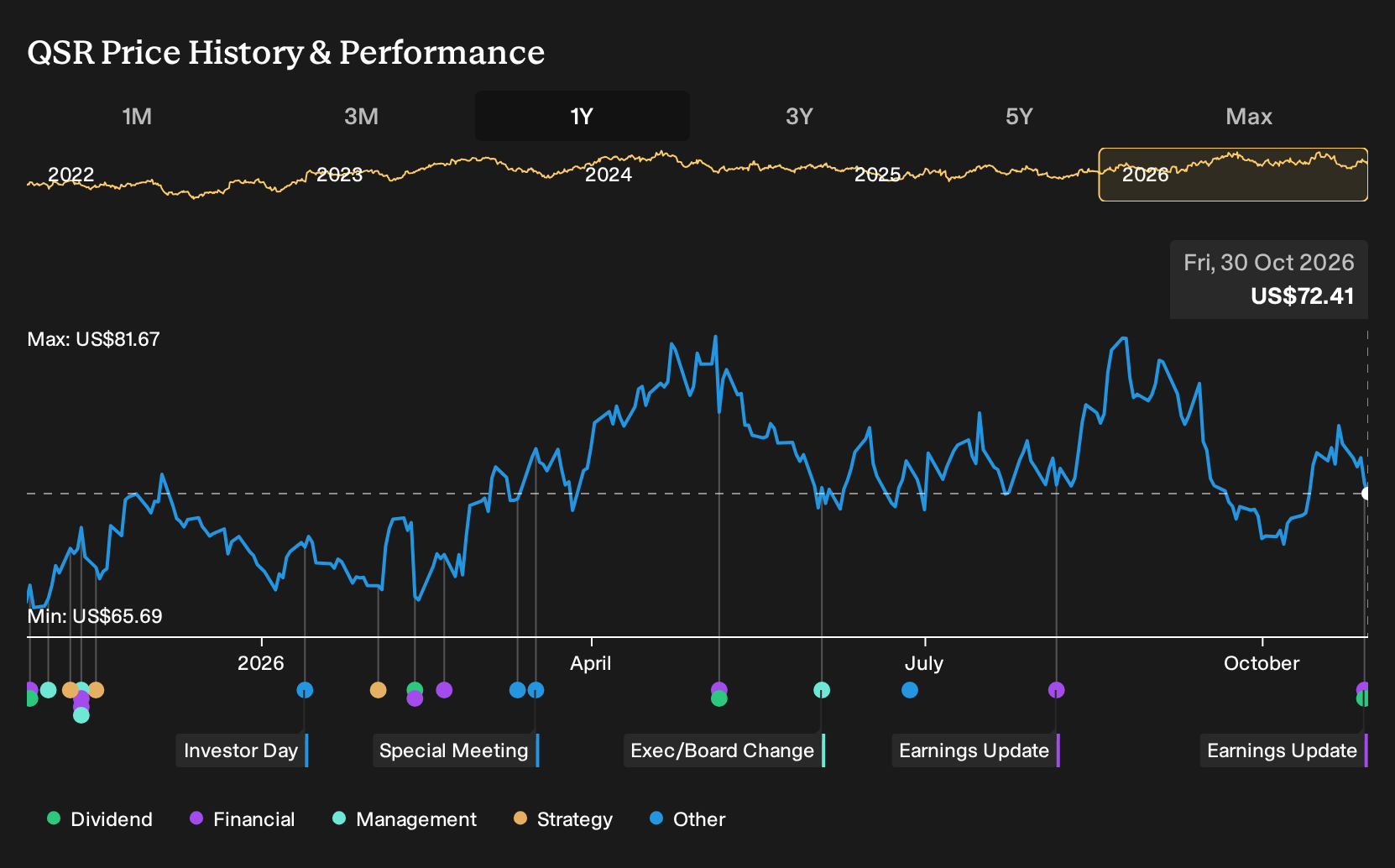
Uncover why Restaurant Brands International's fair value indicates a 19% potential upside to its current price that could narrow quickly.
Exploring Other Perspectives
Three fair value views from the Simply Wall St Community cluster between about US$78.3 and US$86, so you are seeing a tight but still meaningful spread in expectations for Restaurant Brands International. When you set those pre earnings opinions against today’s stronger reported profits and steady dividend, you get a clear reminder that retail investors can read the same numbers very differently. Use that gap as a prompt to explore several alternative viewpoints before firming up your own thesis.
Explore 2 other Restaurant Brands International fair value estimates, including one that suggests the potential for as much as 19% upside from the current price.
Reach Your Own Conclusion
Don't just follow the ticker. Dig into the data and build a conviction that's truly your own.
- A great starting point for your Restaurant Brands International research is our analysis highlighting 5 key rewards and 2 important warning signs that could impact your investment decision.
- See our latest analysis for Restaurant Brands International. The report includes a comprehensive fundamental analysis summarized in a single visual, the Snowflake, making it easy to evaluate Restaurant Brands International's overall financial health at a glance.
Looking for more Restaurant Brands International style ideas?
If the Restaurant Brands International story has sharpened your thinking, use that same framework to scan for other opportunities where quality, resilience, and pricing power show up clearly in the numbers.
- For investors who want potential mispricings with solid fundamentals, start by reviewing 33 high quality undervalued stocks that share similar cash flow strength and balance sheet discipline.
- If capital preservation and smoother return profiles matter most to you, filter for 29 resilient stocks with low risk scores and focus on businesses where volatility and financial risk both screen lower.
- When you are hunting for future leaders before they go mainstream, put time into reviewing 19 high quality undiscovered gems that pair strong financial quality with limited current attention.
Have feedback on this article? Concerned about the content? Get in touch with us directly. Alternatively, email editorial-team@simplywallst.com