


EN
3 U.S. Industrial Stocks Investors Are Watching As Higher Rates Reshape Demand
Markets are wrestling with a rare mix of firm hiring, sticky inflation and the prospect of higher-for-longer interest rates, and that tension is quietly reshaping which U.S. cyclical and industrial stocks investors pay attention to. When labor data and Fed expectations shift together, money tends to move quickly, creating pockets of opportunity and risk. This article walks through three U.S.-listed cyclicals that screen as potential beneficiaries of the latest jobs and productivity signals, and explains what those exposures might mean for your portfolio decisions.
The three stocks below are a small sample of U.S. cyclical and industrial companies that fit this filter. The full screen surfaced 71 more businesses with equally compelling stories that are not covered here. If you want to go broader and identify your own highest conviction ideas across this group, head straight into the U.S. Cyclical and Industrial Stocks screener.
Terex (TEX)
Terex is a textbook U.S. cyclical industrial, supplying heavy equipment into construction, utilities and materials processing. Its order book often reflects how real economy projects respond when jobs data, manufacturing activity and infrastructure spending all pull in the same direction.
Terex manufactures equipment used across construction sites, recycling operations, utilities and industrial maintenance projects worldwide, tying its fortunes closely to the U.S. Cyclical and Industrial Stocks theme. The business currently carries a market value of about US$6.3b.
"The sustained increase in global infrastructure and manufacturing investment supported by policy incentives and federal construction allocations remains a live driver, with Terex now pointing to a Q2 2026 backlog of US$6.9b and upgraded 2026 sales guidance of US$7.9b to US$8.2b as indicators that this demand cycle could continue to support revenue growth and earnings."
One question for investors is what happens if a less visible pressure inside that backlog story shifts and either tightens or stretches Terex margins far more than expected.
If that margin pressure is what you are weighing up, go straight to the full narrative for Terex to see how Terex’s cycle and backlog story could be decoupling.

Eaton (ETN)
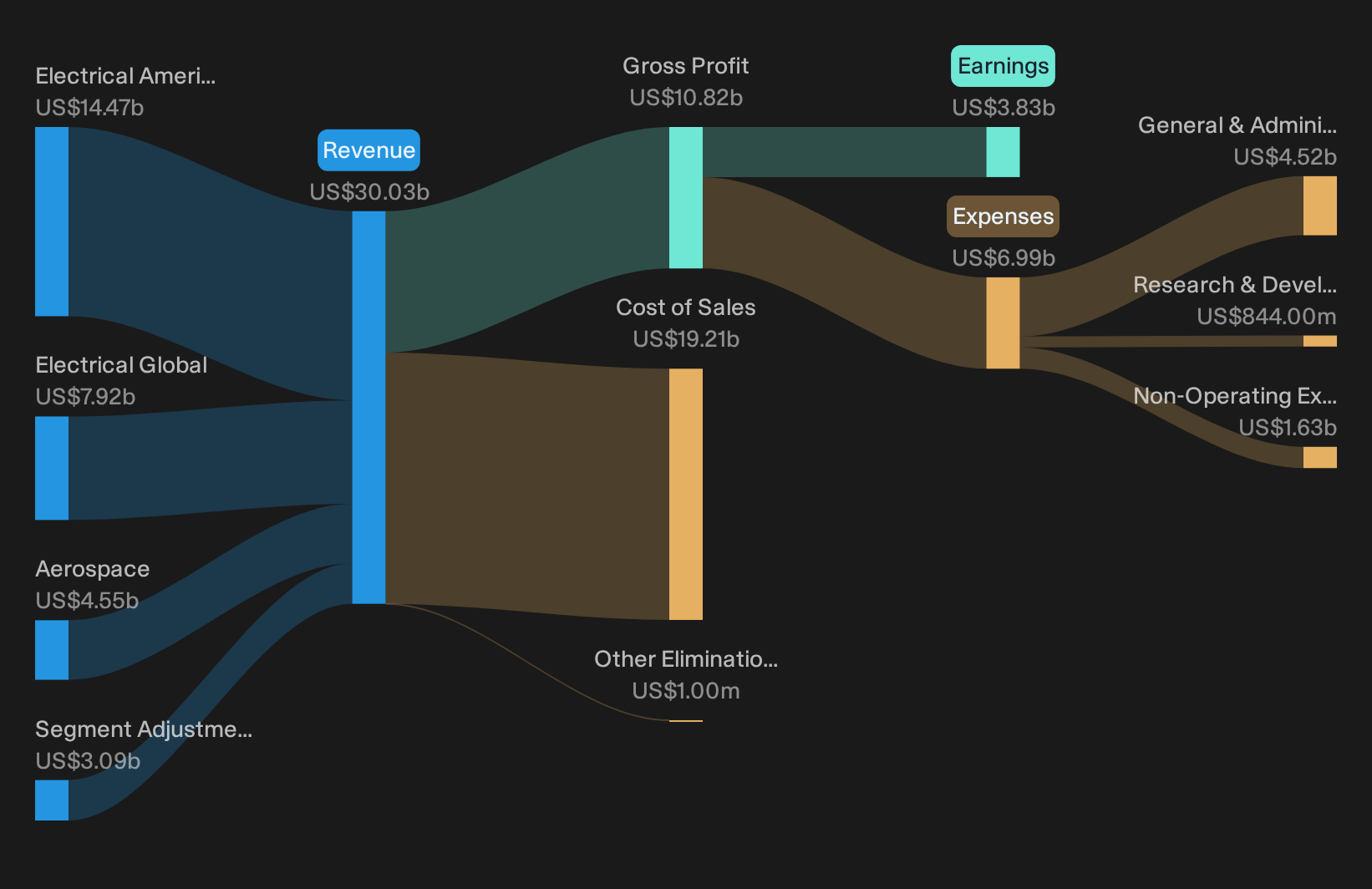
Eaton is one of the clearest U.S. Cyclical and Industrial Stocks plays on power-hungry factories, infrastructure upgrades and grid-heavy data centers, with a broad electrical and aerospace toolkit generating about US$14.5b from Electrical Americas, US$7.9b from Electrical Global and US$4.6b from Aerospace, and a market value near US$144b.
Eaton’s role in electrifying factories, data centers and infrastructure makes it a direct expression of the screener theme at a time when jobs, productivity and capex are pulling in the same direction. This is exactly where investors tend to look for durable industrial demand.
"The expansion of the power grid and the simultaneous capacity demands of renewable energy projects and data centers have completely locked down the global transformer supply chain due to a global constraint in the production capacity of Grain-Oriented Electrical Steel (GOES)."
What really matters for Eaton is how this tight backdrop interacts with one unresolved pressure that could swing pricing power and earnings quality.
That pricing swing is exactly what the full Eaton story unpacks, so read the full narrative for Eaton to see how tight supply could be masking a stronger earnings engine.
Oshkosh (OSK)
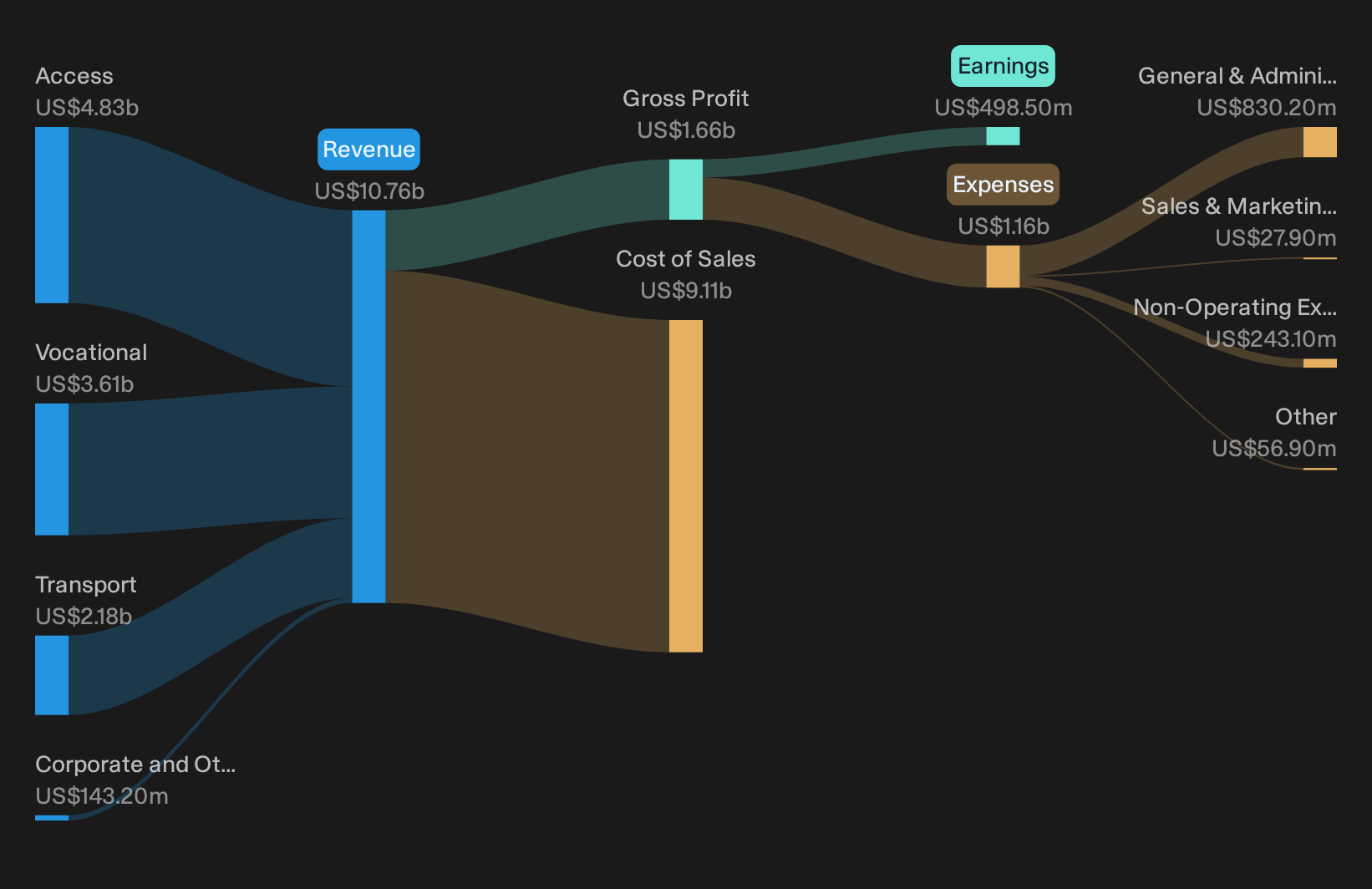
Oshkosh plugs directly into the U.S. Cyclical and Industrial Stocks theme, supplying purpose-built vehicles across construction, defense and emergency services, with most of its US$11.6b in revenue coming from Access at about US$4.8b, Vocational at roughly US$3.6b and Transport at around US$2.2b, and a market value near US$8.5b.
Oshkosh matters here because it is tied closely to real world spending on infrastructure, defense fleets and industrial projects, so a firm jobs backdrop and solid productivity readings feed straight into equipment demand, capacity decisions and how investors judge the long term story.
"Capacity investments and operational improvements in higher margin, less cyclical fire apparatus are progressing, with approximately US$150 million targeted to shift Pierce production to high-flow lines. Throughput is aimed 25-30% higher, which management links to Vocational margin targets of 16-18% by 2028 and therefore to future earnings."
What happens if one pressure inside that transformation either delays those gains or amplifies them will do a lot of work on Oshkosh’s eventual margin profile.
That margin swing is exactly why reading the full narrative for Oshkosh helps you see whether Oshkosh’s shift could be quietly accelerating or stalling future earnings power.
Seeking Fresh Alternatives Beyond These Cyclicals
Some of the sharpest breakouts start quietly while momentum builds and prices move before the crowd even notices. Scan fresh ideas while it matters and get in early.
- Hunt for income streams that can keep paying even when headlines are flying by. Use the 5 dividend fortresses before yields adjust and the window tightens.
- Spot early AI momentum before it gets fully caught in the spotlight by running through the curated 41 profitable AI stocks that aren't just burning cash and filtering for durable cash generation.
- Track under the radar infrastructure momentum in energy and industrial projects by reviewing the hand picked 16 nuclear energy infrastructure stocks while sentiment on the theme is still building.
Have feedback on this article? Concerned about the content? Get in touch with us directly. Alternatively, email editorial-team@simplywallst.com