


EN
Paid Subscription Growth May Change The Case For Universal Music Group Stock
- Universal Music Group reported faster paid-subscription revenue growth, tighter cost control and wider margins, supported by licensing deals such as TYGER's gaming-focused music service agreement.
- The TYGER partnership gives Universal Music Group a direct route into gaming listeners, linking its catalog to interactive, gameplay-synced music experiences across paid and ad-supported tiers.
- This article examines how Universal Music Group's stronger paid subscriptions and cost discipline may reshape its investment narrative for long term investors.
Universal Music Group Investment Narrative Recap
For a shareholder in Universal Music Group, the core belief is that paid audio streaming, licensing and high quality catalog can keep supporting recurring cash generation despite pressure from short form, user generated platforms. The latest update on faster paid subscription revenue and tighter costs leans in that direction, although profitability still depends on disciplined artist spending and overhead.
Right now, the key near term swing factor is whether Streaming 2.0 contracts, pricing and new use cases convert into sustained margin improvement, given free cash flow recently softened and merchandising moved to a loss. The recent beat driven share price reaction matters for sentiment but does not change those fundamental execution risks.
The TYGER licensing agreement is the clearest operational link to this news. Universal Music Group is plugging parts of its catalog into a gaming specific music layer that syncs to live gameplay across both paid and ad supported tiers. That sits directly on top of the Streaming 2.0 idea, which focuses on getting better monetization from engaged listeners rather than just chasing raw play counts.
This arrangement also highlights the main risk around under monetized short form and user generated content. Gaming is an adjacent attention sink where music has often been bundled cheaply, or not fully licensed at all. If TYGER’s relaunch with Universal Music Group content scales well, it could help broaden licensing income and partially offset pressure from weaker merchandising or uneven ad supported payouts elsewhere.
Universal Music Group's narrative projects €15.6b revenue and €1.8b earnings by 2029. This assumes 6.9% yearly revenue growth and an earnings increase of about €1.5b from €323.0m today.
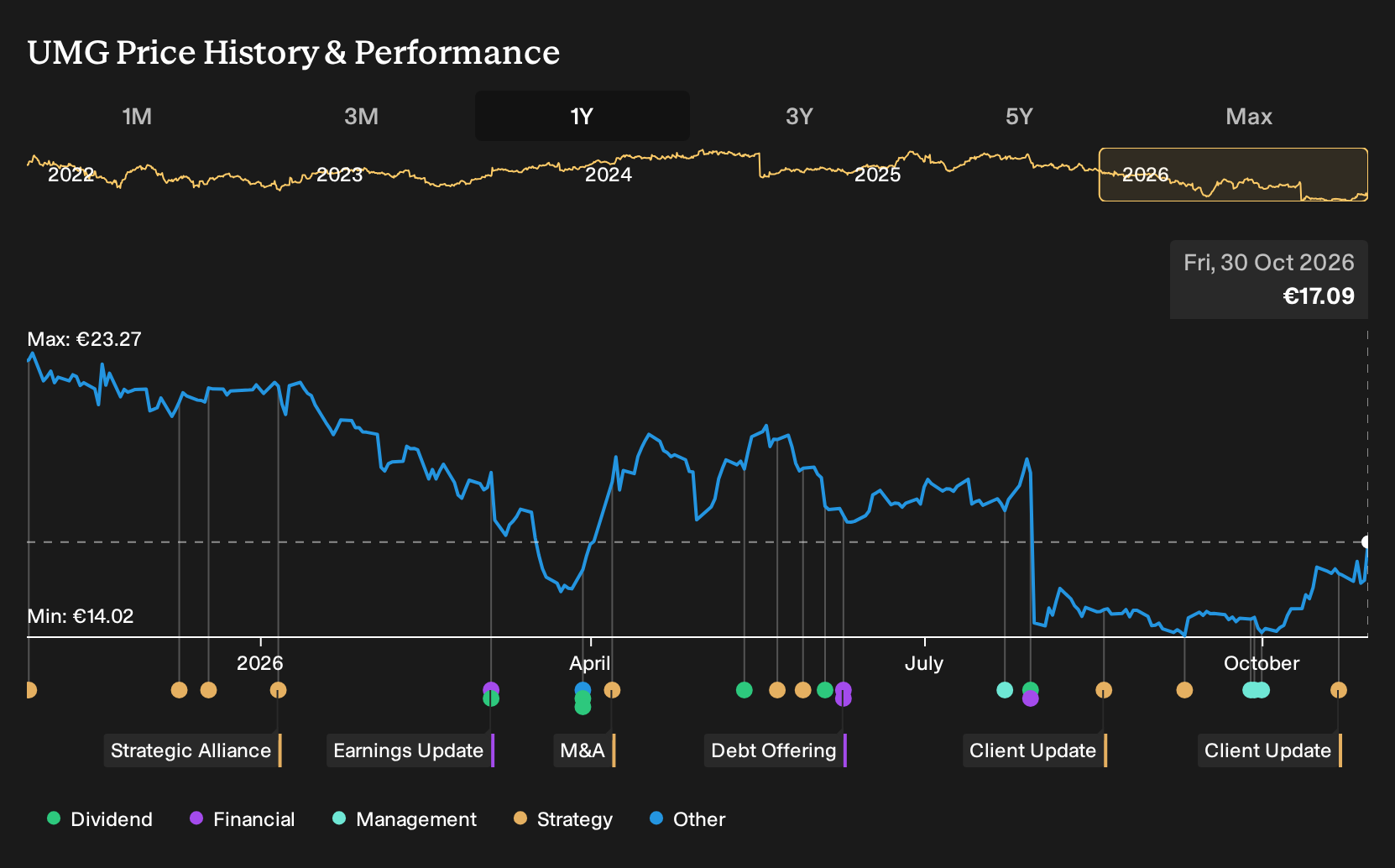
Discover how Universal Music Group's fair value reflects a 27% potential upside to its current price before the market closes that gap.
Exploring Other Perspectives
One alternate angle you might consider focuses on how bullish analysts frame the upside from Universal Music Group’s newer products. Before this TYGER news, that group was already pencilling in revenue of €16.5b and earnings of €2.4b by 2029. Those targets assume stronger monetisation than consensus, so this fresh gaming deal could prompt them to revisit their optimism, and you may want to compare those expectations with your own view.
Explore 6 other Universal Music Group fair value estimates, including one that suggests as much as 105% upside from the current price.
Reach Your Own Conclusion
Don't just follow the ticker; dig into the data and build a conviction that's truly your own.
- A great starting point for your Universal Music Group research is our analysis highlighting 1 key reward and 3 important warning signs that could impact your investment decision.
- See our latest analysis for Universal Music Group. The report includes a comprehensive fundamental analysis summarized in a single visual, the Snowflake, making it easy to evaluate Universal Music Group's overall financial health at a glance.
Looking for more investment ideas beyond Universal Music Group?
If the Universal Music Group story has sharpened your thinking on streaming, licensing and recurring income, it can be useful to compare that with other businesses that have different strengths. The Simply Wall St Screener is a straightforward way to filter the market by quality, balance sheet strength or income profile, so you can build a wider watchlist that matches your own risk and return preferences.
- For investors who care most about resilient business models and capital preservation, start by reviewing a curated 218 resilient stocks with low risk scores that already screen well on stability and financial risk.
- If dependable income is a priority for your portfolio, scan a focused group of 222 dividend fortresses that combine higher yields with robust underlying fundamentals.
- When you want to explore lesser-known opportunities, broaden your radar with a 614 high quality undiscovered gems that pair solid numbers with relatively low investor attention.
Have feedback on this article? Concerned about the content? Get in touch with us directly. Alternatively, email editorial-team@simplywallst.com