


EN
3 US Automation Stocks Worth Watching As Hiring Costs Rise
Immigration policy rarely grabs investor attention until it starts to reshape labor costs, talent pipelines and where automation suddenly looks more attractive than hiring. With talk of H‑1B fees reportedly crossing $100,000, tighter grace periods and fresh hurdles for skilled foreign workers, that moment has arrived. This piece explains what that could mean for US-focused technology and automation stocks and highlights 3 companies that appear positioned to benefit from this shifting backdrop.
The stocks featured next are just a small sample of this theme, and the full screen on Simply Wall St surfaced 53 more US-focused technology and automation players with equally compelling narratives that are not covered here. To go straight to the broader universe of candidates, use the US Domestic-Focused Technology & Automation Stocks screener to identify, filter and analyze the ideas that best fit your own conviction and risk profile.
Blend Labs (BLND)
Overview: Blend Labs provides cloud software that helps US lenders automate digital applications, verification and decisioning across mortgages, home equity, auto loans and other consumer banking products.
Operations: Blend Labs currently generates about US$130 million in revenue from its Blend Platform segment, which sells workflow automation software to financial institutions.
Market Cap: US$265 million
Blend Labs fits this US-focused automation theme because it offers lenders a way to digitize workflows and rely more on software than on expanding headcount. This becomes more important as skilled labor gets harder and more expensive to hire.
"Autopilot’s reported ramp to more than 65 lenders, over 45,000 loans processed within months of launch, and preview data showing higher pull through and faster cycle times suggests Blend Labs could move a growing share of originations to outcome based AI agents, which would give the company a new transaction revenue stream that is less tied to traditional seat based pricing and could lift total revenue."
What really matters now is how one quiet shift in how lenders price and structure those AI driven workflows filters through to margins.
If that margin shift matters to you, read the full narrative for Blend Labs to learn more about how Blend Labs’ AI economics could decouple revenue from headcount costs.

Diebold Nixdorf (DBD)
Overview: Diebold Nixdorf supplies ATMs, branch automation and self checkout systems that help banks and retailers automate routine cash and checkout work.
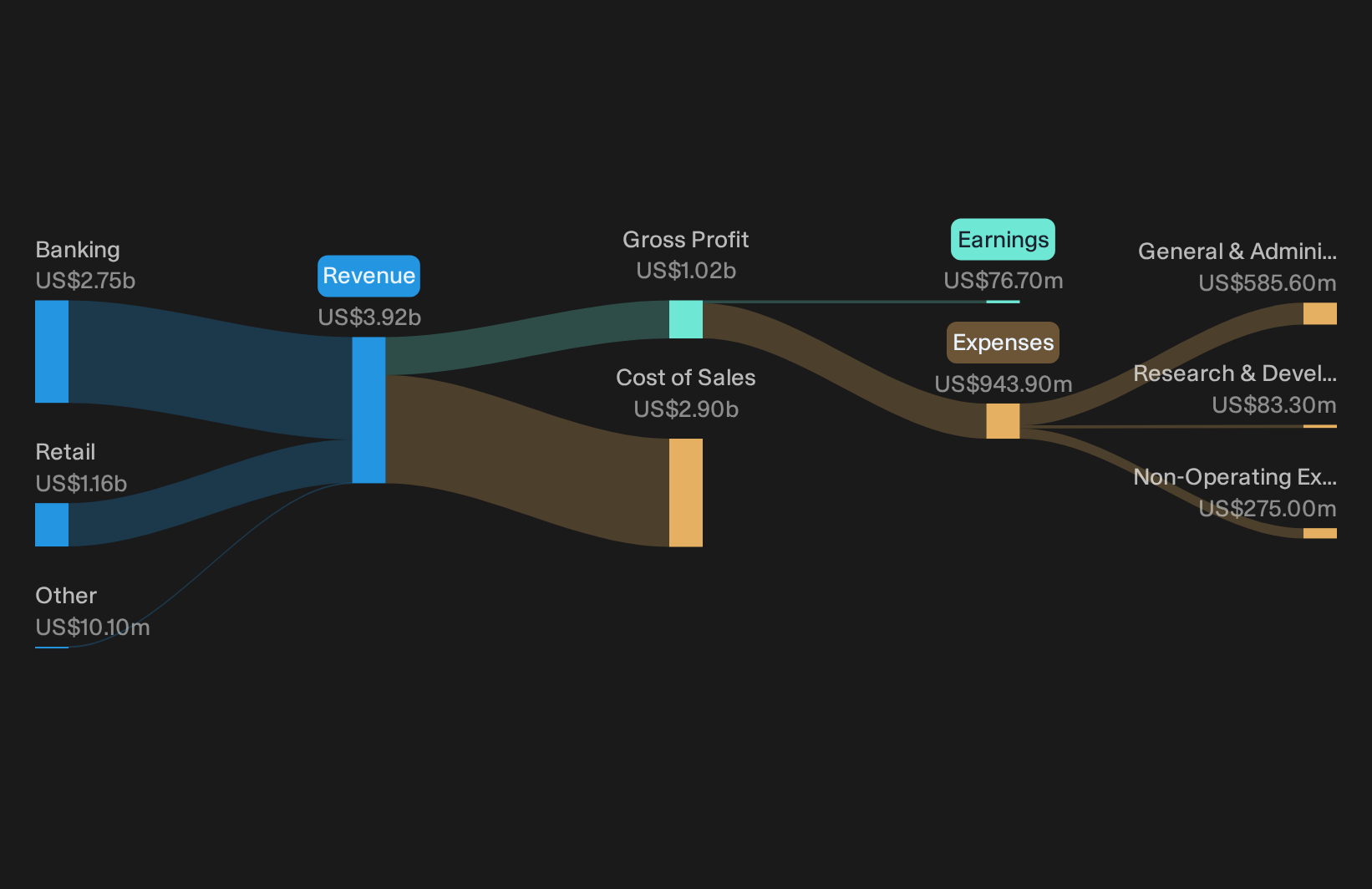
Operations: Diebold Nixdorf generates about US$2.7b from its Banking segment and US$1.2b from its Retail segment, heavily tied to automation projects.
Market Cap: US$1.8b
Diebold Nixdorf sits squarely in this US-focused automation theme as banks and retailers lean on ATMs and self checkout to manage higher labor costs. However, thin 2% net margins and meaningful debt mean the real story comes down to what happens when one unseen pressure on its automation model finally shifts.
When that pressure finally shifts, the 4 key rewards and 2 important warning signs (1 is major!) shows how Diebold Nixdorf’s automation push could mask both balance sheet strain and upside potential.
Pagaya Technologies (PGY)
Overview: Pagaya Technologies runs an AI driven lending infrastructure that automates underwriting decisions for US financial institutions using its data network.
Market Cap: US$1.7b
Pagaya Technologies matters for this automation screen because its AI underwriting engine effectively swaps large analyst teams for software, which becomes more relevant if skilled labor turns more expensive and harder to retain.
"The AI disruption risk is real and acknowledged. If foundation models commoditise the credit decisioning layer, Pagaya's AI moat narrows."
What happens if one key assumption about who really controls the lending network’s economics quietly shifts away from the algorithms?
That power shift sits at the heart of the full narrative for Pagaya Technologies, which maps how Pagaya Technologies could turn network control, AI risk and lender demand into accelerating financial leverage.

Curious About What You Might Be Missing?
Fresh ideas move first. Breakout stories often gain momentum quietly, then start flying once the crowd catches on. Screen under the radar for now and get in early.
- Pinpoint cash rich opportunities before momentum chasers arrive by scanning the 33 high quality undervalued stocks while the numbers still look attractive and expectations remain muted.
- Ride structural demand for reliable metal producers by reviewing the curated 34 elite gold producer stocks while these businesses are still priced as if conditions never change.
- Track structural shifts in industrial demand by assessing the hand picked 16 top copper producer stocks before broader investors connect the dots and re-rate these assets.
Have feedback on this article? Concerned about the content? Get in touch with us directly. Alternatively, email editorial-team@simplywallst.com