


EN
Is Maplebear (CART) Reasonable With A $65 Deal On The Table?
Maplebear, the parent of Instacart, has delivered strong multi year gains for shareholders, which puts a spotlight on whether the current share price is still backed by its earnings power. Recent corporate moves and product decisions now feed directly into that question for anyone trying to assess what the stock is worth today.
- Over the past 3 years, Maplebear has returned 109.8%, which makes it important to test whether that share price performance lines up with what the business is earning.
- The agreed US$17b cash and stock sale to DoorDash at US$65 per share, along with the decision to wind down the Caper Cart unit, can reshape expectations for Maplebear's future profitability, cash inflows and the timing of those earnings.
- The analysts covering Maplebear have run their own numbers. See what analysts think Maplebear's shares could be worth.
The issue now is whether Maplebear's recent share price around US$56.45 is adequately supported by the earnings the company is producing today and is expected to generate over time.
If you are weighing whether Maplebear's earnings justify its latest returns, it can help to compare that question across 33 high quality undervalued stocks.
Does Maplebear Look Fairly Valued on Earnings?
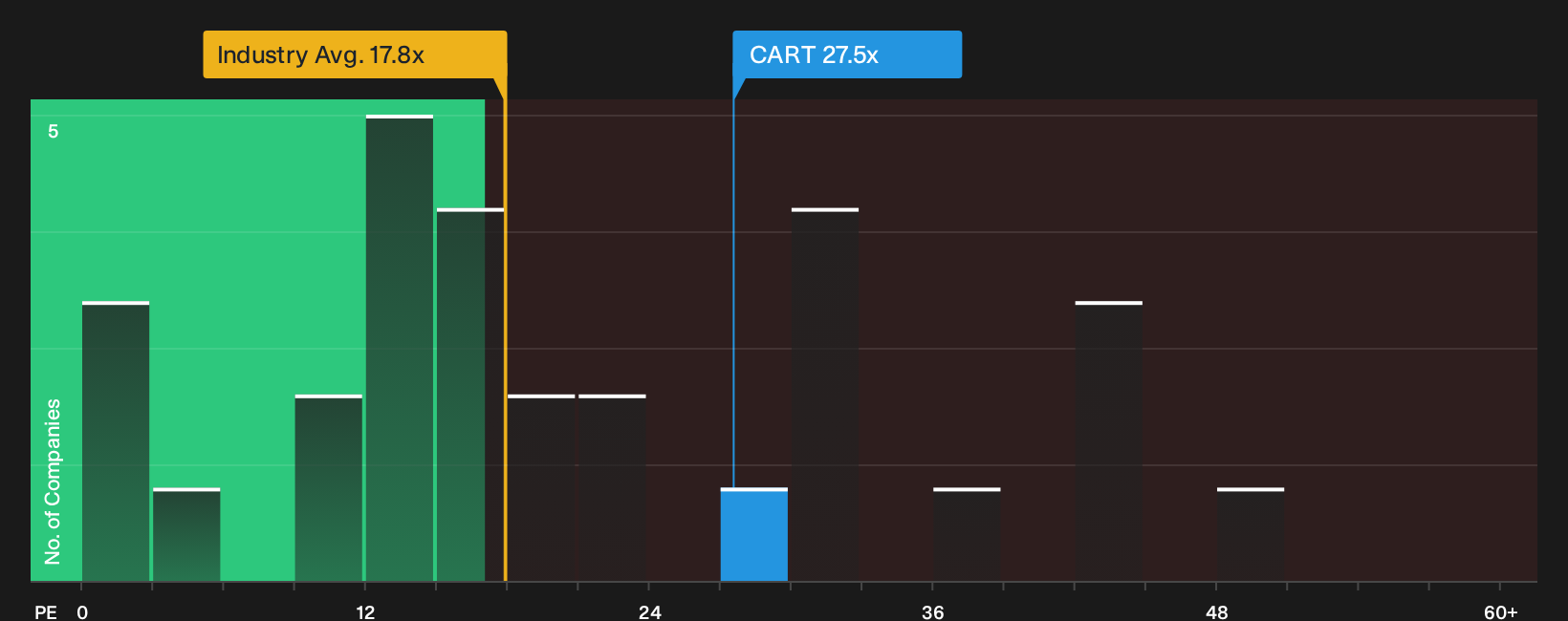
The P/E ratio is a useful way to think about Maplebear because earnings already matter for this business more than pure revenue scale. On this lens, the stock trades on a P/E of about 27.5x, which is above the broader consumer retailing sector on roughly 17.8x and also above the peer group near 24.2x.
The Fair Ratio points to the multiple you might expect for Maplebear once you factor in its margin profile, risk and business mix. On this basis, the current 27.5x sits slightly above the implied level. Despite the agreed US$65 per share DoorDash takeout price influencing sentiment, the current P/E still prices Maplebear at a premium to both peers and the sector, so you need to decide whether the earnings quality and deal terms justify that mark up relative to alternatives. Explore the numbers behind Maplebear's P/E valuation.
The Maplebear Narrative: What Would Justify Today's Price?
Simply Wall St Narratives pick up where the P/E puzzle leaves off by explaining which assumptions about Maplebear's future growth, margins and earnings would need to hold for the stock to be worth meaningfully more or less than today's price. Each narrative ties a specific fair value to a clear story about the business's potential catalysts and risks, so you can track over time which version of events appears to be unfolding on the Community page.
Maplebear followers are essentially weighing one camp that sees current earnings power as roughly fair value against another that worries rising costs bite too hard.
Bull case: roughly fairly valued
"Instacart’s rapid deployment of AI and automation across the shopping journey, including Cart Assistant and Clementine orders that carry larger baskets than the already high average order value of about US$115…"
Discover why this Narrative puts Maplebear at roughly fairly valued.
Bear case: 25% overvalued
"Although Instacart’s enterprise tools and retail media partnerships are more widely adopted, higher ongoing payments to publishers as Carrot Ads and off platform relationships expand have already coincided with GAAP gross profit margin sliding to 7.3% of GTV…"
Explore why this Narrative puts Maplebear at 25% overvalued.
Before acting on Maplebear's valuation, there is one more piece to check
Price, earnings and deal terms only tell part of the story, because the people setting priorities inside Maplebear and how they are rewarded can heavily shape what happens next for shareholders. See who runs Maplebear and how they are paid.
Have feedback on this article? Concerned about the content? Get in touch with us directly. Alternatively, email editorial-team@simplywallst.com