


EN
Micron Stock Faces AI Spending Questions After Strong Earnings And Mixed Memory Signals
- Micron Technology reported strong Q4 fiscal 2026 results with record revenue across key memory lines. This performance was reinforced by long term supply agreements that cover more than 35% of revenue through 2030 and a regular US$0.15 cash dividend that went ex dividend on 14 October 2026.
- The same period brought conflicting industry signals, with SK Hynix talking up tight memory markets, Kioxia warning on slower NAND price gains, and Intel flagging high memory costs. Together, these developments highlight how sensitive Micron’s DRAM, HBM and NAND economics are to AI infrastructure spending patterns and competitor behavior.
- We will look at how Micron Technology's investment narrative holds up as tight supply guidance collides with fresh worries over AI infrastructure spending.
Micron Technology Investment Narrative Recap
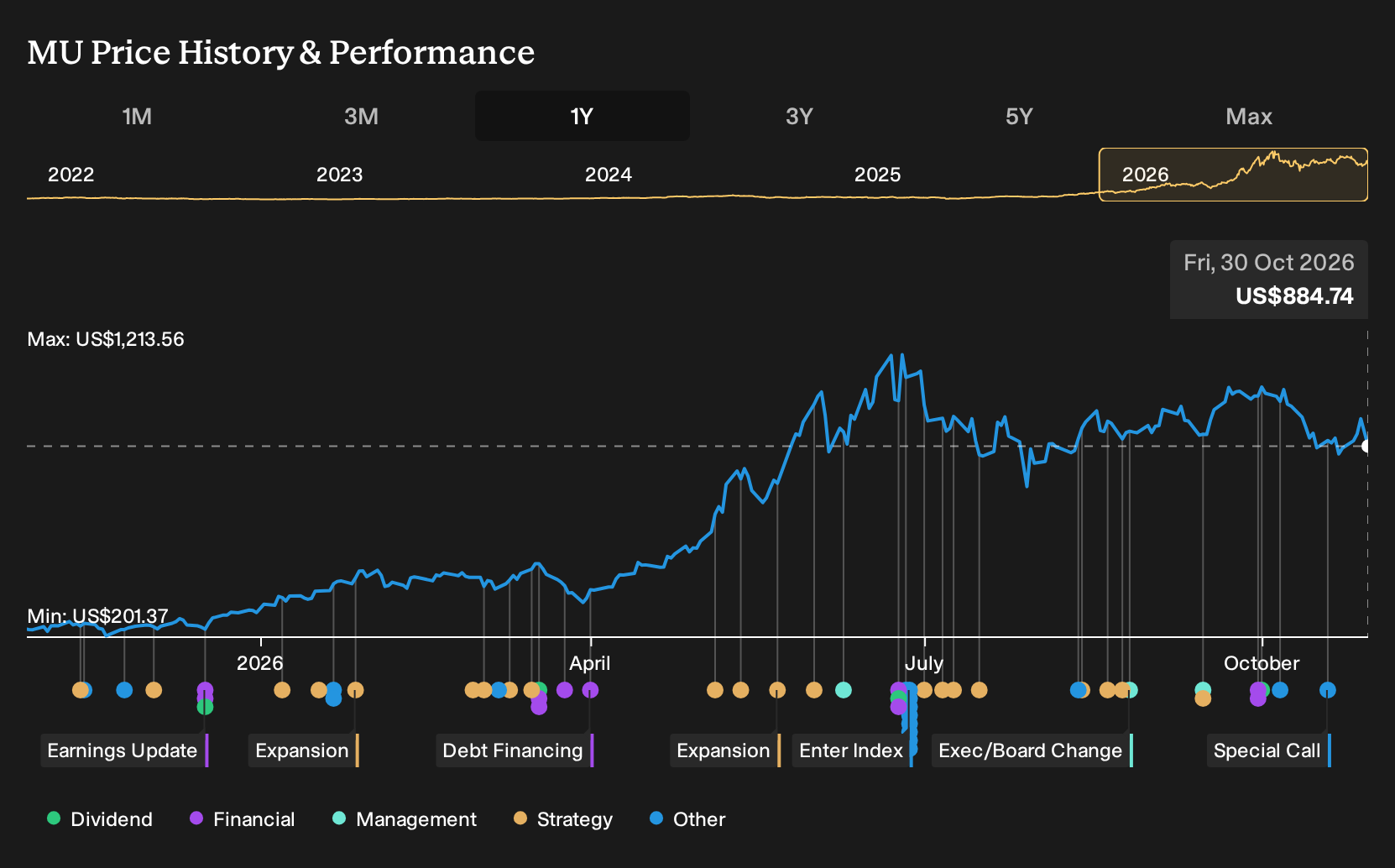
To own Micron Technology, you need to believe tight DRAM, HBM and NAND conditions tied to AI servers can be turned into durable cash generation, not just a short spike. Recent swings after Samsung, SK Hynix, Intel, Amazon and Alphabet headlines show how quickly sentiment whipsaws around that idea. The key short term catalyst is still whether AI data center orders keep translating into high value memory shipments.
The biggest near term risk is that huge planned capex and long dated supply deals run into softer AI infrastructure spending or slower price gains, particularly in NAND. The latest sector noise around memory costs and PC weakness has shaken the share price, but it has not yet clearly altered Micron Technology's own demand outlook or tight supply commentary.
The most relevant recent marker here is Micron Technology's Q4 fiscal 2026 update. It paired record revenue across key memory lines with guidance for tight supply through 2028 and long term customer agreements covering more than 35% of revenue through 2030. That backdrop matters more to the operating story than the regular US$0.15 dividend that went ex dividend on 14 October 2026.
Those agreements and the higher fiscal 2027 revenue guide frame the core catalyst. If Micron Technology can keep filling those contracts with high bandwidth memory and data center DRAM while managing wafer costs and new fabs, the business stays closely tied to AI infrastructure buildouts. The flip side is clear. Any pullback in AI related capex, or faster pricing pressure from SK Hynix, Samsung or Kioxia, hits that same contract base and makes the current capital spending load harder to absorb.
Micron Technology's current analyst narrative points to forecast revenue of US$320.4b and projected earnings of US$217.9b by 2029. That outlook assumes yearly top line growth of 34.0% and an increase in earnings of about US$132.9b from US$85.0b today.
Uncover why Micron Technology's fair value indicates a 76% potential upside to its current price that could narrow quickly.
Exploring Other Perspectives
One alternate view focuses on capital costs rather than AI demand. The most cautious Micron Technology analysts were only pencilling in about US$236.3b of revenue and US$207.2b of earnings by 2029, with a much lower implied P/E near 6x. Those forecasts came before this month’s dividend date and memory sector headlines, so it may be useful to anticipate shifting opinions and explore a range of scenarios for yourself.
Explore 28 other Micron Technology fair value estimates, including one that suggests as much as 38% downside from the current price!
Reach Your Own Conclusion
Don't just follow the ticker; dig into the data and build a conviction that's truly your own.
- A great starting point for your Micron Technology research is our analysis highlighting 4 key rewards and 2 important warning signs that could impact your investment decision.
- See our latest analysis for Micron Technology. The report includes a comprehensive fundamental analysis summarized in a single visual, the Snowflake, making it easy to evaluate Micron Technology's overall financial health at a glance.
Looking for more Micron Technology style investment ideas?
Once you have formed a view on Micron Technology, it can help to widen the lens and compare it with other stocks that share some of the same qualities around balance sheets, income streams and risk profiles. The Simply Wall St Screener is built for exactly that kind of side by side research, so you can pressure test your thesis rather than rely on a single ticker.
- If you care most about financial resilience and fewer surprises, start with a 30 resilient stocks with low risk scores that tend to hold up better when conditions get choppy.
- For investors who want stronger fundamentals backing their thesis, filter for a list of solid balance sheet and fundamentals (25 results) and see which businesses line up with your tolerance for debt and cash flow consistency.
- Income focused readers who prefer regular cash returns can scan a 5 dividend fortresses and compare yields and payout histories against what Micron Technology currently offers.
Have feedback on this article? Concerned about the content? Get in touch with us directly. Alternatively, email editorial-team@simplywallst.com