


EN
Visteon Fell While It Turned A Profit
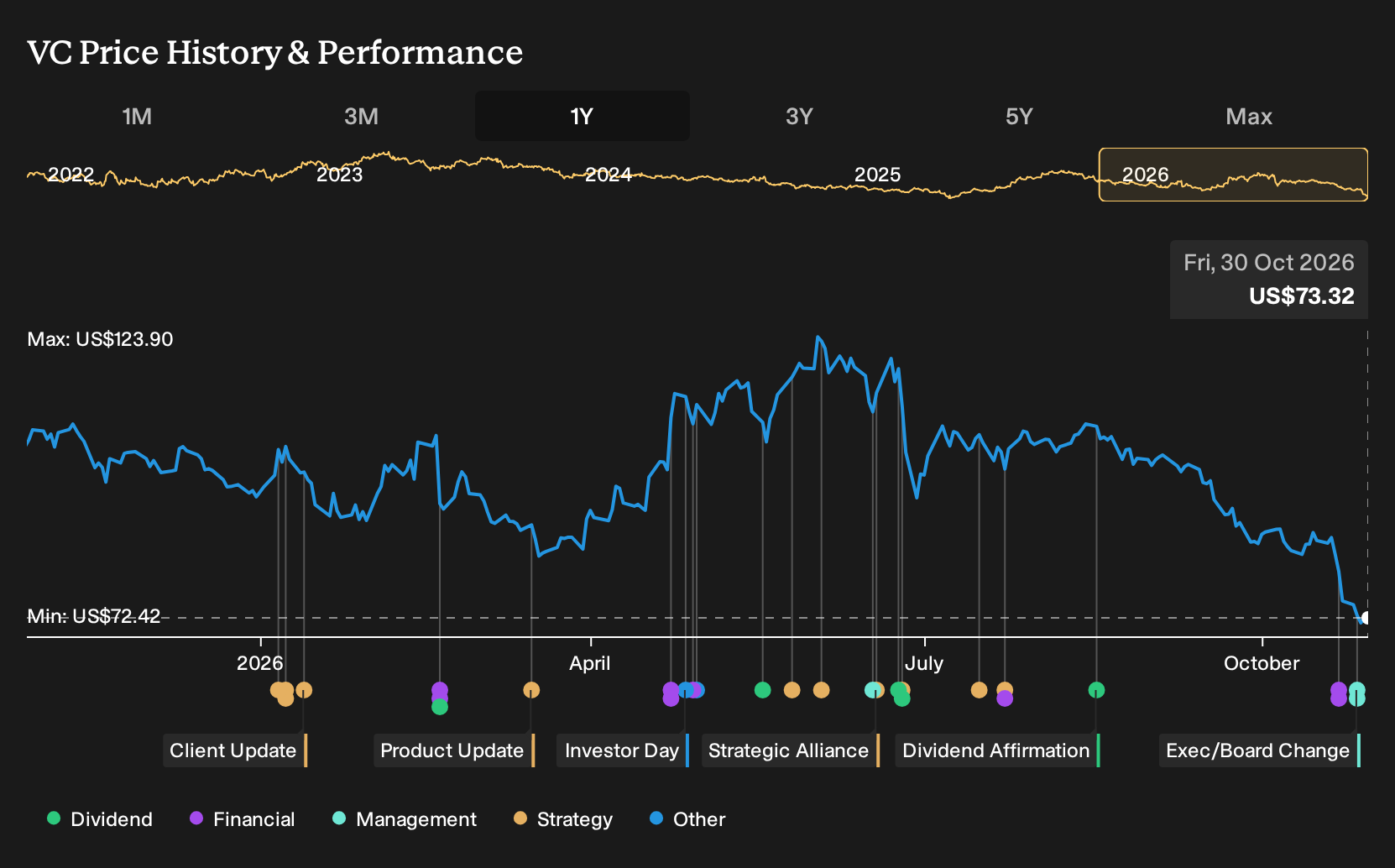
If you had looked at Visteon in late October 2025 and decided to sit it out while others leaned on bullish analyst targets and AI cockpit headlines, that choice avoided a painful ride. Investors who held Visteon over the past year are down 30.6%, including dividends. With Q3 2026 results now showing revenue and net margin higher than a year earlier, which assumption on record a year ago most needed closer scrutiny?
The useful thing about a Narrative is that the reasoning is checkable: the assumptions sit beside the argument, and together they imply an estimated Fair Value you can disagree with.
The move put Visteon in the middle of this trade. Scan 37 AI small caps for other companies exposed to it.
The Argument You Would Have Been Weighing Up On Visteon
The shares cost US$105 at the start of the period, and Visteon sat between two clear stories about where cockpit electronics might head next.
The bullish narrative put fair value at US$127, assuming revenue growth of 3.8%, a 6.1% profit margin and a future P/E of 16.0x, while treating tariff exposure as a manageable risk.
The bearish view set fair value at US$82, built on revenue growth of just 0.3%, margin slipping to 5.3% and a future P/E of 12.7x, with insourcing and tariff pressure seen as the bigger threats.
What The Results Changed For The Visteon Argument
Q3 2026 put real numbers against the story. Visteon reported revenue of US$970m versus US$917m a year earlier, and moved from a loss of US$11m to a profit of US$5m, with net margin shifting from -1.2% to 0.5%. That outcome supported the positive view on cockpit AI demand but left its profit margin assumption of 6.1% unproven, so the evidence cut both ways.
The lesson to apply elsewhere is straightforward: when an investment thesis relies more on future profitability than on sales, keep checking the reported net margin against the original target, not just whether revenue is rising.
What Visteon’s Drop Leaves You Weighing Today
Visteon now trades at US$73.32, with the selected Narrative’s Fair Value sitting above that level. The current argument focuses on cockpit computing, software defined vehicles, and an Asia heavy product mix potentially supporting a healthier earnings engine than recent figures suggest.
If you are asking whether the fall could be an opportunity rather than a warning, the central question is whether future Asian and non automotive bookings translate into the higher margins and free cash flow that management is targeting.
"The main factor that has to go right is that Visteon converts its software defined vehicle and high growth Asian and non automotive bookings into the higher margins and free cash flow that management is targeting through 2029, despite planned memory cost headwinds and legacy program roll offs."
Not everyone reads the same price the same way. → See the higher figure this Narrative lands on, and how it gets there
Looking One Step Beyond Visteon
When you think about Visteon, you are probably picturing screens, chips and software reshaping the cabin.
Step back one level and you hit a different pressure point. All that in car computing still relies on someone funding and operating huge pools of hardware that learn how people drive, travel and work.
Another business is chasing that prize. It is retooling away from classic vehicle manufacturing toward a broader bet on physical AI, including robots and automated mobility.
The idea is blunt. Sell hardware, then rent out skills and miles through software, turning each unit into a potential stream of labour and transport fees.
If that model holds, your Visteon watchlist could sit beside a very different way of monetising mobility and automation.
The case is on the record, with the assumptions it rests on. → See the Narrative that values this company 66% above its price
Have feedback on this article? Concerned about the content? Get in touch with us directly. Alternatively, email editorial-team@simplywallst.com