


EN
Does Shared Satellite Partnership Change The Bull Case For Viasat (VSAT)?
- Viasat, Space42 and Terrestar Solutions signed a memorandum of understanding to create an open, standards-based interoperability framework between the Equatys shared satellite platform and Terrestar's planned CaStar low Earth orbit constellation, while each operator keeps ownership and control of its space and ground assets.
- The Equatys and CaStar integration points to a more modular, shared infrastructure model for direct-to-device and mobile satellite services, which could influence Viasat's capital intensity, partner mix and long-term demand for multi-orbit connectivity solutions.
- We will now look at how Viasat's investment narrative could shift as Equatys targets open, shared infrastructure for direct-to-device services.
Viasat Investment Narrative Recap
To own Viasat, you need to believe that high upfront investment in satellites and spectrum can be turned into durable, higher quality connectivity revenues as multi orbit and direct to device networks mature. The Equatys and Terrestar agreement points in that direction, but the most important near term catalyst still sits with execution on ViaSat 3, Inmarsat integration and the upcoming Q2 FY27 update on November 5.
The biggest risk remains the combination of heavy capital spending and an unprofitable, highly leveraged profile in a fiercely competitive market. If ViaSat 3 timelines, interoperability rollouts or demand ramp slower than expected, free cash flow pressure and earnings drag could persist, even as partnerships like Equatys expand the addressable opportunity.
The NASA Communications Services Project work and the recent launch of the Maxwell spacecraft is the announcement that ties closest to the Equatys move. Viasat is not just selling bandwidth; it is trying to build a role in mission critical links for low Earth orbit operators that need low latency, secure relay back to Earth.
For you as a shareholder, that matters because the same technical capabilities that support NASA trials are relevant to multi orbit commercial services and direct to device ambitions. Success in these demonstrations would support the case that Viasat can monetize its GEO assets, spectrum and ground segment more efficiently, partly offsetting the capital intensity and helping the Equatys framework turn into real usage rather than just another memorandum of understanding.
Viasat's current analyst framework points to forecast revenue of US$5.5b and projected earnings of US$626.3m by 2029, built on an assumed 6.2% yearly revenue growth rate and a move from an earnings loss of US$29.4m today to that future profit level. This implies an earnings increase of about US$655.7m over the period.
Uncover why Viasat's fair value indicates a 35% potential upside to its current price that could narrow quickly.
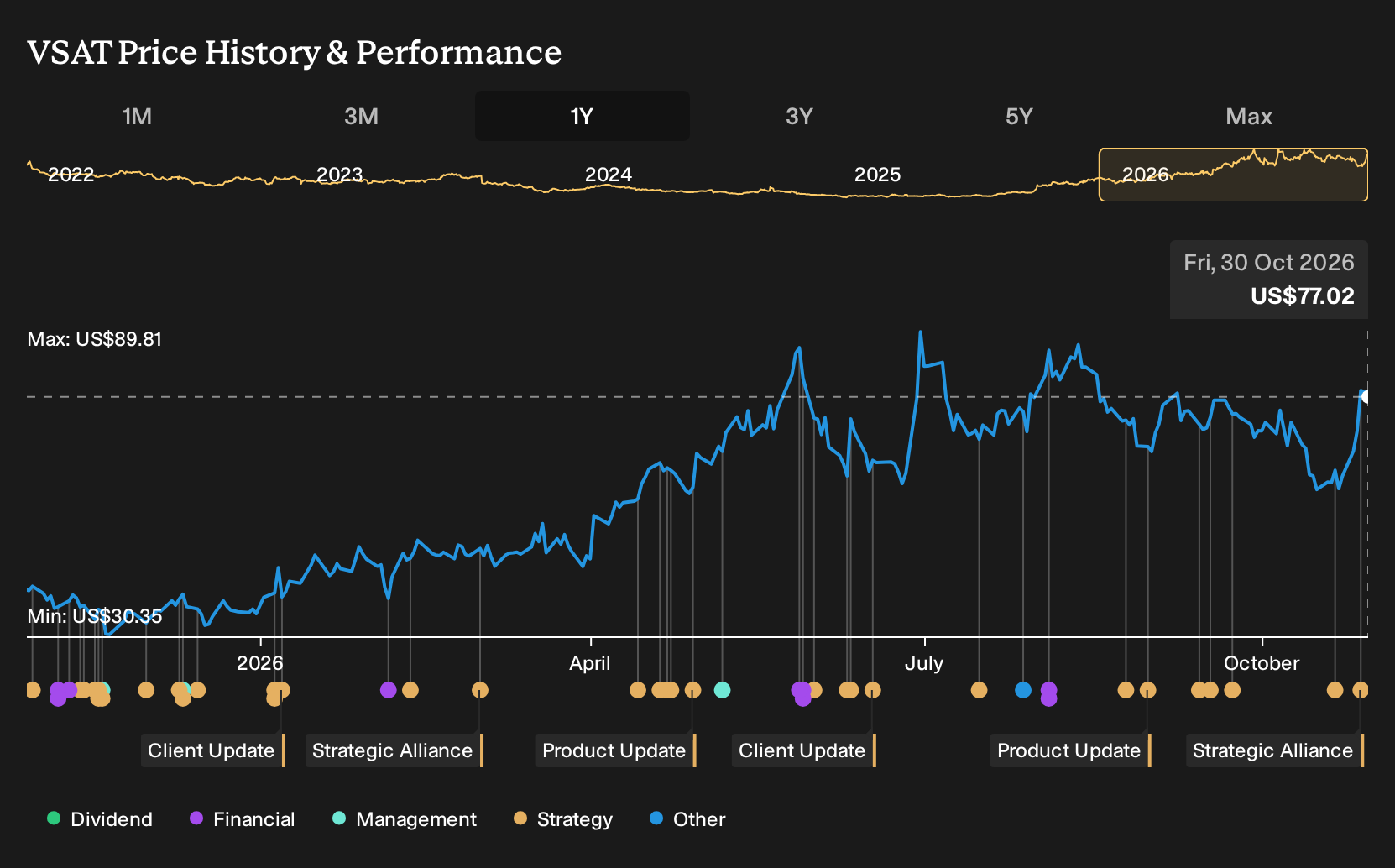
Exploring Other Perspectives
Some of the most optimistic analysts see the Equatys concept as a future revenue engine for Viasat, not just a partnership headline. Before this MoU, they were already using about 9.6% annual revenue growth and US$60.6 million of 2029 earnings in their models. You can compare that to more cautious forecasts and decide which storyline feels closer to your own view, especially as opinions may shift once this interoperability news is fully reflected in updated estimates.
Explore 6 other Viasat fair value estimates, including one that indicates up to 82% potential upside from the current price!
The Verdict Is Yours
Disagree with existing narratives? Extraordinary investment returns rarely come from following the herd, so go with your instincts.
- A great starting point for your Viasat research is our analysis highlighting 3 important warning signs that could impact your investment decision.
- See our latest analysis for Viasat. The report includes a comprehensive fundamental analysis summarized in a single visual, the Snowflake, making it easy to evaluate Viasat's overall financial health at a glance.
Looking For More Investment Ideas Beyond Viasat?
Once you have formed a view on Viasat, it can help to set it alongside other opportunities with different risk and return profiles. The Simply Wall St Screener lets you quickly filter the market down to a focused shortlist that matches what you care about most.
- If capital preservation is front of mind, start with businesses that pair steadier balance sheets with lower risk scores through the 30 resilient stocks with low risk scores.
- For investors seeking value, point your search toward companies that combine quality fundamentals with pricing that screens as potentially cheap using the 29 high quality undervalued stocks.
- If you want ideas with stronger finances and cleaner accounts, filter for companies that show healthier debt and liquidity metrics via the list of solid balance sheet and fundamentals (25 results).
Have feedback on this article? Concerned about the content? Get in touch with us directly. Alternatively, email editorial-team@simplywallst.com