


EN
Missed ASOS's Run? What Holders Had To Believe
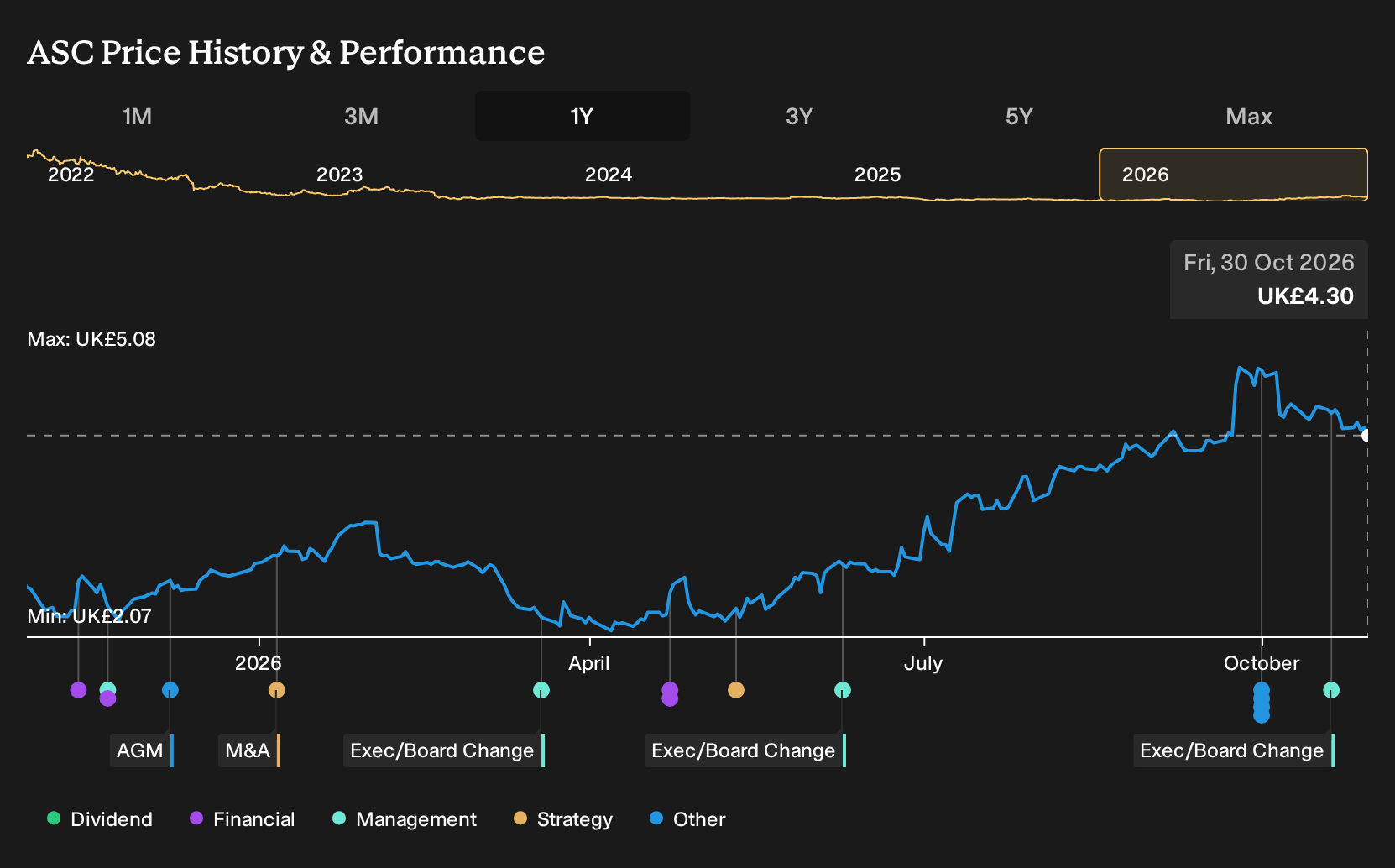
ASOS spent much of the past year talking about its Test & React range and broader supply chain rethink, while the latest half-year report showed revenue at £1,116.0 million in H1 2026 against £1,299.4 million in H1 2025 and a smaller loss. For ASOS shareholders, the return over the past year was 69.0%, including dividends. If you were deciding whether to buy back on 30 October 2025, what exactly had to be true about fashion trends, margins and competition for that outcome to look reasonable?
Narratives are how investors here put a case on the record, with explicit assumptions about revenue, margins and the multiple. Those assumptions imply an estimated Fair Value.
If the move has made ASOS harder to judge, start where the gap is still open and scan 12 high quality undervalued stocks.
What Expectations Framed ASOS At The Time?
The shares cost £2.56 at the start of the period, and ASOS sat between two sharply different stories investors had to weigh.
The bullish Narrative put Fair Value at £3.95. That view leaned on Test & React and supply chain changes lifting gross margins and EBITDA, with ASOS.WORLD loyalty and faster stock turn helping earnings and cash generation.
The bearish Narrative set Fair Value at £2.2. That case focused on SHEIN style competition, ongoing returns and inventory issues, and regulatory costs keeping revenue growth at a slight decline and profit margins near 0.2%.
What The Results Changed For The ASOS Argument
The clearest new fact was ASOS reporting revenue of £1,116.0 million in H1 2026 against £1,299.4 million in H1 2025, while the loss narrowed from £198.8 million to £131.3 million. Net margin improved from a loss of 15.3% to a loss of 11.8%. That combination supported the cautious case, because profitability was still unproven even as efficiency improved.
The lesson to carry over is simple: when a turnaround story leans on margin repair, track whether losses shrink faster than sales fall and use net margin as the main checkpoint.
What ASOS Buyers Are Assuming After The Run
ASOS now trades at £4.3 after a 69.0% gain over the past year, while the selected Narrative places its Fair Value below that level based on its own modelling and assumptions.
The Narrative centres on whether margin repair, AI driven efficiencies and assortment tweaks can eventually rebuild GMV and cash generation. A buyer today effectively needs to believe GMV stabilises and then grows, without cost to serve eroding those margin gains.
"Although ASOS reports sizeable structural margin gains and higher profit per order, the 12% GMV decline across all geographies in FY25 signals that profitability actions may be undermining future demand and could ultimately cap revenue and earnings if higher margins are not converted into stable order growth."
Not everyone reads the same price the same way. → See the lower figure this Narrative lands on, and how it gets there
Where ASOS Points Next
ASOS lives on efficient online retail. Your next question is who refines the plumbing behind that idea.
One giant in global ecommerce has been investing in logistics, data centers and software that keep digital shopping fast and reliable.
Those same assets now support AI tools that help merchants forecast demand and automate more of their storefronts.
If ASOS shows what a focused fashion platform can deliver, this other player hints at where the broader ecommerce engine might head next.
The case is on the record, with the assumptions it rests on. → See the Narrative that values this company 87% above its price
Have feedback on this article? Concerned about the content? Get in touch with us directly. Alternatively, email editorial-team@simplywallst.com