


EN
Vulcan Materials (VMC) Q3 Earnings Spotlight Margin Strength And Valuation Risk
Vulcan Materials stock barely moved after its Q3 2026 report, inching up about 0.3% to around $281. The reaction looked calm. The results were not. The key story this quarter is profitability, with adjusted EBITDA at $707 million and aggregates cash gross profit per ton improving despite a heavy energy bill.
In the short term, traders see a construction materials company that some view as already priced for perfection, trading above a recent discounted cash flow estimate and on a premium P/E. Over a longer horizon, the earnings report highlights a broader question for holders: how much are investors prepared to pay for margins that remain resilient in an environment of elevated energy costs.
Love Vulcan Materials' resilient margins but concerned about paying a premium P/E for that stability in an energy heavy setup? Compare it with companies in our list of solid balance sheet and fundamentals stocks (25 results).
Q3 2026 Earnings Summary
- Total Revenue (Q3 2026 vs. Q3 2025): US$2,184.6m vs. US$2,291.5m (down 4.7%)
- Net Income Excl. Extra Items (Q3 2026 vs. Q3 2025): US$363.5m vs. US$376.1m (down 3.4%)
- Basic EPS (Q3 2026 vs. Q3 2025): US$2.82 vs. US$2.85 (down 1.1%)
- Adjusted EBITDA (Q3 2026 vs. Q3 2025): US$707m compared with the prior-year period, with margin expansion of 0.20 percentage points (indicating improved profitability on an adjusted basis)
Tired of scrolling through earnings summaries and raw figures for Vulcan Materials? See the company’s full visual breakdown, with a clear view of its valuation and how the market is pricing those resilient margins, in the company report for Vulcan Materials..
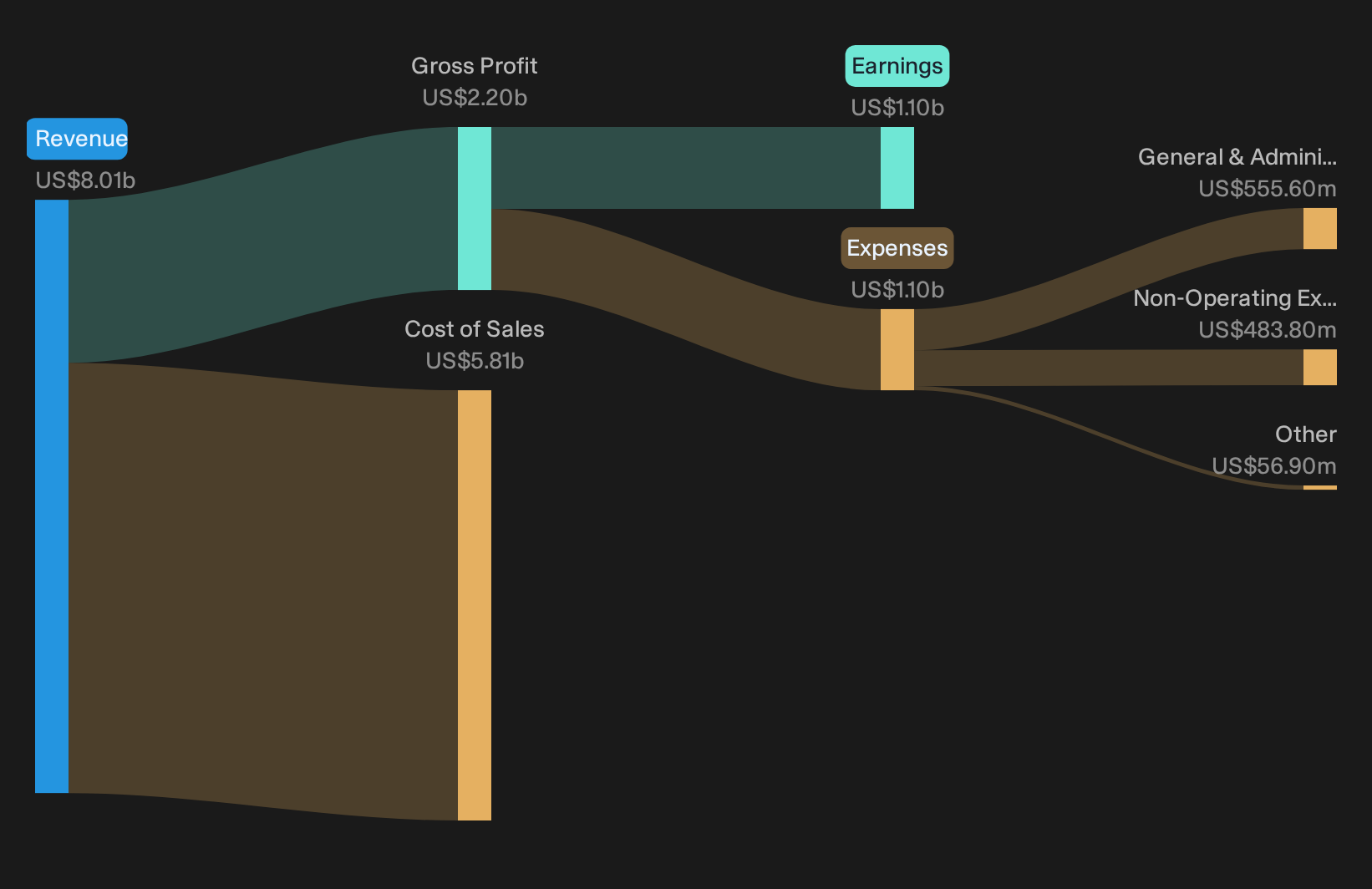
Evaluating Vulcan Materials’ Margin Resilience Claim
The bullish script hinges on Vulcan Materials using its aggregates focus and operating playbook to keep profitability intact despite energy pressure.
"The main thing that has to go right is that Vulcan Materials continues to execute on its aggregates led portfolio reshaping and Vulcan Way operating discipline so that quarry acquisitions, divestitures, and efficiency gains sustain current margin levels despite energy cost pressures and mixed end market demand."
Q3 execution lines up with that aim. Adjusted EBITDA reached US$707m with margin expansion, and aggregates cash gross profit per ton improved even with an expected US$120m energy hit. Underlying EBITDA, stripped of divested downstream assets and energy, rose about 5%, which shows the aggregates mix shift is carrying real weight rather than just being a talking point.
The price and this Narrative do not agree. → Uncover what this Narrative says Vulcan Materials is actually worth.
Vulcan Materials Bears Look For Cracks In Energy Story
Bears argue that Vulcan Materials will eventually lose the pricing tug of war against diesel and liquid asphalt. They frame the risk this way:
"Although Vulcan Materials reports resilient cash gross profit per ton and EBITDA despite energy headwinds, the estimated US$25 million quarterly diesel cost impact and high single digit aggregates cash cost growth indicate that future pricing actions may increasingly lag volatile fuel and liquid asphalt costs, which could pressure net margins and earnings if cost inflation persists beyond current expectations."
Q3 does not really deliver that break in discipline. Mix adjusted aggregate prices rose 5%, unit cash costs excluding diesel rose 3%, and adjusted EBITDA margin still expanded, even with an expected US$120m full year energy hit. The miss shows up more in volumes, with shipments down about 3% year on year and revenue down 4.7%. That is where upside looks capped for now, not in unit profitability.
Hunt For Quiet Margin Stories
Vulcan Materials showed how steady margins can coexist with debate over valuation. The real opportunity could be spotting stocks that look undervalued before the market resets those expectations.
- Company 1 - 46% below our estimate - uses a larger solar tracker backlog to encourage bundled software, storage and inverter solutions that deepen project relationships.
- Company 2 - 34% below our estimate - turns long duration optical and solar supply agreements with customer prepayments into a more committed manufacturing pipeline.
- Company 3 - 38% below our estimate - builds a device recommerce network where policy backed trade in programs direct used phones into higher quality refurbishment channels.
That is three of the list. See every one of the 30 undervalued companies on it →
Have feedback on this article? Concerned about the content? Get in touch with us directly. Alternatively, email editorial-team@simplywallst.com