


EN
How Improved Utility Sentiment Will Impact SSE Shares
- SSE recently saw renewed interest after sentiment toward UK utilities improved, reflecting attention on its electricity generation, transmission and distribution activities.
- The shift in sector confidence puts a spotlight on how SSE's regulated and contracted power infrastructure might handle inflation and borrowing cost pressures.
- We will assess how SSE's investment narrative holds up against this sector wide confidence rebound, particularly the implications of improved sentiment.
Scan how other regulated power players stack up to SSE as sentiment improves by reviewing our hand picked 43 power grid technology and infrastructure stocks aligned with this rebound in electricity infrastructure confidence.
SSE Investment Narrative Recap
Owning SSE means buying into a regulated and contracted power infrastructure story where a roughly £33b plan to 2030 is central. The key short term swing factor is simple: delivery on networks and renewables projects needs to stay on track while debt remains within targets. The recent sentiment rebound and share price move reflect mood, not a clear change in these fundamentals.
The biggest risk right now is execution drag. Delays or higher costs on major wind or grid projects, and the leadership transition from Alistair Phillips Davies, could pressure returns and confidence. Recent news does not materially change those execution and management succession questions.
With no fresh company announcements tied directly to this sentiment rebound, the most relevant reference point is SSE reaffirming its fully funded investment plan to roughly £33b by 2030 and its targeted earnings mix. Management wants more earnings from index linked and regulated sources, guiding to about 60% of FY26 underlying earnings being index linked and aiming for roughly 80% by 2030.
For investors, that plan links straight back to the core catalysts. Record annual CapEx of £3.6b, projects such as Dogger Bank and Berwick Bank under return hurdles above 12%, and a funding split that leans heavily on operating cash flow and debt all put execution and balance sheet discipline in the spotlight. Those operational milestones matter more than a single day’s 4.58% share price move.
SSE Forecasts Behind The Sentiment Shift
Fresh enthusiasm around SSE only really makes sense once you line it up against what analysts are baking into their models. Forecasts assume the group can turn that roughly £33b capital plan into both higher revenue and fatter margins, while still keeping funding costs under control. That is a lot of moving parts for a regulated utility style business that typically prizes predictability over drama.
Consensus numbers sketch out a clearer picture. Analysts are working off current earnings of about £1.2b and expect profit to reach roughly £3.0b by 2029. That is an earnings step up of about £1.8b in value terms, with profit margins assumed to rise from 11.9% today to 23.8% over the next three years. Revenue is projected to grow by 7.8% each year over that period, which is punchy for a regulated operator that still has to answer to watchdogs and politicians on customer bills.
SSE's narrative projects revenue of around £12.7b and earnings of about £3.0b by 2029. This rests on analysts assuming 7.8% yearly revenue growth and an earnings increase of roughly £1.8b from about £1.2b today.
Those earnings forecasts also carry an implied re rating. The stock today is referenced on a P/E of about 24.5x current profit, while analyst fair value work assumes that by 2029 the shares would change hands on closer to 16.7x earnings. That is below the 18.5x P/E quoted for the wider GB Electric Utilities industry in the same report. Put simply, the story expects SSE to grow profit sharply while the multiple on those earnings drifts lower, which keeps a lid on how aggressive the valuation assumptions really are.
Price targets reflect that balance between growth and a more restrained multiple. The consensus goal sits at £27.56 against a reference price of £24.54, with the most optimistic analyst at £30.60 and the most cautious at £20.36. That spread tells you there is still real disagreement over how cleanly the project pipeline converts into earnings and how much investors should pay for a regulated and contracted cash flow profile that still has to manage rising capex, leadership change and policy risk.
Uncover why SSE's fair value indicates a 4% potential upside to its current price before the gap closes.
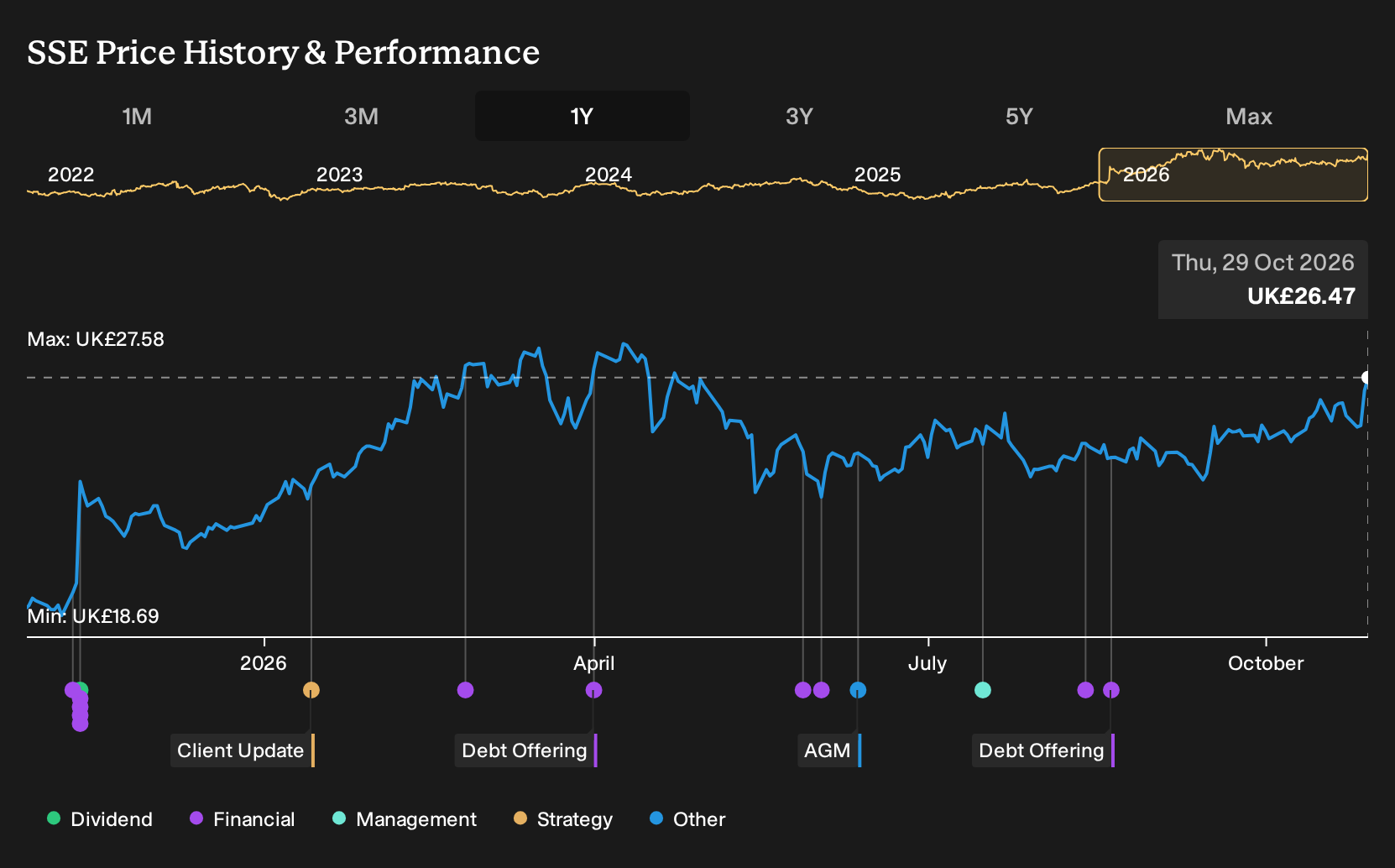
Exploring Other Perspectives
Four fair value views from the Simply Wall St Community cluster between about £20.25 and £31.76. Some retail investors see SSE as close to fully valued, while others model sizeable upside. Those opinions pre date the latest utilities rebound and do not fully reflect leadership risk or project execution questions. Explore the range before deciding where you sit.
Explore 3 other SSE fair value estimates, including one that suggests up to 20% upside from the current price.
Form Your Own Verdict
Don't just follow the ticker. Dig into the data and build a conviction that's truly your own.
- A great starting point for your SSE research is our analysis highlighting 2 key rewards and 2 important warning signs that could impact your investment decision.
- See our latest analysis for SSE. The report includes a comprehensive fundamental analysis summarized in a single visual, the Snowflake, making it easy to evaluate SSE's overall financial health at a glance.
Looking For More Investment Ideas Beyond SSE?
Once you have a view on SSE, it can help to compare it with other opportunities that match your risk appetite, income goals and preference for balance sheet strength. The Simply Wall St Screener gives you a structured way to scan for candidates that fit those preferences instead of relying on headlines or hunches.
- If you are hunting for value with quality in mind, review our 11 high quality undervalued stocks to find companies that combine solid fundamentals with pricing that analysts judge to be attractive.
- For readers who care most about resilience and capital protection, focus on companies in our 5 resilient stocks with low risk scores that score well on financial strength and volatility metrics.
- Income oriented investors who still want robust underlying businesses can sift through our 5 dividend fortresses to see which high yielding payers also carry stronger fundamentals.
Have feedback on this article? Concerned about the content? Get in touch with us directly. Alternatively, email editorial-team@simplywallst.com