


EN
US Stock IPO Outlook | World Logistics: Abandoning basic freight forwarding under “weak volume growth” and betting on digitalization and overseas networks
The global cross-border logistics market is about 325.85 billion yuan in 2025. The CAGR for the next six years is only 4.3%, and the increase is not steep; what really defines the texture of the industry is profit side fluctuations — the average value of China's export container freight index rose 22.57% year on year in the first three quarters of 2026, and spot air freight rates rose 38% year on year. Although rising freight rates can gradually increase freight forwarding revenue, it also reveals the deep binding of cross-border logistics profit companies to the freight cycle. Huatai Securities's judgment on this in the review of the second quarterly report on transportation is quite straightforward: the cross-border logistics sector is under pressure as a whole but its performance is fragmented, and leaders with core capacity resources and favorable pricing capabilities have relatively benefited.
In this industry landscape of “weak volume growth and increased differentiation”, World Road Logistics (World Road), which enters the market with a combination of modular freight forwarding and integrated logistics solutions, its delivery nodes coincide with a window where freight rates are high but space is tight for small and medium-sized participants. Therefore, capitalization experiments are more observational. In terms of the filing schedule, the company secretly submitted an initial public prospectus on December 23, 2024, and the initial public offering on May 16, 2025; the latest prospectus will expand the issuance scale from 1.5 million shares to 6 million shares, and the pricing range will be adjusted from 4-6 US dollars to 5-6 US dollars. Based on a median value of 5.5 US dollars, it is estimated that it has raised about 33 million US dollars and a market value of about 190 million US dollars.
Maintain the bottom line of net profit by reducing costs and increasing efficiency
According to the prospectus, Shilu Logistics was founded in 2020 and is a comprehensive logistics provider headquartered in Wuhan and operated through regional hubs in Shanghai and Shenzhen. Looking at its consolidated statements, the company showed the ultimate “abbreviated poly” characteristics: revenue contraction, marginal gross profit, and maintained the bottom line of net profit by drastic cost reduction and efficiency, but the sharp loss of cash flow from operating activities revealed the company's weak bargaining power in the industrial chain.
Shilu Logistics's revenue for fiscal year 2026 was 381 million yuan (approximately US$55,249 million), a year-on-year decrease of about 17.8% compared with 464 million yuan in fiscal year 2025. This data is in stark contrast to the general environment of the industry — in the first three quarters of 2026, the average value of China's export container freight index rose 22.57% year on year, and spot air freight rates rose 38% year on year. In the year when freight rates rose across the board, why did the revenue of Seilu Logistics, whose main business is freight forwarding and integrated logistics, not rise but fall?
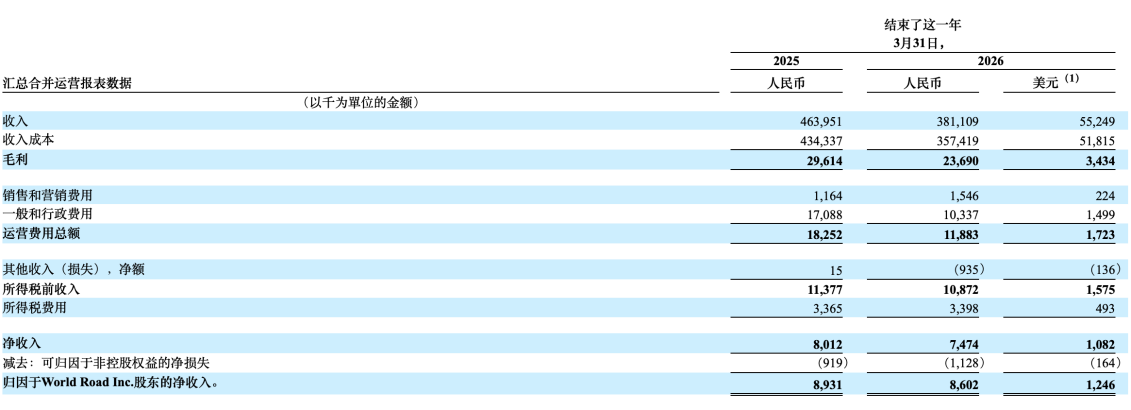
This just confirms the core pain point of the industry: small and medium players lack core transportation resources and direct customer stickiness, and are unable to successfully transfer rising freight rates to downstream customers. As Huatai Securities stated in the research report, the cross-border logistics sector “relatively benefits from leaders with core capacity resources and smooth price capability.” The decline in revenue may be due, on the one hand, to the active contraction of some low-margin or loss-making business lines when freight rates were high; on the other hand, it also reflects that in a fierce inventory game, its underlying business volume or loss of customers exceeds book compensation due to rising freight rates. On the profit side, the company's gross profit for fiscal year 2026 was 23.69 million yuan, down 20% from 29.61 million yuan in the previous year, and gross margin dropped slightly to 6.22%.
Against the backdrop of shrinking revenue and gross profit, Shilu Logistics's net profit to mother remained almost flat in the 2026 fiscal year: it fell slightly from 8.931 million yuan in fiscal year 2025 to 8.62 million yuan (about 1.246 million US dollars), and the net interest rate even rose slightly from 1.92% to 2.26%.
This protection of profits is entirely due to extreme compression of operating expenses. According to the report, its total operating expenses were drastically reduced from 18.252 million yuan in fiscal year 2025 to 11.883 million yuan, a drop of 34.9%. Among them, general and administrative expenses (G&A) plummeted from 17.088 million yuan to 10.337 million yuan.
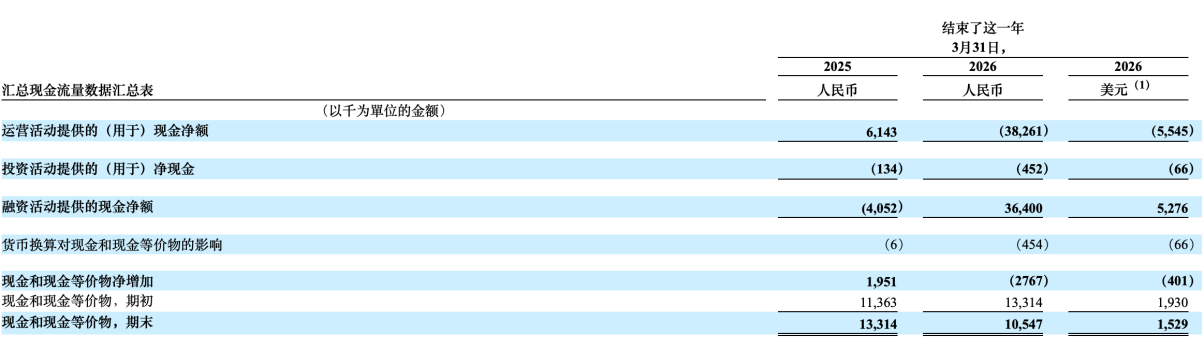
More importantly, in the 2026 fiscal year, the net cash provided by Siro Logistics's operating activities changed from positive to negative, from a net inflow of 6.143 million yuan in fiscal year 2025, to a cliff-style decline to a net outflow of 38.261,000 yuan (about -5.545 million US dollars). For freight forwarding and logistics companies, a large outflow of operating cash flow usually means two things: first, the repayment period for downstream customers is lengthening and accounts receivable backlog; second, they have to advance large advance payments to upstream suppliers (such as shipping carriers and airlines) in order to lock in capacity or space. In a sellers' market where freight rates are high, it is not only difficult for small and medium freight forwarders to pass on costs to customers, but instead need to reverse capital advance operations. This shows that World Road Logistics is absolutely weak in the capital game upstream and downstream of the industrial chain.
In order to make up for the “loss of blood” on the operating side, the company's net inflow of financing activities in fiscal year 2026 reached 36.4 million yuan. This is likely to maintain cash flow through debt financing or shareholder loans. By the end of the period, the company's balance of cash and cash equivalents was only $10.547 million (approximately US$1,529 million). Compared with its hundreds of millions of dollars in revenue and daily freight advance requirements, this cash reserve can be described as being stretched.
As can be clearly seen from its allocation of fund-raising purposes (50% to supplement working capital and general corporate use), the company's primary appeal for this listing is “blood transfusion”; the remaining 20% is for IT services and data processing, and 20% is for overseas entity expansion.
Can small, marginal packages reshape the sea moat?
In the macro picture of global cross-border logistics market growth slowing and sea and air freight rates soaring sharply in the first three quarters of 2026 (sea freight up 22.57% year on year and air freight up 38%), small and medium-sized freight forwarders often face the most extreme “scissor gap” squeeze. Looking at the overall revenue market, Shilu Logistics's total revenue for the 2026 fiscal year fell to 381 million yuan (approximately US$55,249 million) from RMB 464 million the previous year, down 17.9% from the previous year. However, through this appearance of total volume contraction, its business structure is experiencing a drastic “seesaw effect”.
The modular freight forwarding business, which is the core basic market of traditional freight forwarding, experienced a cliff-style contraction. Revenue fell sharply from 32.427 million yuan to 15.753 million yuan, a drop of 51.4%. What is most remarkable is that in the year air and sea freight prices in the industry soared, the revenue of air freight agents plummeted 98.2% year on year (only 173,000 yuan left), and shipping agents almost returned to zero (99.5% year on year). This abnormal data intuitively reveals the pain points of the industry: in a sellers' market where capacity is in short supply, small and medium-sized freight forwarders who lack first-hand space resources are simply unable to obtain competitive prices from airlines or shipowners. High freight rates have completely lost their favorable price space, and a large number of basic customers have been lost or business lines have been strategically shut down. However, its ground distribution business bucked the trend and surged 91.7%, showing that the company still has a partial advantage in the terminal fulfillment process.
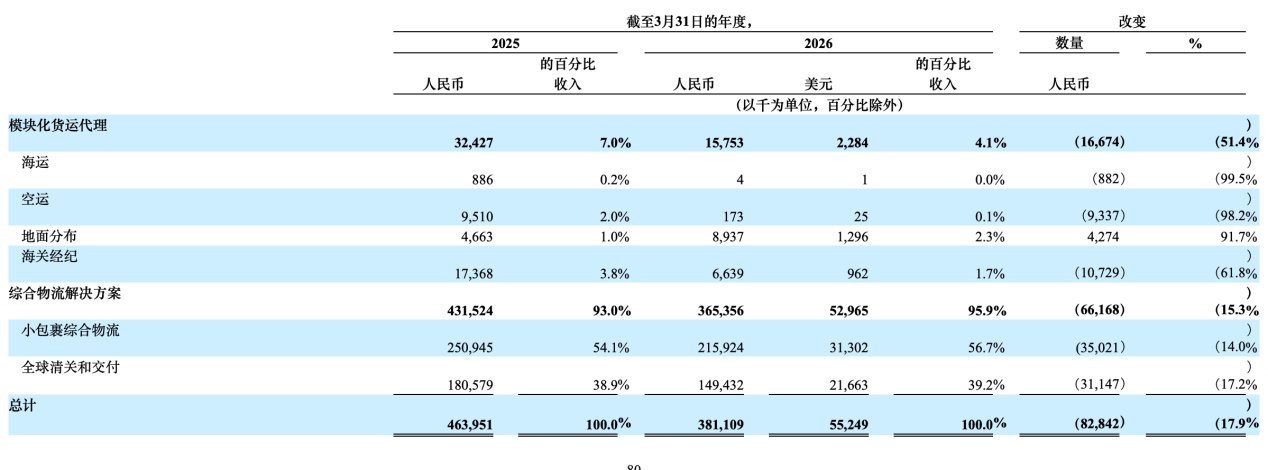
In stark contrast to the collapse of modular freight forwarding, integrated logistics solutions have become an absolute pillar supporting the company's survival. Its revenue share further climbed from 93.0% to 95.9%, reaching 365 million yuan. This sector includes integrated small-package logistics (56.7%) and global customs clearance and delivery (39.2%). Although revenue from these two core businesses also showed a year-on-year decline of 14% to 17.2%, the decline was relatively manageable amid weak macro consumption and industry headwinds where cross-border small package dividends peaked. This shows that Seiro Logistics's customer base and product structure are highly skewed towards cross-border e-commerce and specific direct customers, and the company is trying to hedge against the vulnerability of single trunk line capacity agents through end-to-end integrated services.
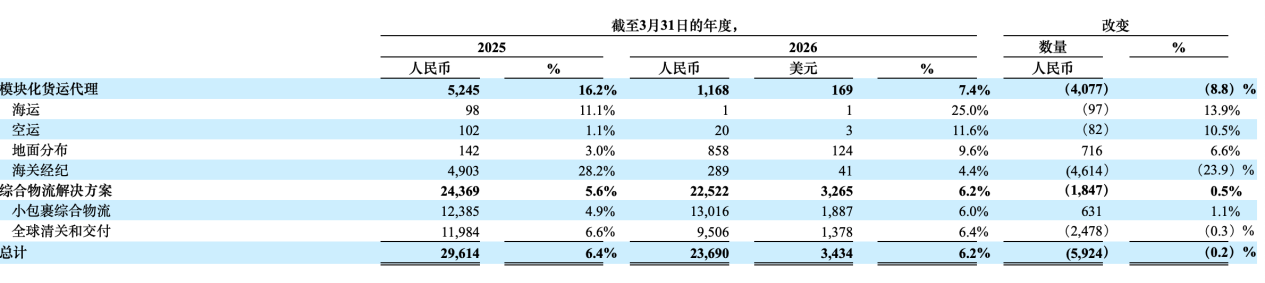
Profit-level data further confirms the “blade-thin” nature of its business model. Total gross profit declined from 296.14 million yuan to 23.69 million yuan, and overall gross margin fell slightly to 6.2%. In the segment, the high-margin customs brokerage business collapsed (gross profit plummeted from 4.903 million yuan to 289,000 yuan), reflecting stricter global trade compliance and heated competition in the cross-border customs clearance process. What is surprising, however, is that the gross margin of its basic integrated logistics solution bucked the trend and rose slightly. In particular, the gross margin of “small package integrated logistics” increased from 4.9% to 6.0%. Achieving improvements in the unit economy model against the backdrop of declining revenue shows that after abandoning inefficient basic freight forwarding business, Shilu Logistics is “defending profits” through extreme cost control, route optimization, and abandoning low-margin orders.
Overall, Seiro Logistics is trying to get rid of the traditional middleman model where freight forwarders “rely on the sky to earn the difference in price” and transform into a digital and service-oriented integrated logistics provider. Combined with the fund-raising use of its IPO in the US (20% to improve IT services and data processing capabilities, 20% to register and operate overseas entities and offices), its future growth path has already surfaced: first, it relies on the digital capabilities of IT systems to improve the efficiency of small package routing planning and customs clearance delivery, thereby squeezing out scale effects in the marginal package circuit; second, by setting up overseas entity networks to truly control last-mile delivery and customs clearance nodes and establish barriers. However, the air and sea transportation infrastructure has almost been cleared, revealing its fatal shortcoming in controlling capacity; the overseas asset investment and IT research and development required for the transformation are also highly dependent on the smooth “blood transfusion” of this fund-raising (50% of the capital raised to supplement working capital).