


EN
Is Portion Pack Bacon Altering The Investment Case For Hormel Foods (HRL)?
- Hormel Foods has launched HORMEL® BLACK LABEL® Portion Pack Bacon in 12 oz. packs priced at US$5.97 to US$6.97, offering three perforated sections with four slices each to help consumers cook only what they need and keep the rest fresh.
- This portion control format speaks directly to Hormel Foods' focus on convenient, value added protein, linking everyday pantry usage to its broader branded protein strategy and product development efforts.
- We will now examine how Hormel Foods' portion controlled BLACK LABEL bacon launch could influence its investment narrative around value added protein.
Hormel Foods Investment Narrative Recap
Owning Hormel Foods is ultimately a bet that value added protein, foodservice exposure and brand led product development can offset pressure from weak volumes and tight margins. The big swing factor in the near term remains execution on portfolio simplification and cost discipline, especially after a year where net margins sit at 2.8% and earnings have been under pressure.
The Black Label Portion Pack Bacon launch supports the value added protein story but does not materially change the near term earnings catalyst or the main risk. Input cost volatility in pork and freight, along with consumer pushback on pricing, still appear to be key threats to any margin recovery investors are monitoring.
The most relevant update for that thesis is the rollout of HORMEL BLACK LABEL Portion Pack Bacon, which focuses on convenience and portion control. It keeps Hormel Foods anchored in branded, packaged protein where consumer interest in practical, low waste formats can support dollar consumption even when volumes are mixed across the portfolio.
For investors tracking catalysts, this kind of incremental product work matters if it scales across categories such as bacon, refrigerated meals and snacking. The risk is that these launches do not offset headwinds from commodity costs or softer retail volumes, and Hormel Foods continues to rely heavily on the yet to be completed Brakebush integration and foodservice exposure to provide much of the performance.
What The Portion Pack Means For Hormel Foods’ Long‑Term Targets
Hormel Foods' narrative projects US$12.6 billion revenue and US$1.3 billion earnings by 2029. This would align with analyst assumptions of 1.2% yearly revenue growth and an earnings increase of about US$957.3 million from US$342.7 million today.
The BLACK LABEL Portion Pack Bacon launch sits against that backdrop of slow top line expansion and a large expected earnings step up. Analysts are only baking in 1.2% annual revenue growth, yet they are assuming margins rise from 2.8% to 10.0%. That puts the focus firmly on mix and efficiency rather than raw volume in the aisle.
Portion controlled bacon fits that mix story. You are looking at the same underlying cut of pork, yet Hormel Foods is charging for packaging, format and reduced waste. If shoppers accept that trade off in bacon, it supports the idea that value added protein can help move the business closer to those higher profit margin assumptions without relying on big volume gains.
The gap between US$342.7 million of earnings today and the US$1.3 billion consensus figure for 2029 is large. For that bridge to make sense, Hormel Foods needs more products that do what Portion Pack Bacon is trying to do. Small tweaks that encourage repeat purchase, limit spoilage at home and justify a stable price point can matter just as much as headline grabbing new brands.
Analysts also tie their 2029 view to a lower future P/E of 13.7x on those earnings, compared with 32.8x today and the US Food industry at 18.7x. That implies investors are expected to get more comfortable paying for cash flow and profit rather than for a premium multiple. Products like Portion Pack Bacon speak directly to that shift because they try to pull margin from existing traffic instead of chasing risky category expansions.
Revenue expectations of US$12.6 billion in 2029, alongside the earnings step up, mean investors are effectively judging whether formats like Portion Pack Bacon can scale. The story is not only about bacon. The same design logic could apply to refrigerated meals, snack packs and foodservice ready formats where portioning and convenience justify better profitability even if overall case volumes stay pressured.
For a holder of Hormel Foods stock, the key question is how many of these portion led or convenience focused ideas can reach real scale by the time those 2029 marks roll around. BLACK LABEL Portion Pack Bacon is one trial on that road. Its success or failure offers a useful, concrete data point on how much room the consumer still gives Hormel Foods to charge a premium for formats that promise less waste and easier planning at home.
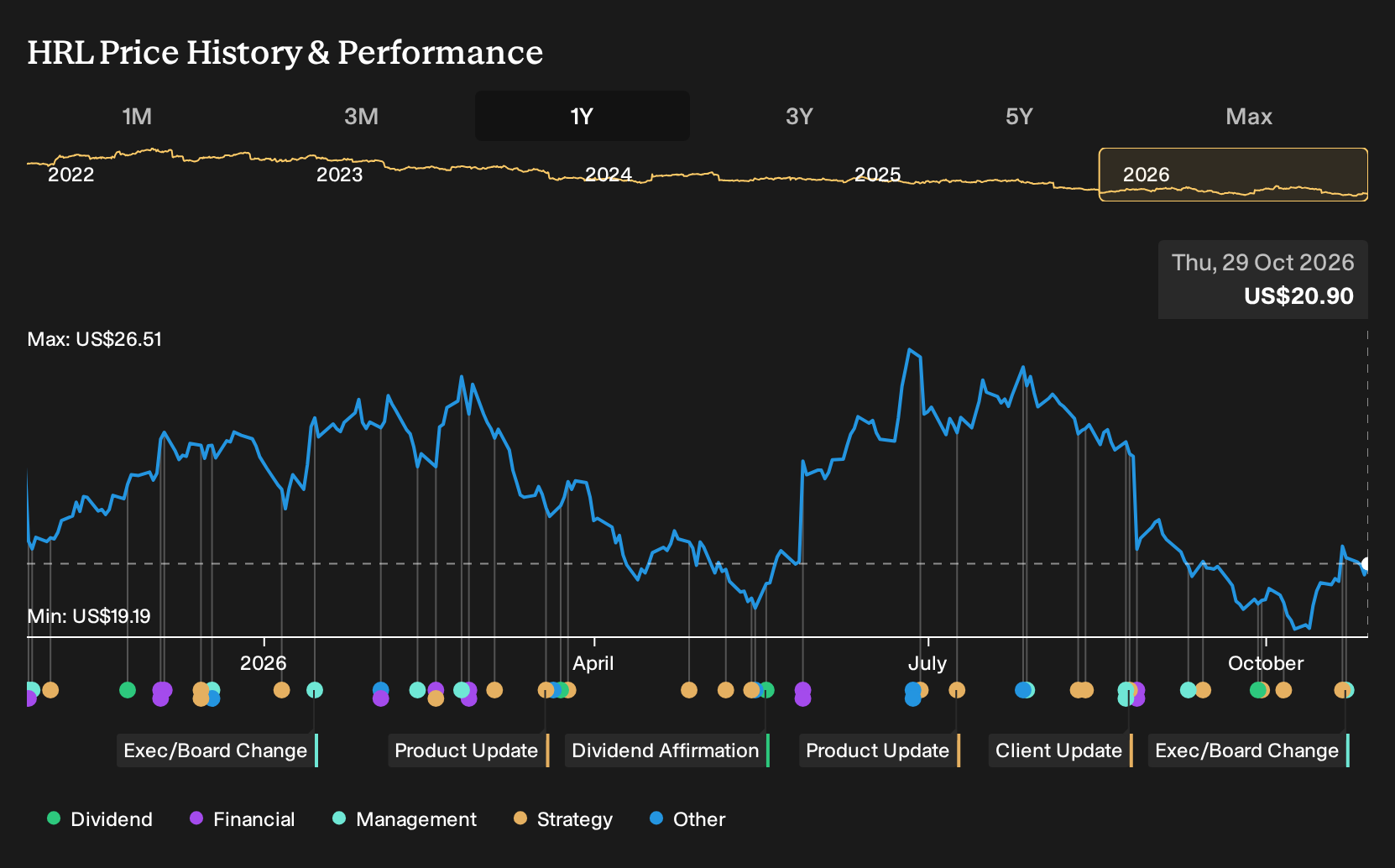
Uncover how Hormel Foods' fair value indicates a 21% potential upside to its current price, which could narrow quickly as sentiment catches up.
Exploring Other Perspectives
Three fair value estimates from the Simply Wall St Community cluster between about US$25.31 and US$47.99 per share, which shows how far opinions on Hormel Foods can stretch. When you set those mixed retail views against upcoming board turnover and Portion Pack Bacon momentum, you see why you should compare several independent takes before forming your own.
Explore 2 other Hormel Foods fair value estimates, including one that suggests it could be worth just $25.31.
Decide For Yourself
Disagree with existing narratives? Extraordinary investment returns rarely come from following the herd, so go with your instincts.
- A great starting point for your Hormel Foods research is our analysis highlighting 3 key rewards and 3 important warning signs that could impact your investment decision.
- See our latest analysis for Hormel Foods. The report includes a comprehensive fundamental analysis summarized in a single visual, the Snowflake, making it easy to evaluate Hormel Foods' overall financial health at a glance.
Looking For More Investment Ideas Beyond Hormel Foods?
If the Hormel Foods story has sharpened your thinking about pricing power, margins and product design, it can pay to line it up against a wider watchlist built around clear, data driven filters.
- If capital preservation is near the top of your list, start with companies that score well on stability by checking out 30 resilient stocks with low risk scores in the Simply Wall St screener.
- If quality at a fair price matters most to you, compare Hormel Foods against a wider field of potential bargains by scanning 30 high quality undervalued stocks that already combine solid fundamentals with attractive pricing.
- If balance sheet strength is your first filter, focus on companies with cleaner debt profiles and resilient cash positions by reviewing the list of solid balance sheet and fundamentals (23 results).
Have feedback on this article? Concerned about the content? Get in touch with us directly. Alternatively, email editorial-team@simplywallst.com