


EN
Lockheed Martin And 2 Space Stocks To Watch
Cyber attacks linked to North Korea and the record $6.3b Binance hack have pushed space based surveillance, secure communications, and defence technology back into the spotlight. Governments want better eyes and ears in orbit. Corporates want sturdier networks. That demand sits behind this new race to build the next layer of infrastructure above Earth. This article highlights three stocks from our global space infrastructure screen that capture that story.
The three stocks below are just a starting sample from this global space race theme. The full screen surfaced 59 more listed companies with equally compelling narratives that are not covered here. To go beyond the shortlist, analyze, compare, and identify your own highest conviction ideas straight from the Global Space Race Stocks screener.
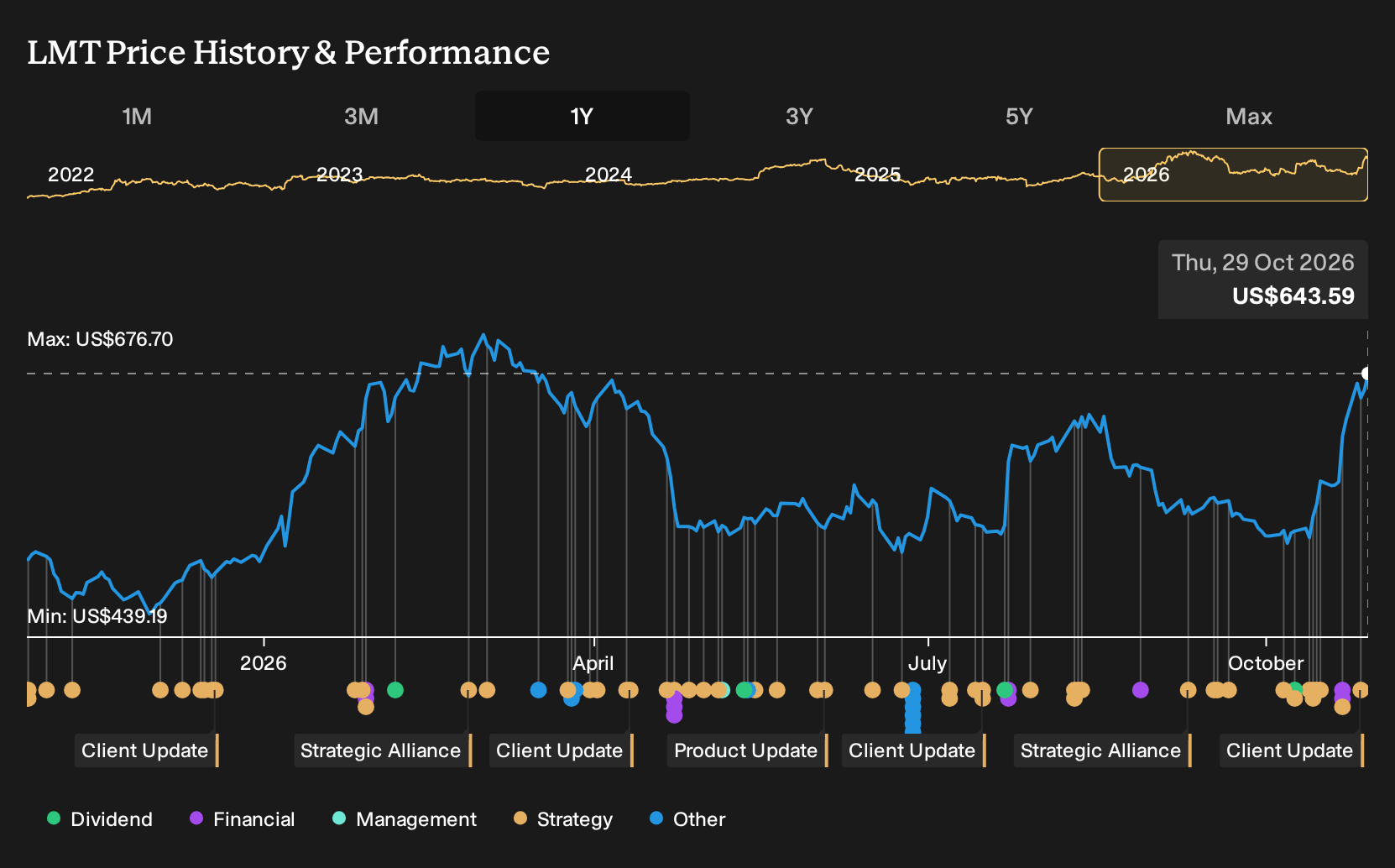
Lockheed Martin (LMT)
Overview: Lockheed Martin is a global aerospace and defense contractor whose Space segment builds satellites, launch systems, and secure orbital infrastructure.
Operations: The group generates about US$87.1b in segment revenue, led by Aeronautics at US$32.2b, with US$13.9b from Space, and most customer demand coming from the United States at US$54.9b.
Market Cap: US$145.5b
Lockheed Martin matters for this Global Space Race theme because its space systems arm helps governments and operators secure the high ground above Earth.
"Lockheed Martin is moving munitions like PAC-3, THAAD, PrSM and JATM onto seven year framework agreements that aim to triple or quadruple production and allow the company to retain a larger share of cost savings from capacity investments such as robotics in Camden."
What happens to margins and long term cash generation depends on how one unresolved pressure around future defense funding ultimately breaks.
Those funding crosscurrents are exactly what the full narrative for Lockheed Martin unpacks, separating temporary noise from longer term drivers that could be masking Lockheed Martin’s real cash story.
Montana Aerospace (SWX:AERO)
Overview: Montana Aerospace designs and manufactures mission critical aerostructures and high precision titanium and aluminum components for aviation, space, and industrial customers.
Market Cap: CHF1.5b
Montana Aerospace plugs into the Global Space Race theme as a behind the scenes builder of mission critical structures and metal components that go into aircraft, launch vehicles, and space hardware. This makes the capital intensity of that footprint important to understand.
"Although Montana Aerospace points to a vertically integrated, multi material footprint as a long term edge, the extra €30m to €40m per year growth and integration CapEx on top of about €50m maintenance CapEx risks outpacing cash generation if new work packages expected mainly from 2027 do not ramp as planned."
What happens to margins and balance sheet flexibility turns on how that single tension between growth spending and incoming space work resolves.
If that balance between heavy CapEx and future space work is the crux of your thesis, the full narrative for Montana Aerospace maps where cash strain could flip into accelerating leverage.

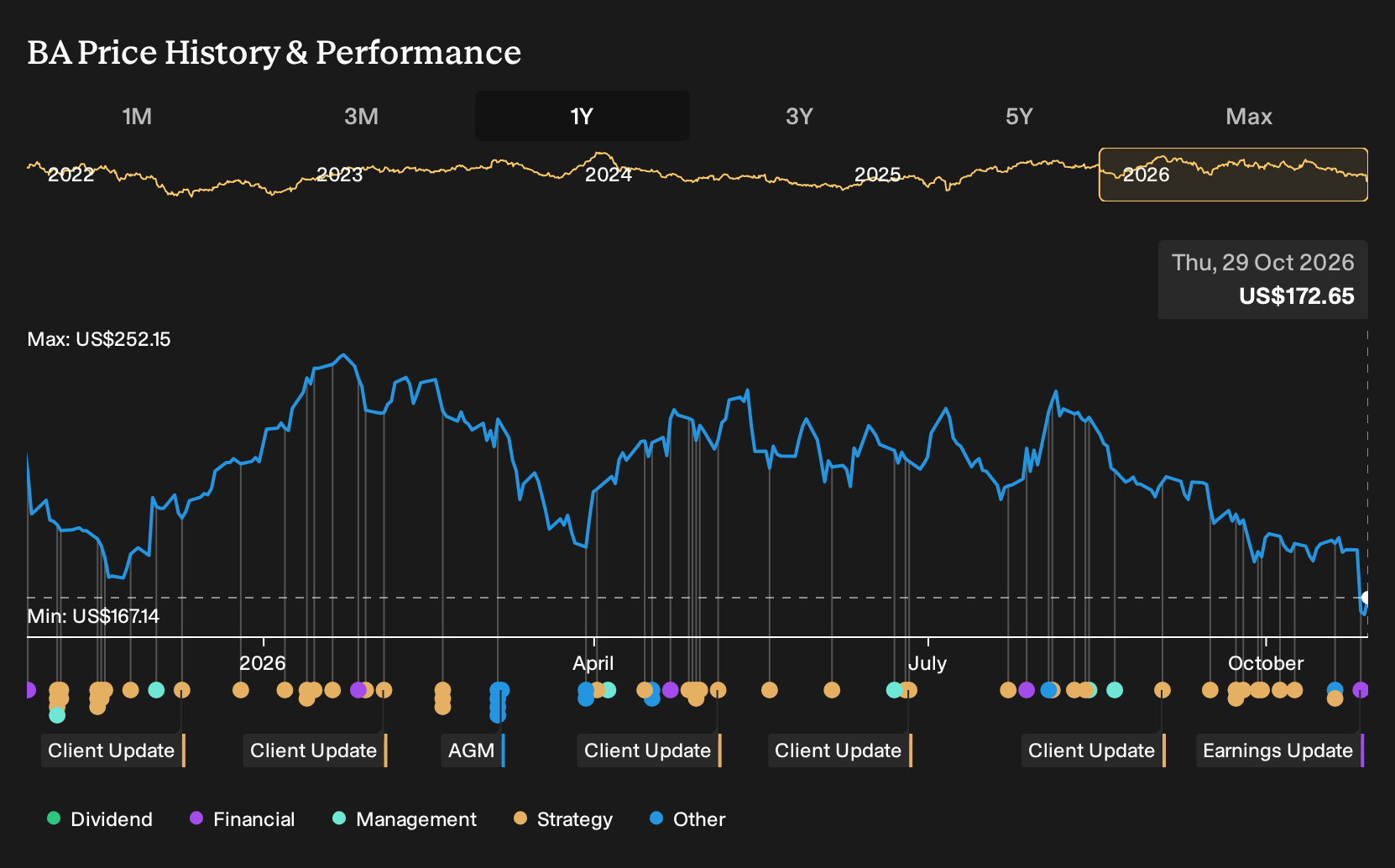
Boeing (BA)
Overview: Boeing designs and supports commercial jets, military aircraft, and space systems, giving investors direct exposure to launch and satellite infrastructure.
Market Cap: US$132.5b
Boeing matters for this Global Space Race theme because its Defense, Space & Security arm connects commercial aerospace know how directly to satellites, human spaceflight, and launch hardware that the sector depends on.
"Any single programme charge above $1 billion in a quarter through 2027. Full year 2026 free cash flow landing below the $1 billion guidance floor, which requires a large second half swing from a negative first."
What happens to Boeing’s long term space opportunity depends on how one unresolved pressure around future cash and debt costs ultimately develops.
That cash question is exactly where the full narrative for Boeing picks up, tracing how programme risks, debt costs, and any recovering demand could be accelerating or masking Boeing’s long term space upside.
Seeking Fresh Alternatives Before They Fly
Fresh themes move first and fast. Breakout ideas rarely stay under the radar for long before momentum builds and pricing gaps get caught. Scan these curated lists and consider them early in your research process.
- Identify income-focused companies with sturdy cash profiles by scanning a curated pool of high yield payers using the 7 dividend fortresses while it still flies under most radars.
- Track real businesses connected to the AI theme by zeroing in on 38 profitable AI stocks that aren't just burning cash before stronger results are fully reflected and straightforward entry points become less available.
- Review companies linked to future-critical materials by using a focused shortlist of 33 best rare earth metal stocks while the supply story still receives relatively limited attention.
Have feedback on this article? Concerned about the content? Get in touch with us directly. Alternatively, email editorial-team@simplywallst.com