


EN
Social Security Cuts Could Lift Wealthfront Stock And Retirement Savings Shares
Social Security’s projected 22% benefit cut by 2032 has turned a distant policy debate into a personal retirement question for millions of Americans. That kind of uncertainty often pushes savings, planning, and investment decisions to the forefront, creating ripple effects across retirement-focused stocks. This article walks through three US Retirement Savings & Asset Management screener picks that are closely tied to this story, and explains why their exposure to these trends matters to long term investors.
The three stocks in this article are just a starting sample, and the broader screen surfaced 22 more US retirement savings and asset management companies with equally compelling stories that are not covered here. To identify and analyze the highest conviction retirement plays for your watchlist, head straight into the US Retirement Savings & Asset Management screener.
Wealthfront (WLTH)
Overview: Wealthfront is a US-based robo-advisory asset manager that automates investing for individuals focused on long term goals and retirement-oriented saving.
Operations: Wealthfront generates about US$372 million of revenue from asset management in the United States of America, fully tied to its investment platform.
Market Cap: US$1.6 billion
Wealthfront matters for this retirement-focused screen because its robo-advisory model sits directly where younger workers are starting to build independent, long term savings outside Social Security.
"The client base is concentrated in digital natives with an average age of 38 years, and this group holds US$16t of household net worth that is projected in the call to grow at 11% annually over two decades, which can support higher platform assets and advisory revenue over time."
The real question is how that growing pool of money behaves if a single key assumption about future retirement safety nets begins to crack.
If that safety net cracks, read the full narrative for Wealthfront to see how Wealthfront’s model could accelerate or stall as retirement habits reset.

Acadian Asset Management (AAMI)
Overview: Acadian Asset Management runs a Boston based asset management group that handles diversified portfolios for individuals and institutions seeking professionally managed retirement oriented investments.
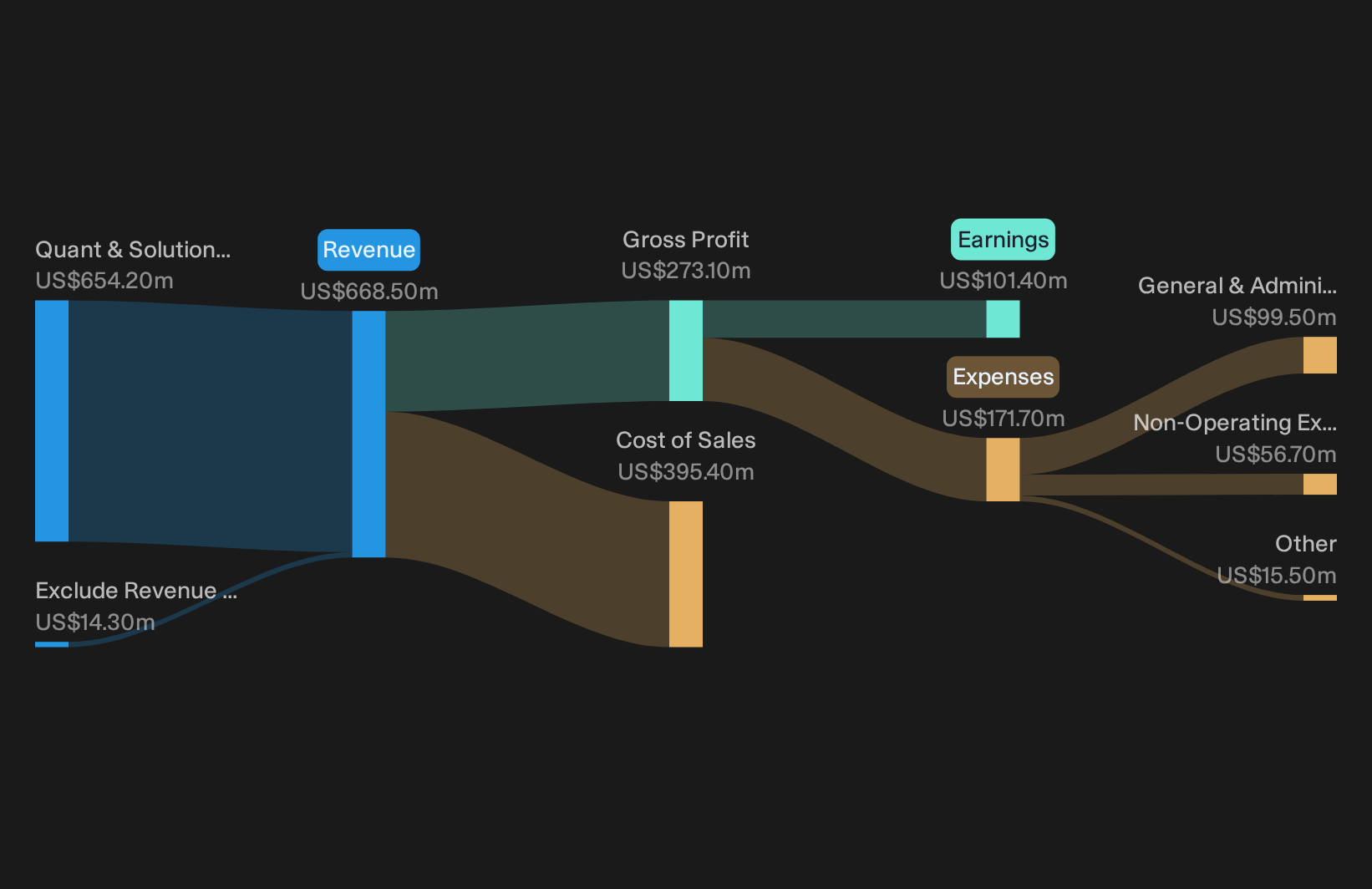
Operations: Acadian Asset Management generates about US$654 million from Quant & Solutions, with roughly US$458 million of revenue coming from US clients.
Market Cap: US$3.2 billion
Acadian Asset Management provides exposure to professionally managed savings at a time when Social Security uncertainty is pushing retirement planning toward fee based products. Long term returns still depend on how one unseen pressure shapes what clients are willing to pay for that help.
That pressure on fees is exactly where the story gets interesting, and the 2 key rewards and 4 important warning signs (3 are major!) highlights how Acadian Asset Management’s potential upside and pain points align with it.
Hamilton Lane (HLNE)
Overview: Hamilton Lane is a Philadelphia based asset manager that builds private markets portfolios for pensions, retirement plans, and long term investors.
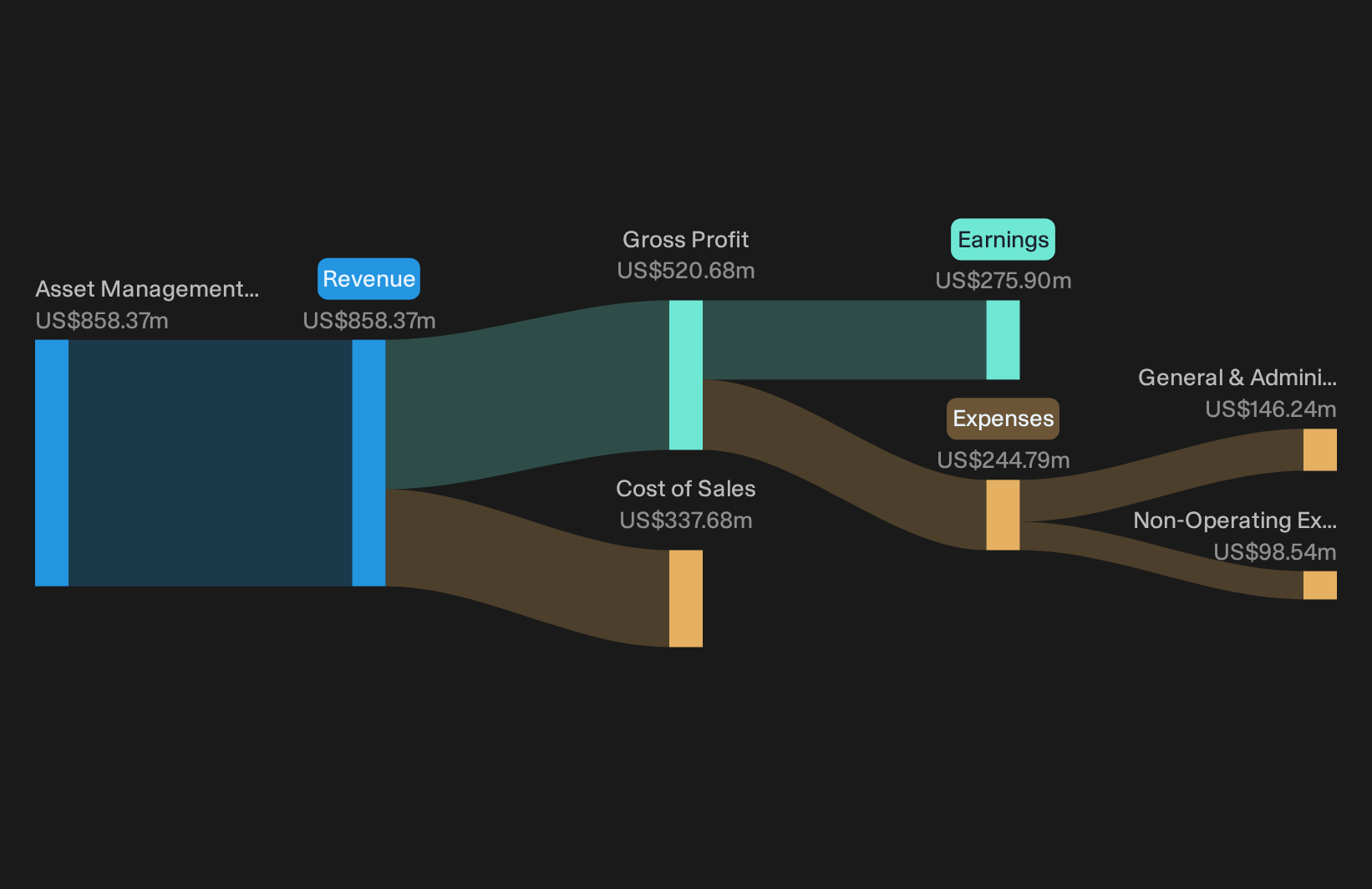
Operations: Hamilton Lane generates about US$858 million from asset management, focused on private markets strategies across its platform.
Market Cap: US$4.6 billion
Hamilton Lane taps into the same Social Security anxiety fueling interest in long horizon portfolios, but does it through private markets that many retirement savers are only just starting to access.
"Hamilton Lane operates on two very different financial clocks. The second clock measures incentive fees, which are real and potentially lucrative but inherently irregular, generated when underlying private investments reach realizations or performance thresholds."
What really matters for retirement focused investors is how one quiet, less visible part of Hamilton Lane’s fee engine holds up if that timing noise grows louder.
When that fee engine starts to decouple from the timing noise, the full narrative for Hamilton Lane shows how Hamilton Lane could turn volatility into long term opportunity.
Seeking Alternatives Before Momentum Flies Past?
Fresh ideas often move first. By the time every headline catches up, early entries may already be participating in the breakout and slower money can end up chasing pullbacks instead. Consider planning your approach in advance.
- Look for early-stage breakouts with real balance sheet strength by running the 18 high quality undiscovered gems while these under-the-radar stories are still priced like afterthoughts.
- Explore opportunities linked to demand for electrification and infrastructure with the 17 top copper producer stocks before capital potentially concentrates in a narrower list of tickers.
- Review possible momentum in precious metals by scanning the 35 elite gold producer stocks while these producers are still attracting relatively limited broad market attention.
Have feedback on this article? Concerned about the content? Get in touch with us directly. Alternatively, email editorial-team@simplywallst.com