


EN
It is difficult to change the strength of the US dollar in the midterm elections. Wall Street bluntly said: if it falls, buy
The Zhitong Finance App learned that this round of dollar gains may have enough momentum to ignore the impact of the US midterm elections — even if the election causes a political impasse, high interest rates and surges in artificial intelligence (AI) related spending are still attracting capital inflows.
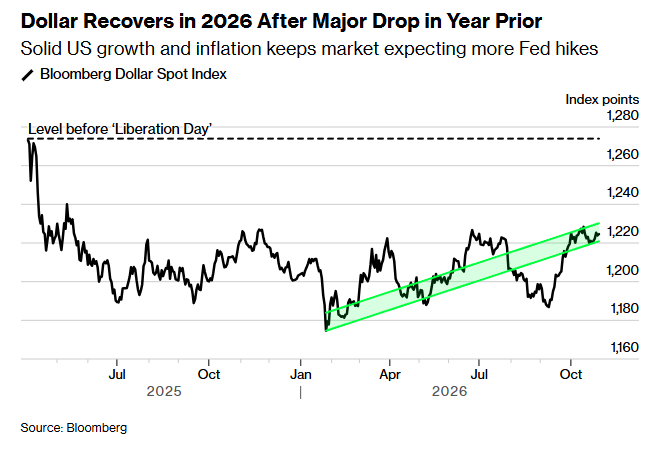
Investors are preparing for the possible policy paralysis caused by the November 3 vote. This situation is generally bad for the dollar, and polls suggest that the Democratic Party may win control of at least one house of Congress. However, driven by better-than-expected inflation data, the Bloomberg Dollar Spot Index hit its highest level since May 2025 this month. Also, for fund managers and strategists who follow the foreign exchange market, regardless of the election results, the main drivers supporting the strengthening of the US dollar are unlikely to change.
“Although the election results may affect market sentiment in the short term, we believe investors should be careful not to exaggerate their long-term impact on the US dollar,” said Nathan Thooft, senior portfolio manager at Manulife Investment Management. “Ultimately, the foreign exchange market is more driven by relative economic growth, inflation, interest rates, and capital flows than by the election results alone.”
He pointed out that splitting the government meant fewer policy changes and reduced uncertainty, “providing a degree of stability to financial markets, including the US dollar.”
Citi strategist Daniel Tobon said that analysis of previous midterm election results shows that the US dollar often weakens after voting, especially if the election divides the government — as expected this time around. He expects any weakness to be “short-lived,” though, as other factors point in the opposite direction.
Bank of America strategist Alex Cohen believes that the Democrat-led Congress may block government spending or other initiatives for the remaining two years of Trump's presidency, thereby curbing growth. But Trump can veto any legislation the Democratic Party may propose to strengthen regulation (particularly around artificial intelligence), thereby keeping one of the main drivers of the US stock market intact. Cohen expects the dollar to strengthen this year.
“If AI trading is shaken by the election and the dollar is sold off, we will buy on dips,” Cohen said.
The dollar's biggest potential benefit still comes from the Federal Reserve — the market expects the Federal Reserve to resume interest rate hikes after the November election. The Federal Reserve left interest rates unchanged on Wednesday, and Chairman Kevin Walsh hinted that officials were “ready to act.” The Federal Reserve raised interest rates for the first time in three years in September, driving the US dollar to record its best monthly performance since March, and is expected to close for the second month in a row, rising about 1.8% so far in 2026.
This round of gains prompted Wall Street strategists to re-examine their outlook for the US dollar, and Morgan Stanley reversed previous predictions that the US dollar would weaken for the rest of the year.
“The market is happy to see a divided Congress or a situation where the Democratic Party has a weak majority in the Senate and cannot overturn Trump's veto,” said Steven Englander, the bank's G-10 global head of foreign exchange research. “We believe that any strengthening of the dollar will depend on the market's expectation that the Fed will maintain low inflation and high real interest rates.”
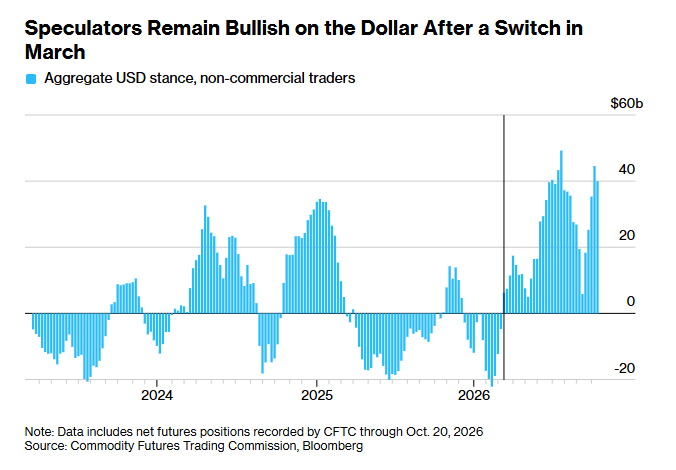
According to data from the US Commodity Futures Trading Commission for the week ending October 20, asset management companies and non-commercial participants maintained bullish positions on the US dollar, holding stronger bets of slightly less than 40 billion US dollars. They have been bullish on the dollar since mid-March.
Looking at it over time, negative factors are accumulating. Kristina Hooper, chief market strategist at Man Group, said that although safe-haven demand caused by election disputes or other election-related dysfunctions will support the dollar, she is less optimistic about the dollar's long-term prospects.
“There are many concerns about a possible slowdown in AI capital spending, which could have a substantial impact on economic growth,” and “put downward pressure” on the US dollar, she said.
The geopolitical background that previously favored the US dollar may also change. The rise in oil prices by about 80% since this year has proven to be a big plus — the war with Iran has disrupted energy flows and dragged down the currencies of importing countries, including the yen and the euro. France's deteriorating fiscal outlook has increased pressure on Europe's single currency.
Trump said earlier this month that the US will not attack Iran before the November vote, but the possibility of stepping up military attacks after the vote is not ruled out.
“For the foreign exchange market after the midterm elections, the most important thing is how Trump treats Iran after the vote,” said Noah Buffam, a capital market strategist at CIBC. “The current expectation seems that the US will substantially escalate aggressive actions after the midterm elections, but we are not so sure. We think that if military action is limited, the dollar may weaken along with oil prices.”