


EN
Yunji Technology (02670) and Vanke Poyu reached a cooperation: embodying intelligent cross-scene replication to open up a new density of commercial space
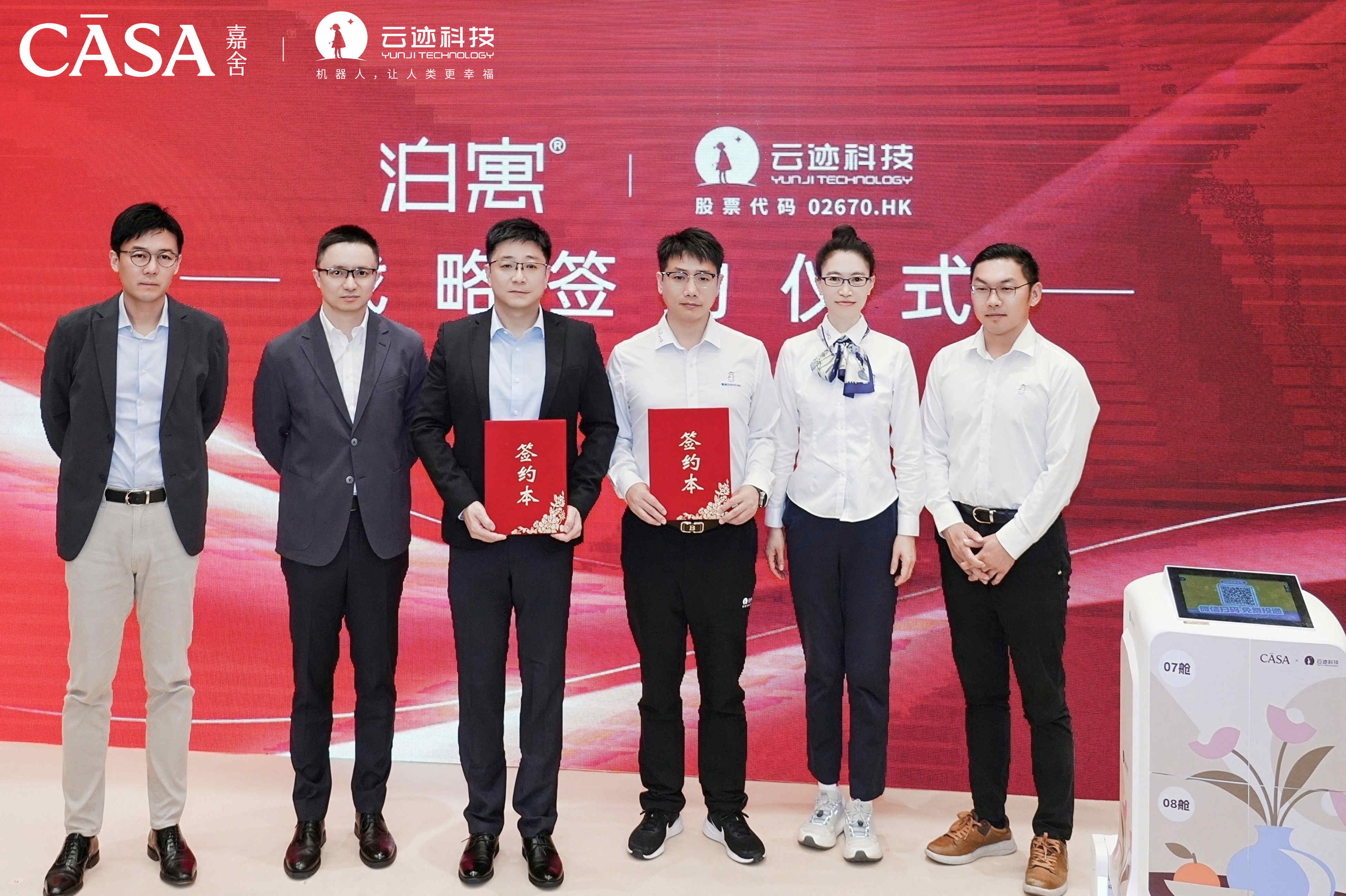
Zhitong Finance App learned that on October 29, Yunji Technology (02670) and Vanke's long-term rental apartment brand Boyu signed a strategic cooperation agreement at the CASA Jiashe brand press conference. Yunji became the “preferred strategic partner” for intelligent long-term rental apartments. The two sides jointly built the “Boyu x Yunji Space Intelligence Joint Laboratory” to conduct research on human-robot collaboration models in the apartment scene. The results were shared between the two parties. The two sides will use the apartment scenario as a starting point to replicate the robot's proven service capabilities in closed scenarios such as hotels to a centralized long-term rental apartment network to promote robot delivery into the normal operation of apartments.
The key word for this collaboration is “cross-scene replication.” The hotel and apartment have the same enclosed space and multi-floor layout. They all require elevators and access controls, and the flow of people has clear peaks and valleys. The delivery, elevator control, access control, multi-machine scheduling and exception handling capabilities accumulated in the hotel scene can be directly migrated to the apartment. However, an apartment is not a simple copy of a hotel: there are hundreds of households in one building, dozens of orders for meals come in at the same time, there are more buildings, more complicated entrances, and higher requirements for scheduling systems. This is the key hurdle in the ability to move from “single building to network replication.”
Demand density has provided support. Yunji reached strategic cooperation with Taobao Flash Sale and Meituan, and platform orders are directly connected to the Yunji robot distribution network. According to the data, the maximum number of daily orders in the Yunji apartment scenario is about 650, and the service covers about 400 apartment properties. Boyu is a centralized long-term rental apartment brand under Vanke Group. It operates and manages more than 220,000 properties. The robot is not entering a fragmented project, but a network of apartments with uniform operating standards that can be replicated in batches.
The significance of cross-scenario replication is not limited to order increases, but also changes in the growth structure. As of September 2026, the average number of simultaneous online robots per day increased by about 20%-25% year on year, and the number of tasks completed during the period increased by about 25%-30% year on year. The total number of HDOS smart system customers exceeded 5,000, an increase of about 230% year on year, of which the number of paying customers increased by about 220% year on year. This means that cross-scene replication is building network density, and commercial closed-loop flywheels are also accelerating.
Duan Yanbiao, CPO of Yunji Technology, said that the apartment is one stop in Yunji's platform-based strategy. The value of this collaboration is not one more implementation scenario, but rather verifying whether robot services can continue to be paid for. Users' willingness to continue to pay is an important sign that value is recognized; service volume, revenue, and delivery costs can all be calculated through actual operation accounting, and the closed commercial loop and ROI are evidence-based.
When robot services can become the basic configuration of apartments like elevators, access control, and networks, intelligent commercial spaces will also move from project density to network density. More importantly, this tests not whether a single robot can operate, but whether scenario capabilities can be stably replicated in a real operating network to form a sustainable commercial density.