


EN
The Bet Yamaha Motor Holders Made
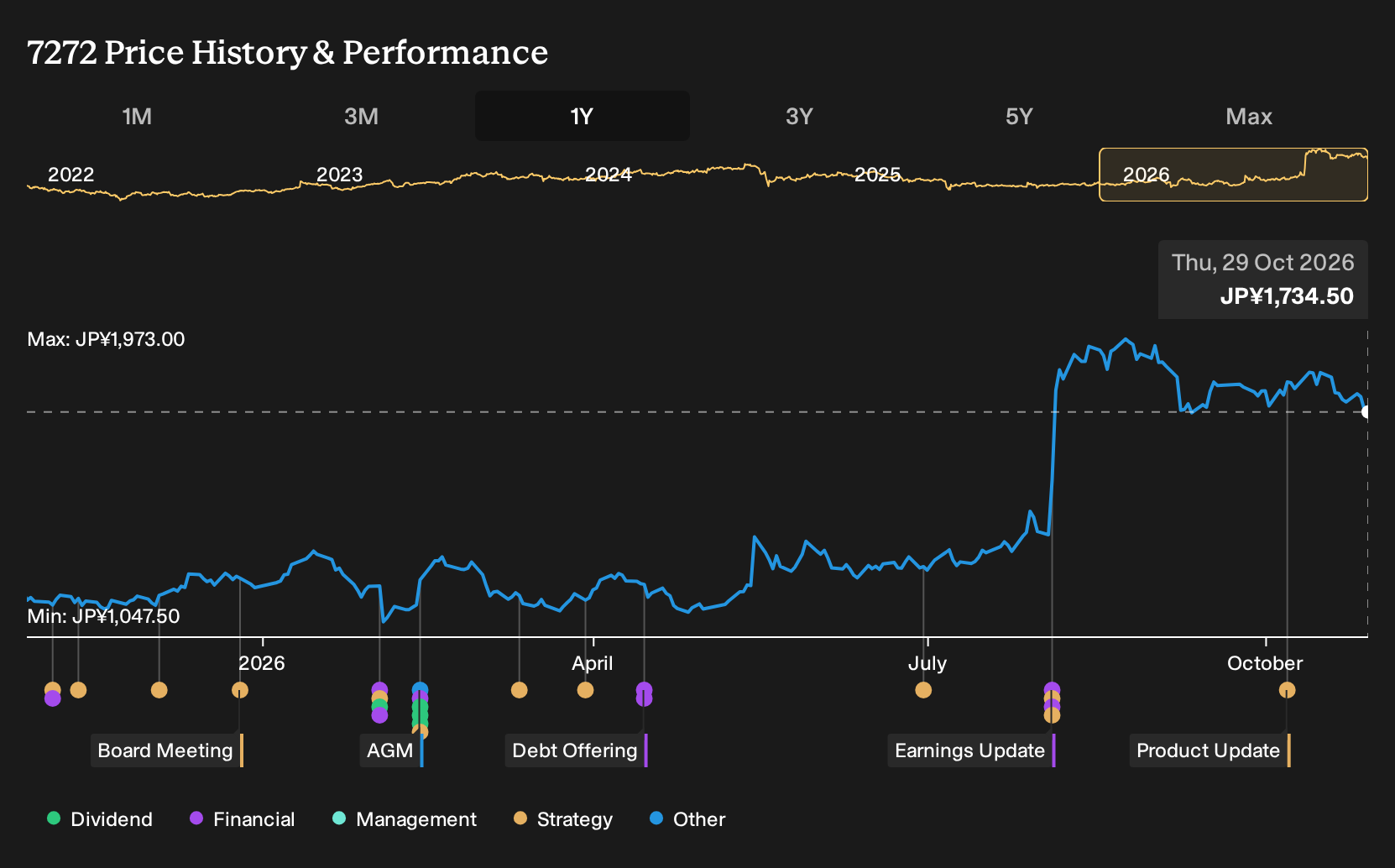
If Yamaha Motor sat on your watchlist instead of in your account, the payoff probably feels distant. Investors who held Yamaha Motor over the past year are up 58.4%, including dividends. That move arrived while earlier research disagreed on whether urbanization and electrification would lift demand for premium two wheelers or shared mobility and tougher regulation would cap volumes. If you rewind to October 2025, which of those competing views about motorcycle ownership in crowded cities looked more convincing to you?
Yamaha Motor has already moved. See which of 15 high quality undervalued stocks still trade below our estimates.
The Two Yamaha Motor Stories Investors Had To Weigh
The shares cost ¥1,119 at the start of the period, and Yamaha Motor sat between two very different but plausible stories about where urban mobility might head next.
The bullish narrative pointed to a Fair Value of ¥1,300, effectively a price level justified if premium models, digital services, and marine investments lifted margins and supported higher average selling prices across key regions.
The bearish view argued for a Fair Value of ¥1,000 and treated slow electrification and ongoing reliance on internal combustion engines as a core risk that could invite tighter regulation and weaker demand.
What The Results Changed For Yamaha Motor
Record Q2 2026 figures gave Yamaha Motor investors fresh data. Revenue reached ¥767,868m and net income was ¥72,640m, up from ¥651,873m and ¥22,434m in Q2 2025, while net margin widened from 3.4% to 9.5%. That profitability shift supported the view that premium products and a better product mix could contribute to stronger earnings.
The lesson here is simple. When an investment thesis focuses on margin quality rather than just higher sales, track net margin and profit per unit sold in each result, not only headline growth or share price movements.
What Yamaha Motor's Price Already Assumes
Yamaha Motor now trades at ¥1,734. The selected Narrative’s Fair Value sits below that level, framing today’s quote as one that already bakes in a lot of good news on motorcycles, marine, and robotics.
The question for you is what must keep going right for this price to hold, especially around cost reforms and tariff relief that need to offset heavier R&D and SG&A.
"The main thing that has to go right for Yamaha Motor is that cost structure reforms, OLV restructuring, and loss reduction in SPV and e-mobility meaningfully offset large U.S. tariff headwinds and higher development spend by 2027 and 2028."
One Narrative has put a figure on that disagreement. → See the Narrative with its lower Fair Value, assumptions and all
Before The Next Story Makes Headlines
What if your next investment idea came before the headlines? Go straight to the companies whose prices and our estimates still disagree. Three places to start, with the names waiting behind the link.
- Company 1 - 34% below our estimate - sells verification, DX support, and MaaS services as devices gain software complexity.
- Company 2 - 36% below our estimate - runs hiring and lifestyle platforms that convert offline search, booking, and staffing workflows into software.
- Company 3 - 19% below our estimate - expands independent elevator servicing, modernization, and monitoring as equipment owners seek alternatives to OEM contracts.
Three companies from the same screener. Open the full list of 23 financially solid companies →
Have feedback on this article? Concerned about the content? Get in touch with us directly. Alternatively, email editorial-team@simplywallst.com