


EN
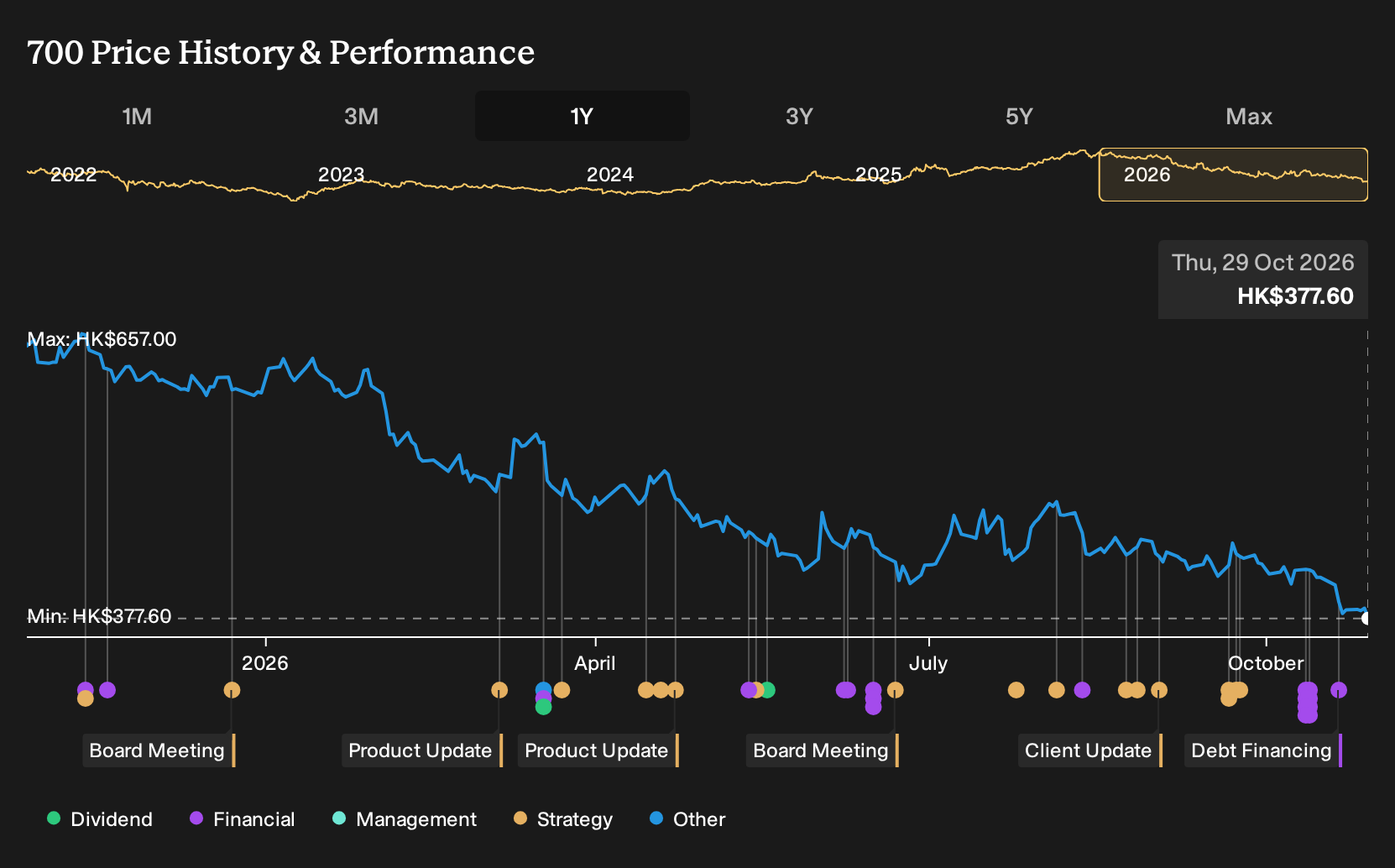
Tencent Shares Slid Even Though Profit Rose
If you had backed the Tencent growth story a year ago, the return has been harsh. Investors who held Tencent over the past year are down 41.3%, including dividends. That outcome sits awkwardly against October 2025 expectations that assumed double digit revenue growth, rising profit margins and a premium future P/E. So what exactly did that original case miss about AI spending, regulation and chip access risks, given what was already on record then?
Narratives are how investors here put a case on the record, with explicit assumptions about revenue, margins and the multiple. Those assumptions imply an estimated Fair Value.
Tencent has already moved. Pinpoint other ways to investigate the theme among 54 AI infrastructure stocks.
The Two Tencent Narratives Investors Had To Weigh
The shares cost HK$645 at the start of the period, and Tencent sat between two sharply different stories that still looked reasonable on the numbers available.
The bullish narrative put fair value at HK$687, based on revenue rising 10.5% a year, profit margins reaching 31.6% and a future P/E assumption of 23.0x, supported by AI tied into the WeChat ecosystem, as well as cloud, fintech and gaming.
The more cautious view set fair value at HK$508, used a 12.0% revenue growth assumption with a 24.0% margin and a 22.0x future P/E, and focused on the possibility that tighter Chinese regulation could limit Tencent’s earnings power.
What The Tencent Evidence Actually Showed
Tencent doubled down on AI through heavier capex, bond-funded chip spending and deals like DeepSeek and Manus, which leaned toward the bullish thesis on monetisation potential. The numbers told a cooler story. Revenue moved from CNY184,504m in Q2 2025 to CNY204,785m in Q2 2026, while net income barely shifted and net margin slipped from 30.2% to 27.4%. Overall, the evidence cut both ways.
The key assumption investors needed to track was margin expansion from AI. For any other stock, treat promised AI payoffs as a claim and check future filings to see whether reported net margin actually widens rather than just higher capex and debt.
What You Would Be Paying For In Tencent Today
Tencent now trades at HK$378, and the selected bullish Narrative argues that its Fair Value sits above that level based on how the current price treats future cash flows.
The Narrative highlights heavy AI capex, compressed free cash flow and the contractual structure in China. A buyer today would need to judge whether this AI spending and contract risk still allow long term cash generation to support that Fair Value.
"Run a discounted cash flow backwards. It is the only honest way to find out what a price is asking you to believe, because it removes your opinion from the exercise and leaves only the market's. Do that at HK$442.40, which is where Tencent closed on 18 August, and the answer comes out at revenue shrinking 0.3% a year, every year, for ten years."
One Narrative has put a figure on that disagreement. → See the Narrative with its higher Fair Value, assumptions and all
Find Your Own Contrarian Opportunity
This company's disappointment is already part of the story. Your next idea could come from looking where the price and the possibilities still seem far apart. Here are three companies priced below our estimates.
- Company 1 - 21% below our estimate - uses surgical robots and connected care platforms to pursue higher value procedures.
- Company 2 - 36% below our estimate - ramps high horsepower engine capacity to supply mission-critical data center power needs.
- Company 3 - 15% below our estimate - shifts heavy biologics and biosimilars investment into launching complex, higher margin therapies.
That is three of the list. See every one of the 194 undervalued companies on it →
Have feedback on this article? Concerned about the content? Get in touch with us directly. Alternatively, email editorial-team@simplywallst.com