


EN
We're Not Very Worried About Brii Biosciences' (HKG:2137) Cash Burn Rate
There's no doubt that money can be made by owning shares of unprofitable businesses. For example, although software-as-a-service business Salesforce.com lost money for years while it grew recurring revenue, if you held shares since 2005, you'd have done very well indeed. But while the successes are well known, investors should not ignore the very many unprofitable companies that simply burn through all their cash and collapse.
So should Brii Biosciences (HKG:2137) shareholders be worried about its cash burn? In this article, we define cash burn as its annual (negative) free cash flow, which is the amount of money a company spends each year to fund its growth. First, we'll determine its cash runway by comparing its cash burn with its cash reserves.
How Long Is Brii Biosciences' Cash Runway?
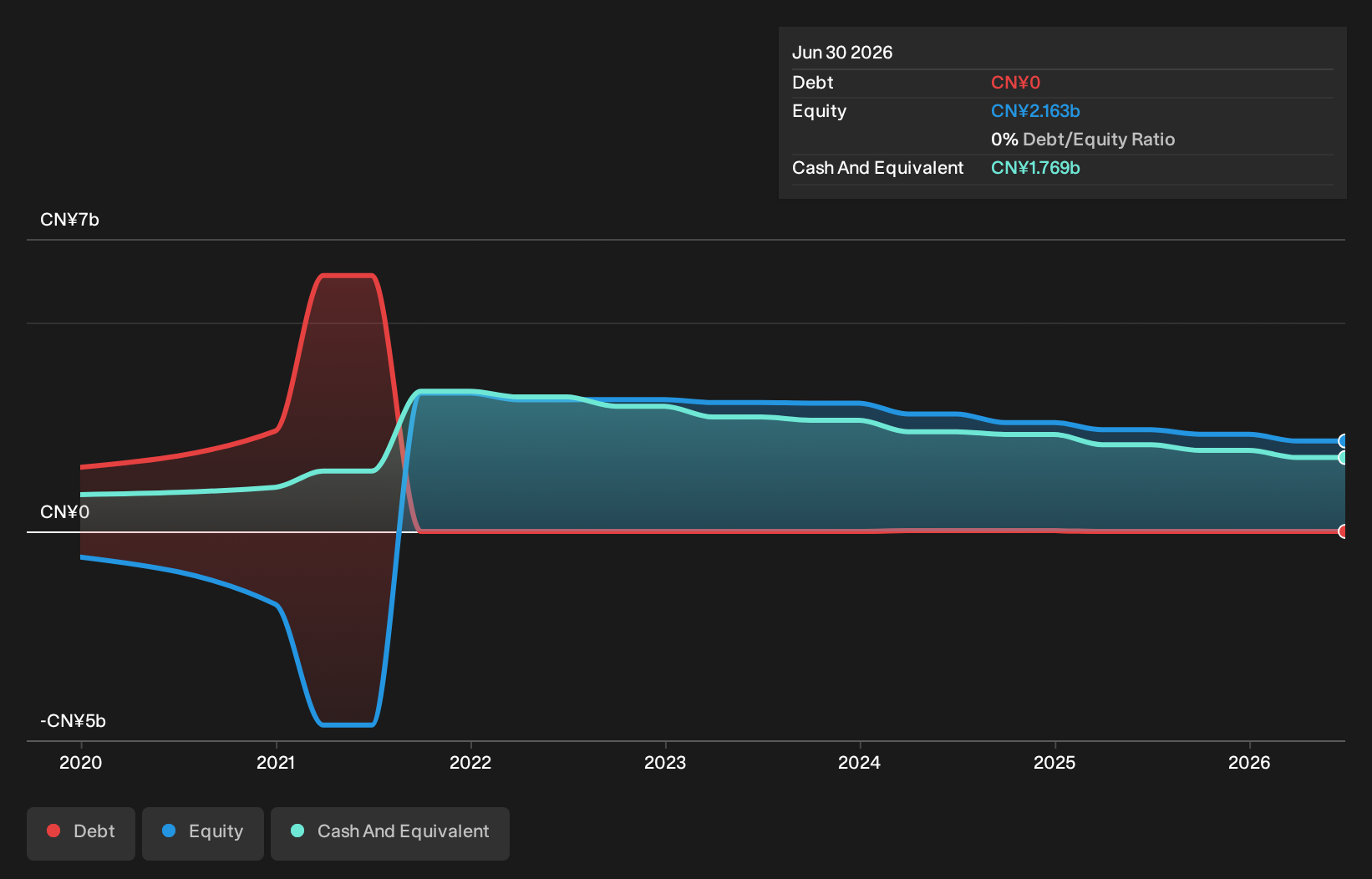
A company's cash runway is calculated by dividing its cash hoard by its cash burn. As at June 2026, Brii Biosciences had cash of CN¥1.8b and no debt. Importantly, its cash burn was CN¥293m over the trailing twelve months. Therefore, from June 2026 it had 6.0 years of cash runway. Even though this is but one measure of the company's cash burn, the thought of such a long cash runway warms our bellies in a comforting way. You can see how its cash balance has changed over time in the image below.
See our latest analysis for Brii Biosciences
How Is Brii Biosciences' Cash Burn Changing Over Time?
In our view, Brii Biosciences doesn't yet produce significant amounts of operating revenue, since it reported just CN¥19m in the last twelve months. As a result, we think it's a bit early to focus on the revenue growth, so we'll limit ourselves to looking at how the cash burn is changing over time. While it hardly paints a picture of imminent growth, the fact that it has reduced its cash burn by 41% over the last year suggests some degree of prudence. In reality, this article only makes a short study of the company's growth data. You can take a look at how Brii Biosciences has developed its business over time by checking this visualization of its revenue and earnings history.
How Easily Can Brii Biosciences Raise Cash?
Even though it has reduced its cash burn recently, shareholders should still consider how easy it would be for Brii Biosciences to raise more cash in the future. Companies can raise capital through either debt or equity. Commonly, a business will sell new shares in itself to raise cash and drive growth. By looking at a company's cash burn relative to its market capitalisation, we gain insight on how much shareholders would be diluted if the company needed to raise enough cash to cover another year's cash burn.
Brii Biosciences' cash burn of CN¥293m is about 49% of its CN¥595m market capitalisation. From this perspective, it seems that the company spent a huge amount relative to its market value, and we'd be very wary of a painful capital raising.
So, Should We Worry About Brii Biosciences' Cash Burn?
Even though its cash burn relative to its market cap makes us a little nervous, we are compelled to mention that we thought Brii Biosciences' cash runway was relatively promising. Considering all the factors discussed in this article, we're not overly concerned about the company's cash burn, although we do think shareholders should keep an eye on how it develops. Readers need to have a sound understanding of business risks before investing in a stock, and we've spotted 1 warning sign for Brii Biosciences that potential shareholders should take into account before putting money into a stock.
Of course, you might find a fantastic investment by looking elsewhere. So take a peek at this free list of companies with significant insider holdings, and this list of stocks growth stocks (according to analyst forecasts)
Have feedback on this article? Concerned about the content? Get in touch with us directly. Alternatively, email editorial-team (at) simplywallst.com.